Stuttgart’s HammerHAI AI Factory Puts Data Control and User Support Ahead of Chip Independence
HammerHAI combines HPE and Nvidia hardware with certified data controls, workload portability and hands-on help for startups and manufacturers.
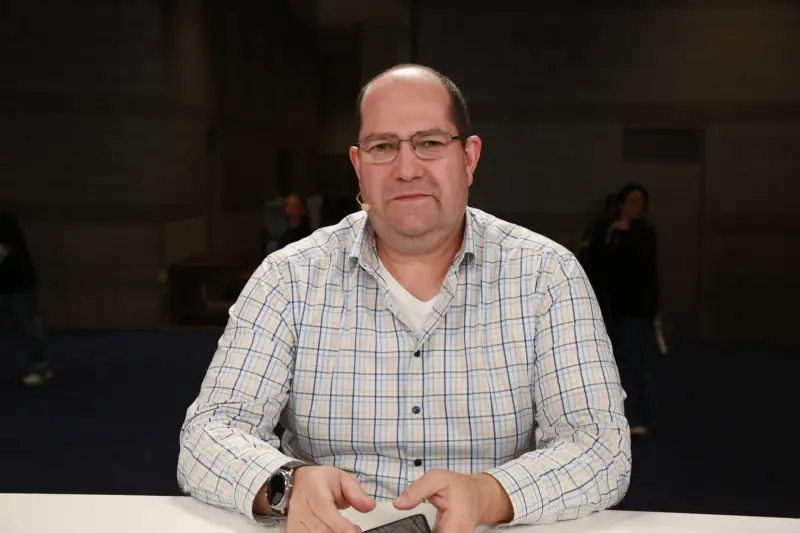
HammerHAI’s approach to AI sovereignty starts with the data its users handle and whether their workloads can move when their needs change. The Stuttgart AI factory is being built around Hewlett Packard Enterprise Co. hardware using Nvidia Corp. Grace Blackwell chips, while its service model is designed to help startups and small manufacturers make practical use of the system.
That emphasis matters for companies that lack large in-house computing teams. Some arrive with a defined AI project; others are still working out what they want to test. Bastian Koller, managing director of the High-Performance Computing Center Stuttgart, says the center needs to support both groups. Access to high-performance processors alone won’t answer questions about getting started, handling data or turning an experiment into a usable workload.
HammerHAI is one of the publicly funded AI factories taking shape across Europe to make advanced computing available to startups and smaller manufacturers. Their challenge is to offer serious computing capacity without making customers dependent on one provider or leaving them uncertain about how their information is handled. In Stuttgart, the stated plan combines new hardware with direct user support and a focus on data protection.
Workloads should be able to move
Koller says the center has already worked with customers on existing systems while it waits for the new hardware. Some customers have developed success stories through that work. The service is being designed so those users can take their workloads elsewhere if that better suits their requirements.
“The idea is to evolve the system and the services in a way that they can simply move from us to a hyperscaler or from hyperscaler back,” Koller said. He described the center’s role as giving customers a boost and helping them progress, rather than keeping their work tied to HammerHAI.
That portability is a practical test for an AI service. Teams may need one environment to develop or test a project, then another to run it at a different scale or under different operational conditions. Koller’s description points to movement in both directions: from the Stuttgart center to a hyperscaler, and from a hyperscaler back to the center. He did not specify technical standards or migration procedures, so organizations considering a move will still need to establish how their own workloads and data would transfer.
Industrial customers also expect a familiar way to access computing services. Koller said they no longer want to depend on shell programming and instead look for an experience closer to that of a hyperscaler. That expectation raises questions for operators about user access and security as well as the interface itself. The center’s hands-on model is intended to help address those needs while customers work with the system.
Data handling defines the sovereignty approach
The center operates an ISO-certified environment and holds TISAX Level 3 certification for automotive work. These credentials form part of the operating context for companies assessing whether the environment suits their data and industry requirements. The source did not specify which ISO standard applies or describe the controls covered by the certifications, so prospective users will need to check the details against their own requirements.
Koller also set a near-term limit on what hardware sovereignty can mean. He said it isn’t realistic to tell customers to wait until Europe has its own sovereign processor or GPU. Instead, the center has to focus on the data. For administrators evaluating an AI environment, that frames sovereignty as a question of how information is handled today, even while the computing hardware comes from established suppliers.
“We have to look for the data,” Koller said. That position doesn’t promise independence from every external technology supplier. It puts the immediate emphasis on data handling and on offering a service customers can use while hardware independence remains out of reach in the near term.
Efficiency and personal support are part of the offer
Koller said the new system will deliver twice the performance of its predecessor, which used 3.2 megawatts, while drawing about 700 kilowatts. The center also reuses the system’s waste heat. Those figures describe the system comparison as Koller presented it; he did not provide benchmark workloads or other test conditions. For IT teams, the figures make power use and heat recovery part of the operational picture alongside computing capacity.
The center’s concierge model pairs each customer with a consistent contact. Koller said that repeated contact helps staff learn how users work and what they need. His concern is that an advanced system can go unused if its design doesn’t fit users’ actual requirements. For smaller organizations without dedicated high-performance computing specialists, access to someone who knows their work may help them get from an initial idea to a working project.
Koller discussed HammerHAI with theCUBE Research’s John Furrier and Amit Eyal Govrin at SC26. Hewlett Packard Enterprise sponsored the interview segment; Koller’s comments describe the center’s stated plans and operating approach.
For prospective users, the next practical checks are whether the center’s data controls match their requirements, how a workload could move between environments, and what assistance is available during setup and use. HammerHAI’s offer rests on that combination: substantial computing capacity, attention to energy use, a data-centered approach to sovereignty, and a named human contact for customers.


