SpaceX Gets Approval for 1 Million Starmind Data Center Satellites, With Debris Plan Still Pending
SpaceX can deploy up to 1 million Starmind satellites, but needs a revised debris plan for four orbital shells and must meet firm rollout deadlines.
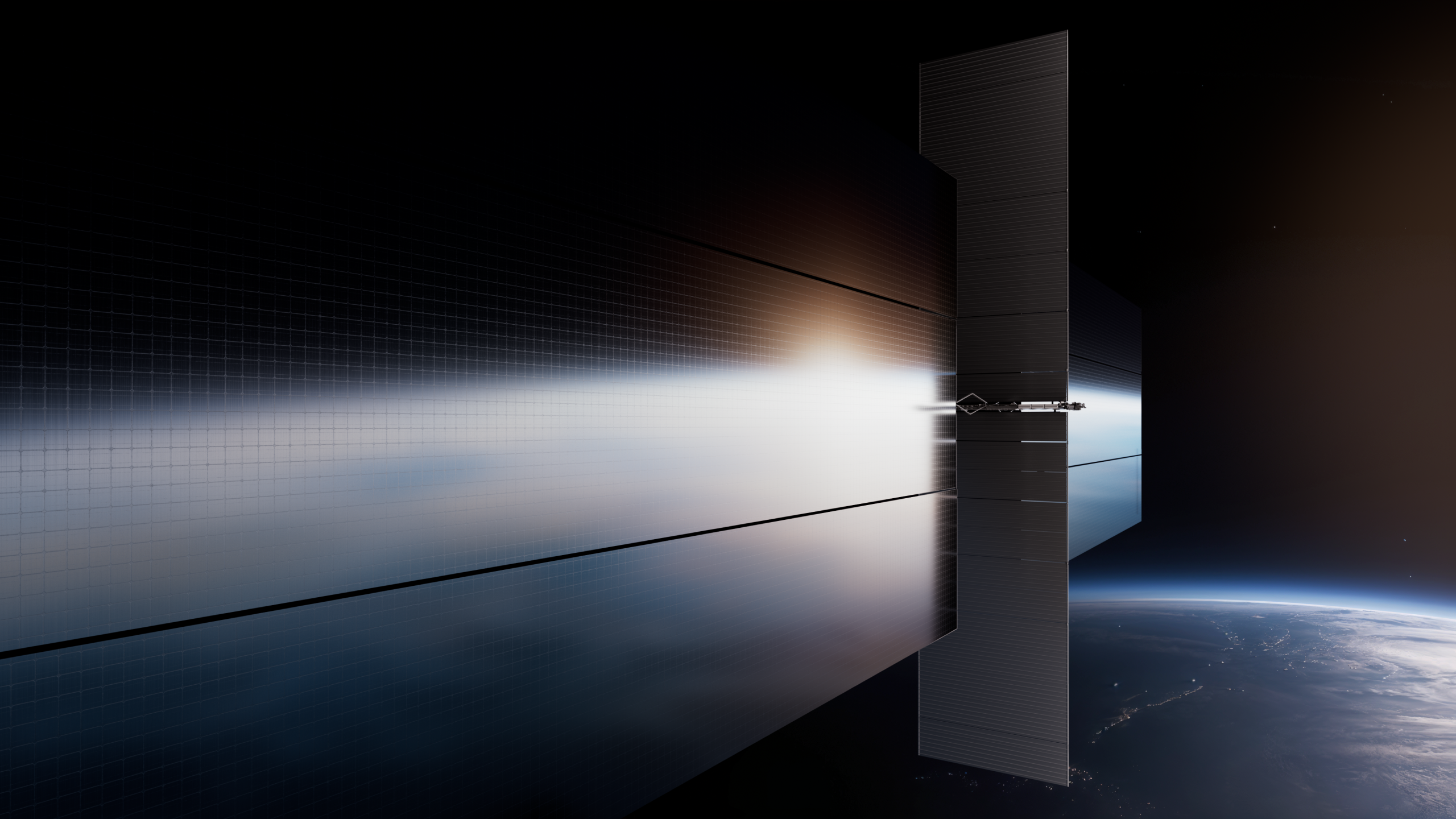
SpaceX has approval to build an orbital data center network of up to 1 million Starmind satellites, but the authorization leaves a major deployment condition unresolved: four of the six planned orbital bands sit above the altitude covered by the company’s accepted debris plan. SpaceX must submit a revised plan before placing satellites in those higher shells.
The decision sets out an ambitious schedule as well as a technical hurdle. SpaceX must have its first Starmind satellite operating by Nov. 25, 2033, then reach 100,000 satellites by 2035, 500,000 by 2038 and 1 million by 2040. Missing any deadline would void the license.
Six orbital bands, with a key condition above 600 kilometers
The satellites are planned for six altitude bands between 500 and 1,002 kilometers. That is a narrower range than the 2,000-kilometer ceiling in SpaceX’s original application. Four of the six bands are above 600 kilometers, where the company’s current debris plan has not been found to meet the applicable rules.
Before deploying satellites in those higher bands, SpaceX must file a modification application that includes a final debris plan. The condition makes debris planning a step in the rollout itself: approval of the overall network does not clear deployment across all six bands immediately.
SpaceX also asked to retire some satellites in higher orbits around Earth or the sun, instead of having them re-enter the atmosphere within five years. That request was deferred because the filing did not provide enough information. The decision therefore does not settle how those satellites could be disposed of, and the company will need to address that question as it develops its plans.
Optical links are central to the network design
Most Starmind communications are expected to use optical links between satellites, including links to spacecraft in the Starlink network. The license covers a backup Ka-band radio system for emergency telemetry, tracking and command. That distinction matters for operators assessing the architecture: the licensed radio system is described as a backup for control and telemetry functions, while optical links are expected to carry most communications.
The first-generation satellite, called AI1, is designed around a space-optimized version of Nvidia’s Vera Rubin NVL72 rack-scale system. Elon Musk has said the spacecraft could reach orbit as early as the third quarter of next year. That timing is a projection, while the license’s first operating deadline is Nov. 25, 2033. The deployment schedule gives SpaceX a longer formal window than the stated target for AI1.
Challenges did not block the authorization
Amazon Leo, Viasat and the American Astronomical Society each filed a petition seeking to deny SpaceX’s application. All three were rejected. Amazon’s March filing characterized the proposal as “a lofty ambition rather than a real plan,” a criticism that now sits alongside the authorization’s specific milestones and conditions.
The decision states that the rules do not set a limit on the number of satellites in a single constellation. It also finds that astronomers’ concerns about infrared brightness fall outside the scope of a radio license. Those findings address the objections considered in this proceeding; they do not remove the separate debris-plan condition for the higher shells.
The Space Bureau described the order as the first U.S. authorization for a constellation of data centers in space. FCC Chairman Brendan Carr said orbital computing and competing efforts could combine space and advanced technology. Musk, responding to Carr on X, called Starmind “a great asset to America and the world.” Those are statements of support; the practical test will be whether SpaceX can meet its deployment milestones and resolve the open debris questions.
Competition is taking shape around orbital computing
SpaceX filed its application in January, shortly before acquiring xAI. Orbital data centers also featured in the company’s pitch to investors ahead of its initial public offering in June. Other companies are pursuing similar concepts: Blue Origin applied in March for Project Sunrise, a proposed network of up to 51,600 data center satellites, while Starcloud is developing orbital AI data centers.
For IT leaders, the authorization is an early marker for a new infrastructure proposal, not a description of a service ready for enterprise use. The schedule stretches through 2040, the first satellite is still described as a future launch, and the higher orbital bands require more debris planning. The next concrete milestones to watch are SpaceX’s modification filing for those bands and whether AI1 reaches orbit on the timeline Musk has described.