
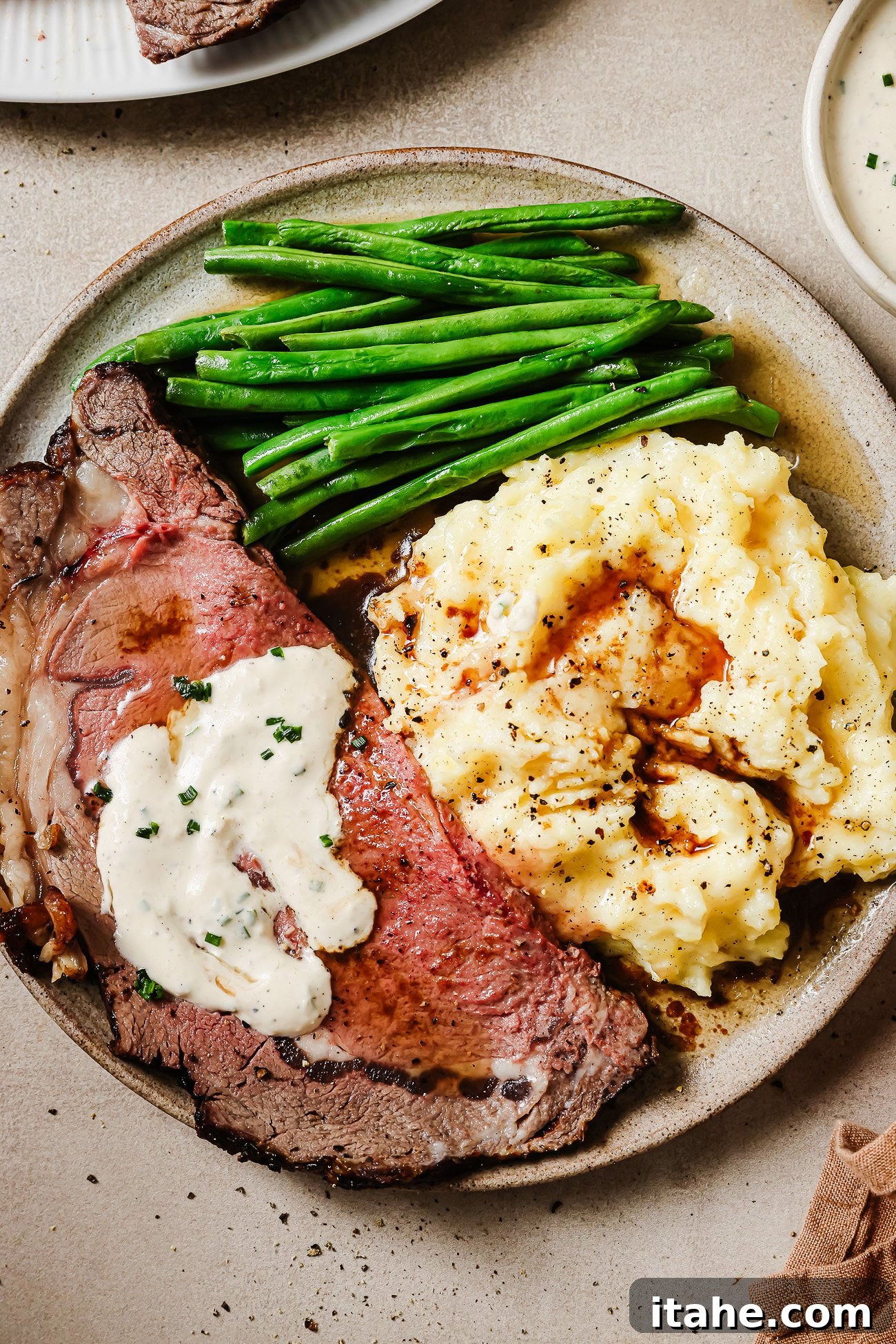
Unlock the secret to a truly unforgettable main course with the Reverse Sear Prime Rib method. This culinary technique ensures a perfectly cooked roast every single time, delivering impeccable doneness from one edge to the other, while masterfully locking in all those precious, flavorful juices. The result is an incredibly tender, succulent interior that practically melts in your mouth. Through a meticulous slow-roasting process, the meat develops a profound, rich flavor profile, culminating in a final high-heat sear that creates a magnificent, caramelized crust. This isn’t just a recipe; it’s a foolproof guide to serving a show-stopping prime rib that will be the undisputed centerpiece of any table. Whether you’re planning for holidays, family gatherings, or any special occasion, this method guarantees rave reviews and a truly memorable dining experience.
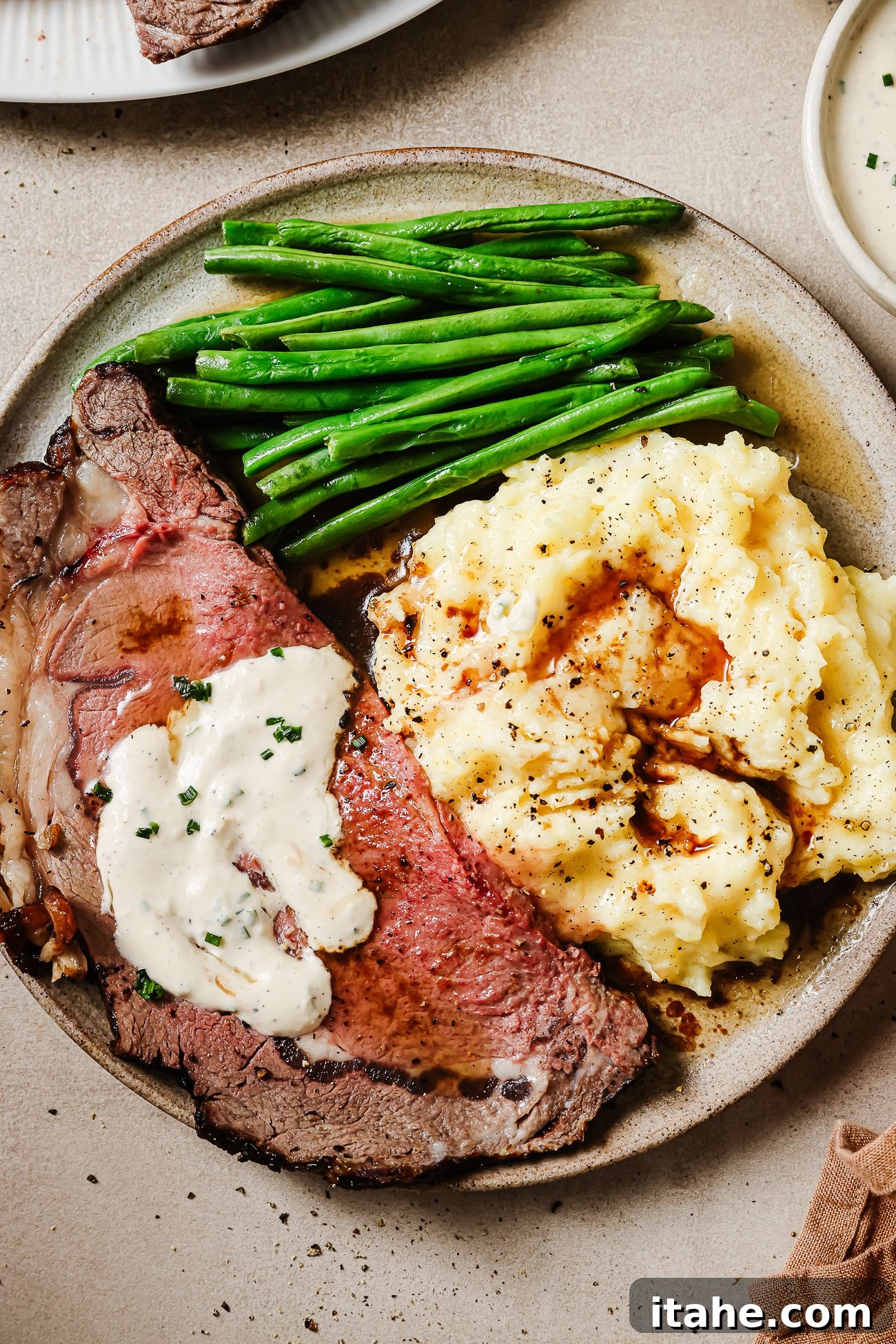
Why This Method Is a Game-Changer for Prime Rib
Few dishes evoke the grandeur and joy of a “holiday feast” quite like a beautifully roasted prime rib. Also revered as a standing rib roast, it stands as the ultimate centerpiece for celebratory dinners, right alongside classics like a succulent roasted turkey or an elegant beef tenderloin. While the thought of preparing such a magnificent cut of beef might seem daunting, the reverse sear method is designed to eliminate all guesswork, consistently guaranteeing flawless, restaurant-quality results in your home kitchen.
The brilliance of this technique lies in its two-stage cooking process. By beginning with thorough seasoning and then slowly roasting the prime rib at a low temperature, meticulously monitored with an oven-safe probe thermometer, we ensure an even internal temperature throughout the meat. This gentle initial cook allows the muscle fibers to relax, producing unparalleled tenderness. The process culminates with a quick, high-heat sear, which is where the magic happens, creating an irresistibly crispy, deeply browned crust that boasts incredible flavor and texture. This precise combination yields a roast that is not only perfectly crusted on the outside but also features an evenly rosy, tender interior from edge to edge. Each slice is infused with rich, beefy flavor, complemented by the aromatic blend of garlic, fresh herbs, and the umami depth of Worcestershire sauce, all without a single overcooked spot. Prepare to savor every bite!
Key Ingredients and Essential Notes
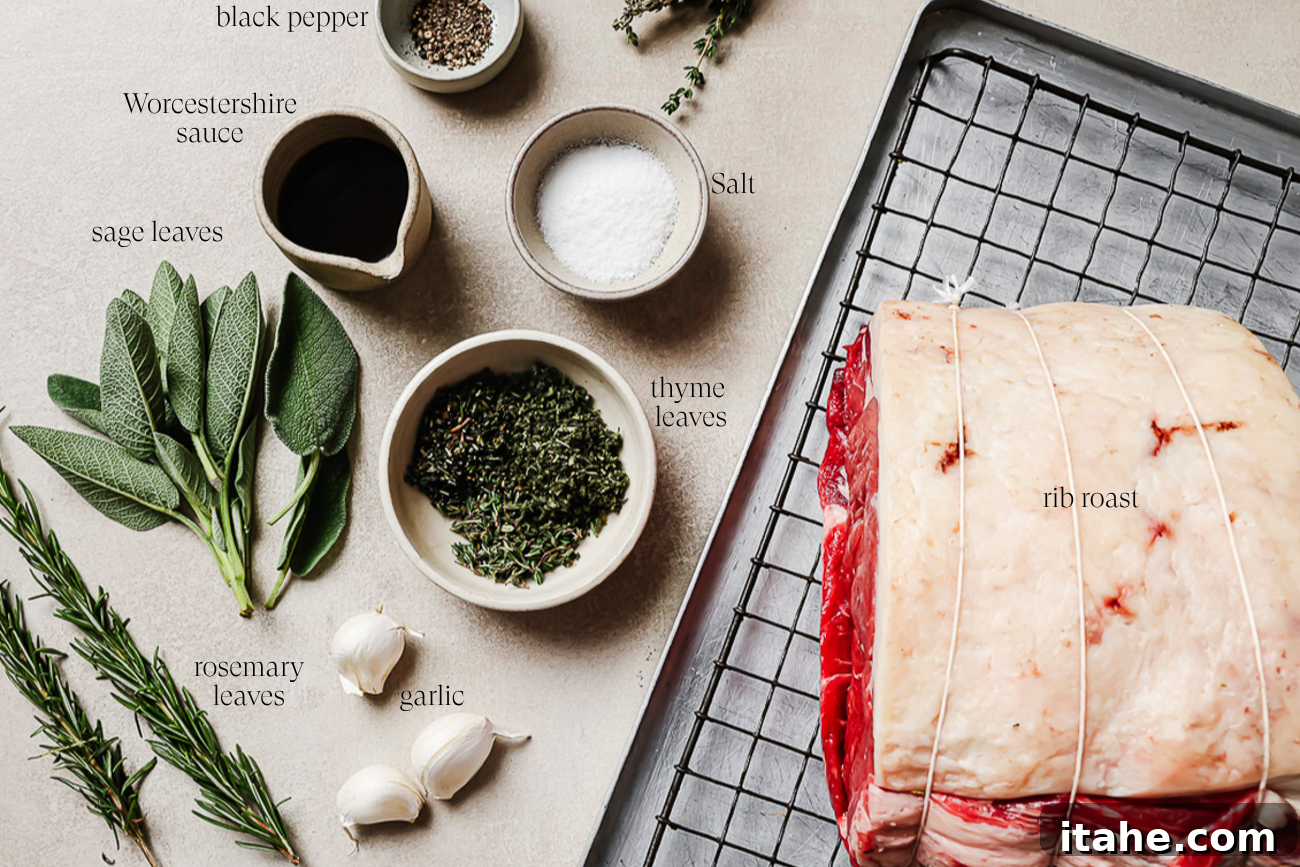
To achieve the pinnacle of prime rib perfection, selecting high-quality ingredients and understanding their roles is paramount. Below, you’ll find a detailed breakdown of what you’ll need and why each component is crucial. For a complete list of ingredients and their precise measurements, please refer to the comprehensive recipe card located at the bottom of this post.
Prime Rib Roast: The star of our show, a prime rib roast, demands attention. For the absolute best flavor and a stunning presentation, I wholeheartedly recommend opting for a bone-in prime rib. The bones aren’t just for show; they contribute an incredible richness to the meat during cooking and act as natural insulation, ensuring the roast remains incredibly juicy and tender. To simplify carving later without sacrificing the benefits of the bone, I typically ask my butcher to remove the bone and then tie it back onto the roast. When you’re at the butcher counter, seek out a roast with excellent marbling—those fine, white streaks of fat woven throughout the meat. This marbling is vital; as the roast cooks, this fat renders down, essentially self-basting the meat from within, resulting in that coveted buttery, melt-in-your-mouth texture.
Choosing the correct size of prime rib is crucial for feeding your guests without excess or shortage. To make your planning effortless, I’ve compiled a helpful chart below that outlines recommended roast sizes based on the number of people you’ll be serving.
| Number of People | Bone-In Prime Rib | Boneless Prime Rib |
|---|---|---|
| 2–3 people | 3–4 lb roast | 2–3 lb roast |
| 4–6 people | 5–6 lb roast | 4–5 lb roast |
| 7–8 people | 7–8 lb roast | 6–7 lb roast |
| 9–10 people | 9–10 lb roast | 7–8 lb roast |
It’s also important to note that if you opt for a boneless prime rib, the cooking time will differ. Bone-in roasts generally require a longer cooking duration because the bones act as a buffer, slowing the heat transfer to the center of the meat. For a roast of equivalent weight, a bone-in cut typically adds an additional 20–30 minutes to the cooking time. However, regardless of whether your roast is bone-in or boneless, the golden rule for perfect results is always to cook by internal temperature, not by time. Factors like the roast’s shape, fat content, bone density, and even your oven’s individual heating characteristics can significantly influence cooking times. This is precisely why an accurate meat thermometer is your most indispensable tool for achieving consistent perfection.
Worcestershire Sauce: More than just a condiment, Worcestershire sauce provides a foundational deep, savory, and complex flavor. It not only amplifies the meat’s natural umami notes but also acts as an excellent binder, helping the subsequent dry rub adhere effectively to the roast. Its distinctive tang and depth enhance the beef without overwhelming the delicate balance of herbs.
Garlic: Freshly minced garlic is a non-negotiable ingredient, infusing every bite with its warm, pungent, and aromatic essence. Minced garlic releases its powerful flavors more readily than sliced or crushed garlic, allowing it to seamlessly meld into the seasoning paste. This ensures that a perfect savory aroma permeates every succulent slice of prime rib.
Fresh Rosemary, Sage, and Thyme: This classic triumvirate of fresh herbs is the secret to the roast’s quintessential holiday aroma and flavor profile. Rosemary contributes an earthy, slightly piney, and robust note. Sage introduces a subtle peppery warmth and a herbaceous depth that beautifully complements beef. Thyme, with its gentle, slightly floral freshness, serves to harmoniously tie all these flavors together. After extensive testing, I’ve found this specific balance of herbs provides just the right depth and complexity without ever overpowering the magnificent natural taste of the beef itself.
Kosher Salt: Salt is not merely a seasoning; it’s a critical component in the dry brining process. Kosher salt, with its larger crystal size, is ideal for drawing out the meat’s natural moisture, which then reabsorbs, intensifying the flavor and tenderizing the beef. Crucially, it also aids in developing that exquisite, crispy crust during the high-heat sear. If you find yourself using finer table salt, remember to adjust the quantity, reducing it to about 1½ teaspoons, as it is significantly more concentrated by volume.
Essential Equipment for a Perfect Roast
Achieving a truly perfect reverse-sear prime rib isn’t just about the ingredients; it also hinges on having the right tools. These simple, yet crucial, pieces of equipment will empower you to cook your roast evenly, monitor its temperature with precision, and carve it like a seasoned professional, ensuring flawless results every single time.
- Large Rimmed Baking Sheet + Sturdy Wire Rack (or a shallow roasting pan): This setup is fundamental. The wire rack elevates the roast, allowing hot air to circulate uniformly around all sides. This even airflow is key to consistent cooking and helps develop a superior crust. The rimmed baking sheet underneath catches all the flavorful drippings, making cleanup significantly easier and providing the base for potential gravies or au jus.
- Oven-Safe Probe Thermometer: This is arguably the most vital tool in your arsenal for reverse-searing. An oven-safe probe thermometer allows you to continuously monitor the internal temperature of your roast without opening the oven door. This precision eliminates all guesswork, guaranteeing that your prime rib reaches your desired level of doneness with absolute accuracy.
- Paper Towels and Aluminum Foil: Paper towels are essential for thoroughly patting the roast dry before seasoning, a critical step for achieving a crispy, flavorful crust. Aluminum foil serves two purposes: it can be used to loosely tent the roast during its crucial resting period, which helps redistribute juices and keeps the meat warm, and it can also line your baking sheet for easier cleanup.
- Sharp Carving Knife + Cutting Board with Juice Groove: After all your careful preparation, a sharp carving knife is indispensable for making clean, effortless slices that preserve the integrity and tenderness of the meat. A cutting board equipped with a juice groove is equally important, as it efficiently collects all those delicious, savory juices, preventing them from spilling and allowing you to utilize them for serving.
Step-by-Step Guide: Crafting the Perfect Reverse Sear Prime Rib
Follow these detailed steps to prepare a magnificent prime rib that will impress even the most discerning palates. Precision and patience are your allies in this culinary endeavor.
1. Prepare the Roast
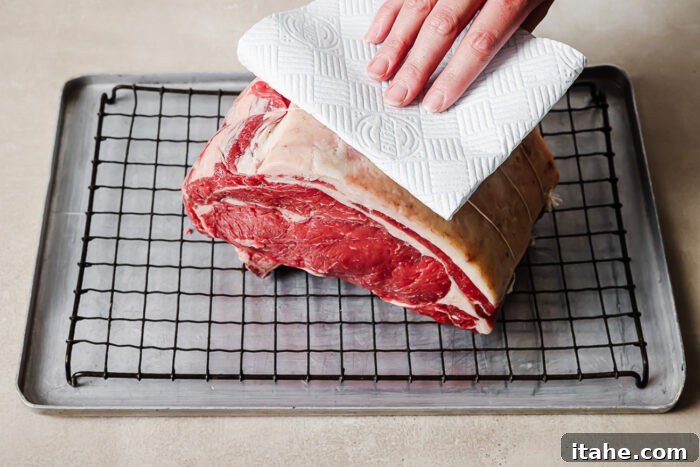
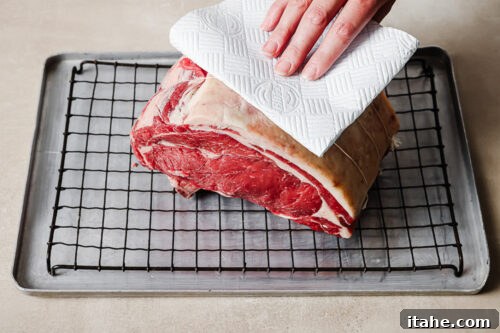
Step 1: If your butcher has already removed and tied the bone back on, ensure it remains tied for cooking. Thoroughly pat the entire prime rib roast dry with paper towels. Removing excess surface moisture is critical for achieving a crisp, flavorful crust during the searing process.
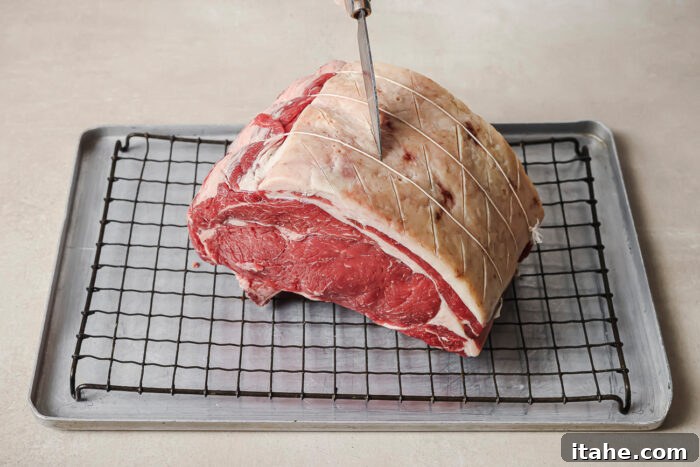
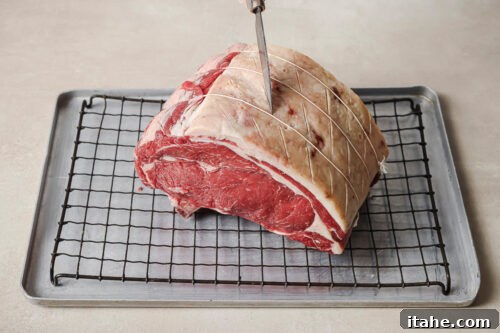
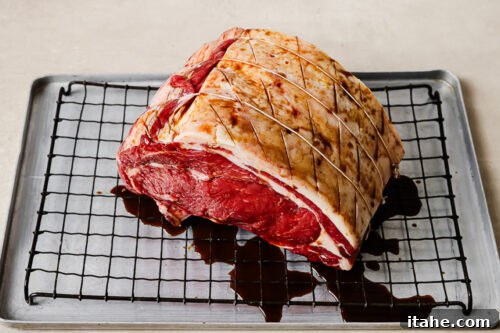
Step 2: With a sharp knife, gently score the fat cap of the roast. Make shallow cuts, just deep enough to mark the surface of the fat without penetrating into the meat below. This technique allows the seasonings to better absorb into the fat and helps it render more evenly during cooking, enhancing both flavor and texture.
2. Season and Dry Brine for Optimal Flavor
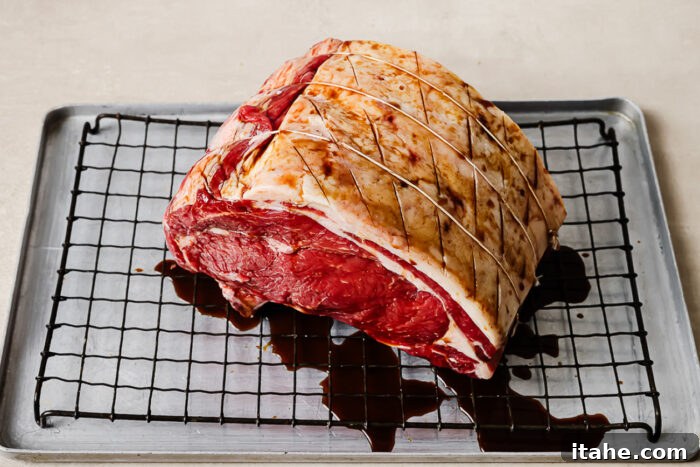
Step 3: Generously rub the entire surface of the prime rib with Worcestershire sauce, ensuring it’s evenly coated. Set the roast aside briefly.
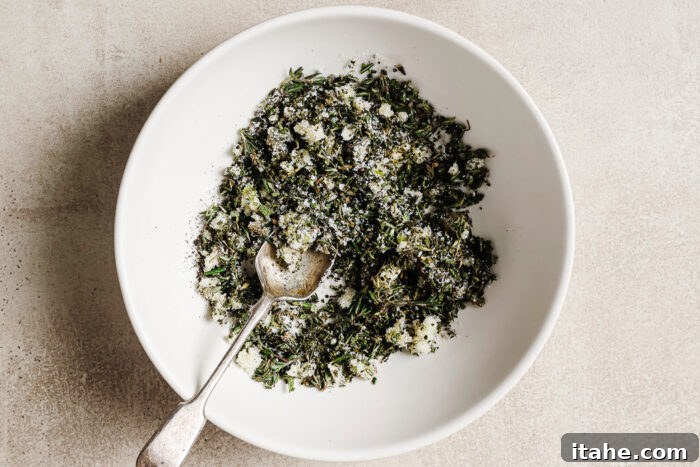
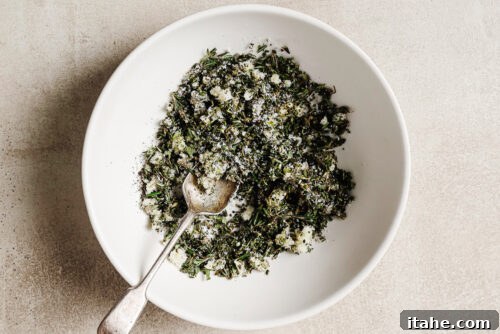
Step 4: In a small bowl, combine the minced garlic, finely chopped fresh rosemary, sage, thyme, kosher salt, and freshly ground black pepper. Mix these ingredients thoroughly to create a fragrant, cohesive seasoning paste.
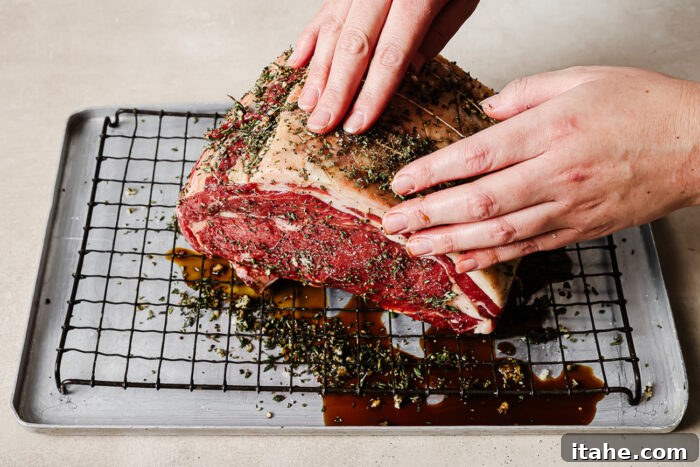
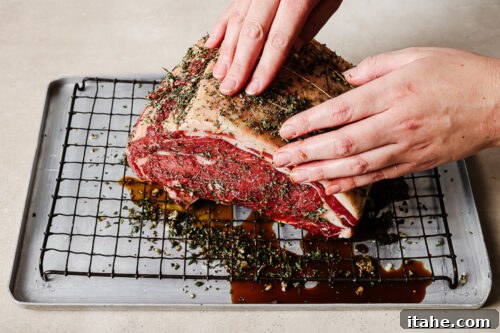
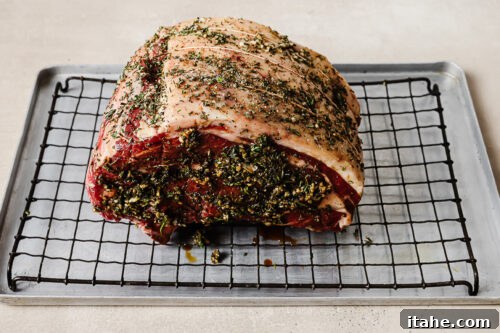
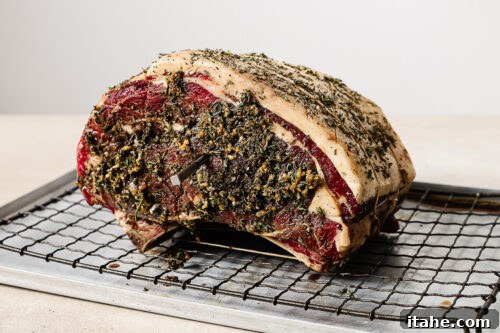
Step 5: Vigorously rub the prepared seasoning mixture over all sides of the prime rib roast, pressing it firmly into the scored fat and ensuring every part is well-coated. This forms a flavor-packed crust. If the string holding the bones loosened during this process, re-tie the roast securely with kitchen twine.
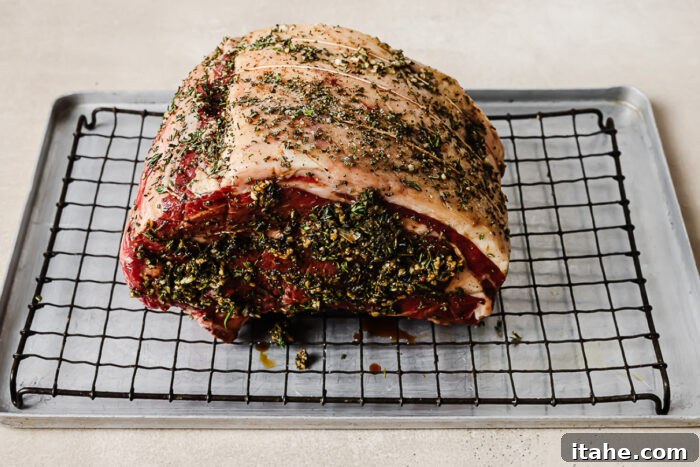
Step 6: Place the seasoned roast on a wire rack, which should be set over a foil-lined baking sheet. This setup allows for optimal air circulation. Transfer the roast to the refrigerator and chill, uncovered, for 12 to 24 hours. This crucial dry brining period allows the salt to penetrate deeply, enhancing flavor and tenderness, and helps to dry the surface, which is essential for developing a superior crust.
3. Prepare for Slow Roast (Reverse Sear Part 1)
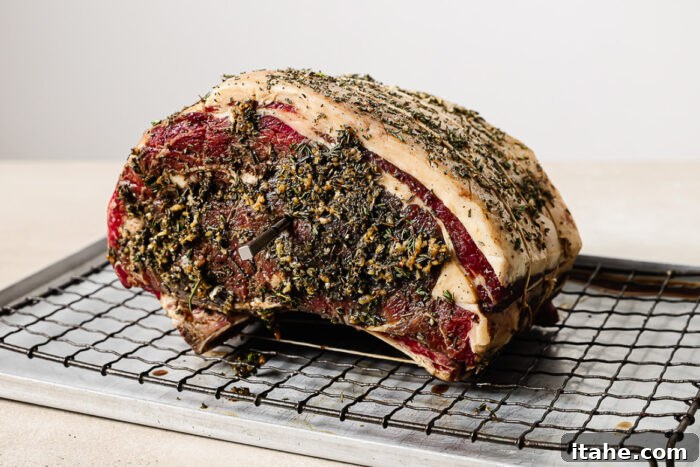
Step 7: One hour before you plan to roast, remove the prime rib from the refrigerator and allow it to come to room temperature. This helps ensure more even cooking. While it rests, preheat your oven to a low temperature of 250°F (121°C). Once the roast is out, insert an oven-safe probe thermometer into the thickest part of the meat, being careful to avoid hitting any bone or significant fat pockets, as this can give an inaccurate reading.
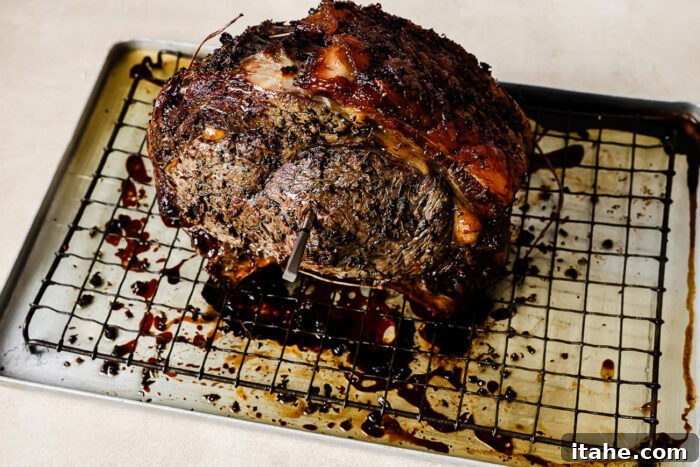
Step 8: Place the prime rib, still on its wire rack and baking sheet, into the preheated 250°F (121°C) oven. Roast slowly until the internal temperature of the meat reaches 115°F (46°C) for a perfect medium-rare doneness. This initial slow roasting typically takes approximately 3 to 3½ hours, though exact times can vary based on your oven and the roast’s dimensions. Once it reaches the target temperature, remove the roast from the oven, tent it loosely with aluminum foil, and let it rest for a critical 30 minutes. During this resting period, increase your oven’s temperature to a high-heat setting of 500°F (260°C) for the final sear.
4. High-Heat Sear (Reverse Sear Part 2) & Serve
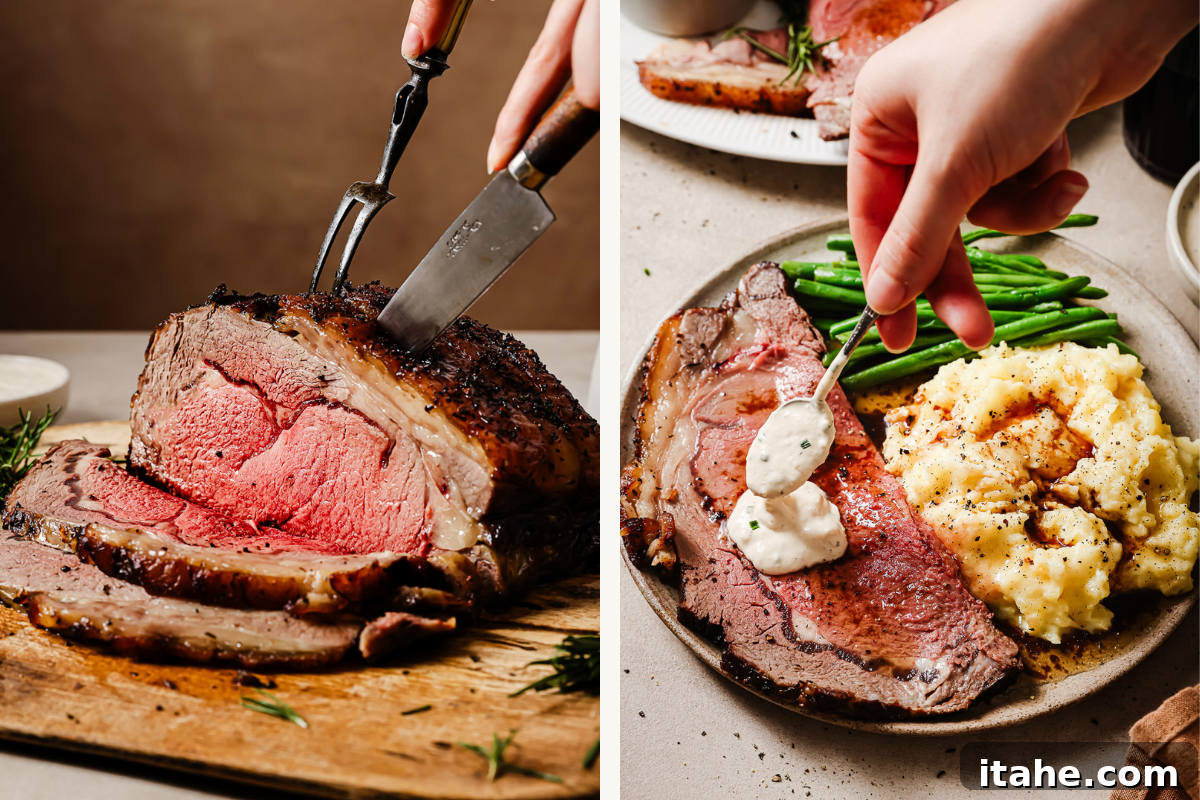
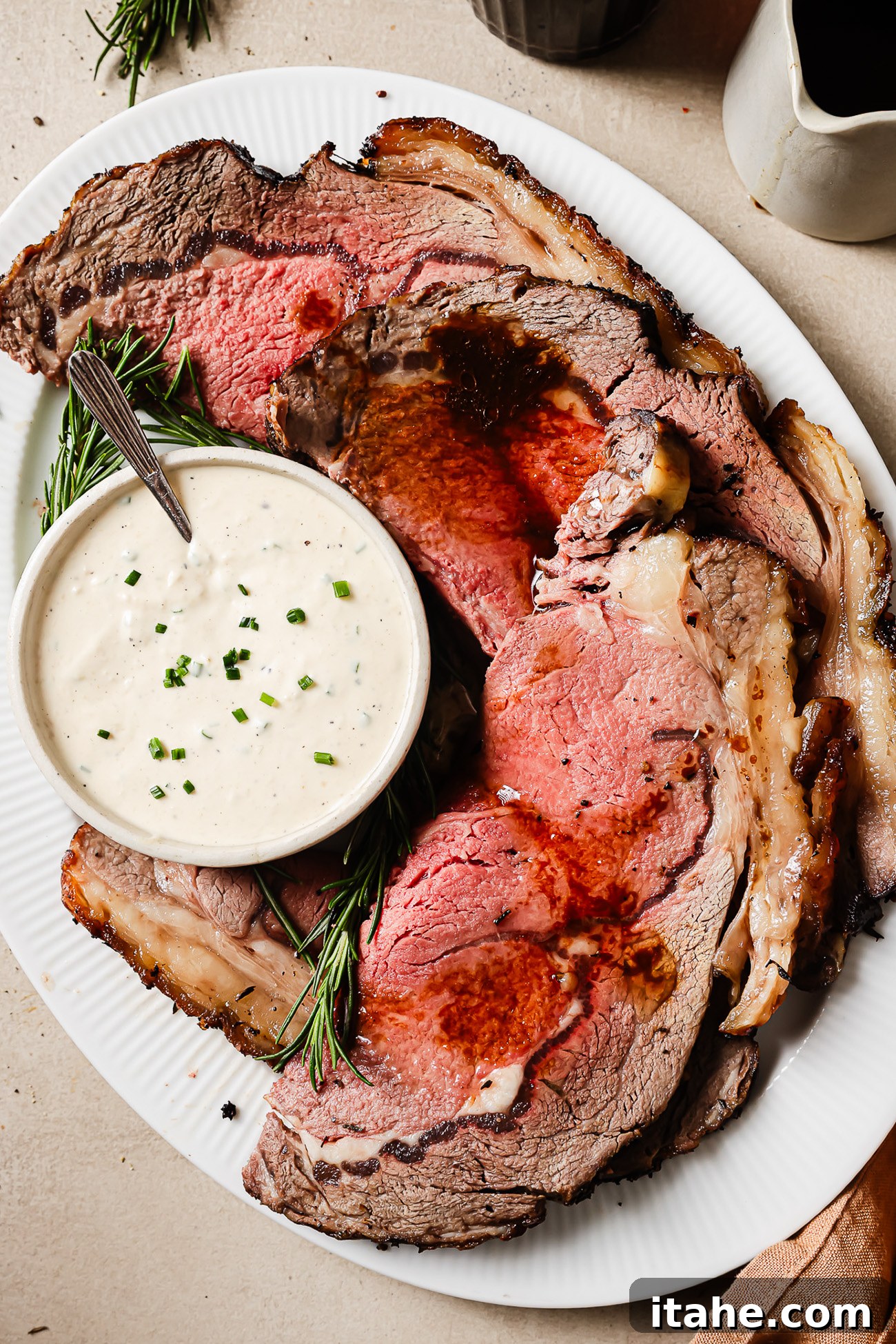
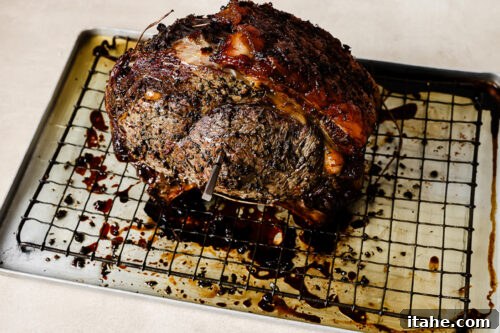
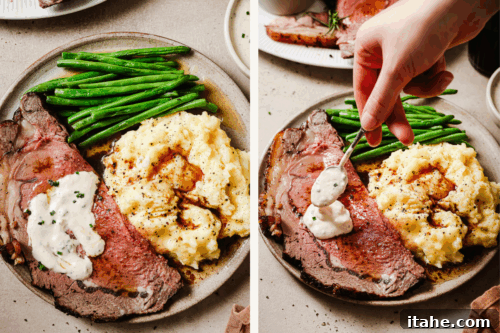
After the resting period and once your oven has reached the scorching 500°F (260°C), return the prime rib to the hot oven, ensuring it remains uncovered. Cook for an additional 10–15 minutes, or until the internal temperature reaches your desired final doneness, typically 130–135°F (54–57°C) for a luscious medium-rare. During this high-heat blast, the exterior will rapidly caramelize, developing that stunning, deeply browned, and crispy crust. Watch it closely, as temperatures can rise quickly. Once it hits your target temperature, no further resting is required – the initial rest already took care of juice redistribution. Carefully cut the kitchen string, remove the bones if they were tied on, and slice the roast against the grain into beautiful ½–1-inch thick slices. Serve your impeccably cooked prime rib immediately with your favorite complementary sides and sauces. I particularly love serving it with a zesty horseradish sauce. Your guests will undoubtedly adore it!
Reverse Sear Prime Rib Temperature Chart: Your Guide to Perfect Doneness
As emphasized, cooking by accurate internal temperature rather than solely by time is the unequivocal secret to a flawlessly cooked prime rib. Given that every roast is unique in its size and fat content, and every oven heats a little differently, this chart serves as your definitive guide. It will help you know precisely when to remove your roast from the oven after the initial slow cook and what final temperature to aim for after the crucial high-heat sear, ensuring your beef is cooked exactly to your preference.
| Doneness | Pull from Oven | Final Temp (After Sear) | Color / Texture | Notes |
|---|---|---|---|---|
| Rare | 110°F / 43°C | 120–125°F / 49–52°C | Deep red, very juicy | Cool center, soft texture |
| Medium-Rare (best) | 115°F / 46°C | 130–135°F / 54–57°C | Warm red center, tender | Most flavorful & juicy |
| Medium | 125°F / 52°C | 140–145°F / 60–63°C | Pink throughout | Slightly firmer, still juicy |
| Medium-Well | 135°F / 57°C | 150–155°F / 65–68°C | Slightly pink center | Leaner, less juicy |
| Well Done | 140°F / 60°C | 160°F / 71°C+ | Mostly brown | Least juicy; not recommended |
Pro Tip: Understanding Carryover Cooking and Resting
It’s critical to account for “carryover cooking” during the resting phase. When you remove the roast from the oven after the initial slow cook, its internal temperature will continue to rise by about 5–10°F (3–6°C) during the 30-minute rest, especially while the oven preheats to 500°F (260°C). This phenomenon is due to residual heat distributing throughout the meat. Always rely on your probe thermometer and aim for the “Pull from Oven” temperatures listed in the table. This ensures that after the resting period and the final high-heat sear, your prime rib will reach its desired doneness perfectly.
What to Serve with Your Magnificent Prime Rib
A show-stopping prime rib deserves equally impressive and thoughtfully chosen accompaniments. I adore serving prime rib with a medley of comforting, classic side dishes that beautifully balance the richness of the beef. Here are some of my favorite pairings that truly complement this regal cut:
- Creamy Mashed Potatoes– Indulgent, buttery mashed potatoes are the quintessential comfort food. Their smooth texture and rich flavor provide the perfect canvas to soak up all those delectable au jus drippings from the roast.
- Potatoes Au Gratin – For an even more decadent side, thinly sliced potatoes baked in a luscious cream and cheese sauce are an absolute dream. This rich, bubbly casserole is a true holiday favorite that elevates any meal.
- Roasted Brussels Sprouts – Transform often-maligned Brussels sprouts into a craveable side by roasting them until crispy on the outside and tender within. Their slightly bitter, savory flavor, often enhanced with bacon, provides a wonderful contrast to the richness of the beef.
- Crisp Green Beans – Whether steamed, roasted, or air-fried, light and crisp green beans offer a refreshing, vibrant counterpoint to the substantial prime rib. They add a fresh element and a delightful texture.
- Exquisite Sauces – While reverse-seared prime rib is so intensely flavorful and juicy that it truly shines on its own, a well-chosen sauce can elevate it to an entirely new dimension. Drizzle each succulent slice with a bold, creamy Horseradish Sauce for a spicy kick, or complement it with a rich, savory Prime Rib Au Jus made from the pan drippings for that classic steakhouse experience. For an extra touch of indulgence, consider a simple yet luxurious Garlic Butter, a creamy Garlic Aioli, or a velvety homemade Gravy Without Drippings for a truly melt-in-your-mouth finish.
Expert Tips for the Best Reverse Sear Prime Rib
Position the Roast Bone-Side Down While Roasting: This isn’t just a suggestion; it’s a vital technique! If you’re using a bone-in roast, the bones serve as an ingenious, natural roasting rack. They elevate the meat slightly, allowing hot air to circulate freely and evenly around the entire surface of the roast. Furthermore, the bones protect the bottom of the roast from overcooking and help to keep all those delicious juices locked within the meat, rather than pooling underneath.
Monitor the Internal Temperature Scrupulously During the High-Heat Sear: The final searing stage at 500°F (260°C) is incredibly fast and efficient. During this period, the internal temperature of the roast can climb very rapidly. Therefore, it is absolutely essential to keep a vigilant eye on your probe thermometer to prevent accidentally overshooting your desired target doneness. A few minutes too long can change a perfect medium-rare to a less desirable medium-well.
Do Not Cover the Roast While Cooking: Resist the urge to cover your prime rib with foil during the slow roasting phase. Leaving the roast uncovered allows its surface to gradually dry out. This slightly drier exterior is precisely what you want, as it creates the optimal conditions for developing that magnificent, golden, and deeply flavorful crust when it comes time for the high-heat sear.
Reverse Sear Prime Rib – Slow Roasted & Seared for Perfection
Servings: 8 people
Prep Time: 15 minutes
Dry Brine: 1 day
Cook Time: 3 hours 40 minutes
Total Time: 1 day 3 hours 55 minutes
The Reverse Sear Prime Rib method delivers perfectly even doneness from edge to edge, locking in all those flavorful juices for a tender, melt-in-your-mouth interior. The slow roast builds rich flavor, while the final high-heat sear creates a beautifully caramelized crust. It’s the foolproof way to serve a show-stopping prime rib. Perfect for holidays, gatherings, and any special occasion.
Ingredients
- 6 lbs bone-in prime rib roast (have butcher remove the bone and tie it back on – easier to carve but keeps flavor)
- 3 tablespoons Worcestershire sauce
- 3 large garlic cloves (minced)
- 1 tablespoon fresh rosemary leaves (finely chopped)
- 1 tablespoon fresh sage leaves (finely chopped)
- 1 tablespoon fresh thyme leaves
- 1 tablespoon kosher salt (Windsor or Morton’s brand*)
- ½ tablespoon black pepper
Instructions
Prepare the Roast:
-
If your butcher removed and tied the bone back on, leave it tied. Pat the entire roast dry with paper towels.

-
Lightly score the fat cap with small shallow cuts (don’t cut into the meat). This helps seasoning penetrate.
Season and Dry Brine:
-
Rub the roast all over with Worcestershire sauce.
-
In a small bowl, mix garlic, rosemary, sage, thyme, salt, and pepper.
-
Rub the seasoning mixture evenly over all sides of the roast. If the string loosened, tie the roast again with kitchen twine.
-
Place the roast on a wire rack set inside a baking sheet. (Optional but helpful: Line or wrap the baking sheet with aluminum foil before placing the rack on top. This makes cleanup easier and helps catch any drips.)
-
Leave uncovered in the fridge overnight (at least 12 hours, up to 24 hours). This dry brine seasons deeply and dries the surface for a better crust.
Remove From Fridge & Insert Thermometer:
-
Take roast out of the fridge 1 hour before cooking to take the chill off. Insert a probe thermometer into the center of the thickest part (avoid bone and fat).
Slow Roast (Reverse Sear Part 1):
-
Preheat oven to 250°F (121°C). Place the roast (still on the rack set inside the foil-lined baking sheet) in the center of the oven.
-
Roast until the internal temperature reaches 115°F (46°C) for medium-rare. This usually takes about 3 to 3.5 hours, but time may vary by oven and roast shape. Keep in mind that the beef will keep cooking a bit even after it’s out of the oven, thanks to residual heat.
Rest the Roast (Very Important):
-
Remove roast from the oven, tent it loosely with aluminum foil and let it rest for 30 minutes while the oven preheats. Resting prevents juices from pushing out during the high-heat sear.
-
Increase oven temperature to 500°F (260°C).
High-Heat Sear (Reverse Sear Part 2)
-
Once the oven is preheated, return the roast (without the foil on top) and cook until it reaches: 130°F (54°C) internally for medium-rare. This takes about 5-10 minutes. Please, watch carefully because the temperature rises quickly during this step.
-
Once it’s done cooking, you can serve it immediately, no resting needed. To carve, cut the kitchen string and remove the bone section. Slice the roast against the grain into ½–1 inch slices. Serve immediately with your favorite sides and sauces.
Notes
*If using table salt, use 1 ½ teaspoons (much stronger).
Refrigerate: Let the prime rib cool completely, then store leftovers in an airtight container or wrap them tightly in foil or plastic wrap. Keep in the fridge for up to 4 days.
Freeze: For longer storage, slice the roast and wrap each piece tightly in plastic wrap, then place them in a freezer-safe bag or container. It will keep well for up to 3 months.
Reheat: To keep it juicy, reheat gently. Place slices in a baking dish with a splash of beef broth, cover with foil, and warm in a 275°F (135°C) oven until just heated through (about 10–15 minutes). Avoid the microwave. It can make the meat tough and dry.
Tip: Always store and reheat your prime rib before adding sauce or gravy. Add it right before serving to keep the flavors fresh and the texture perfect.
Nutrition
Serving: 1/8, Calories: 411kcal, Carbohydrates: 2g, Protein: 57g, Fat: 19g, Cholesterol: 138mg, Sodium: 575mg, Potassium: 682mg, Fiber: 1g, Sugar: 1g, Calcium: 4mg, Iron: 22mg
Nutrition information is automatically calculated, so should only be used as an approximation.
Did You Make This?
Follow @primaverakitchen on Instagram, snap a photo, and tag it #primaverakitchen. We’d love to see your recreation.