
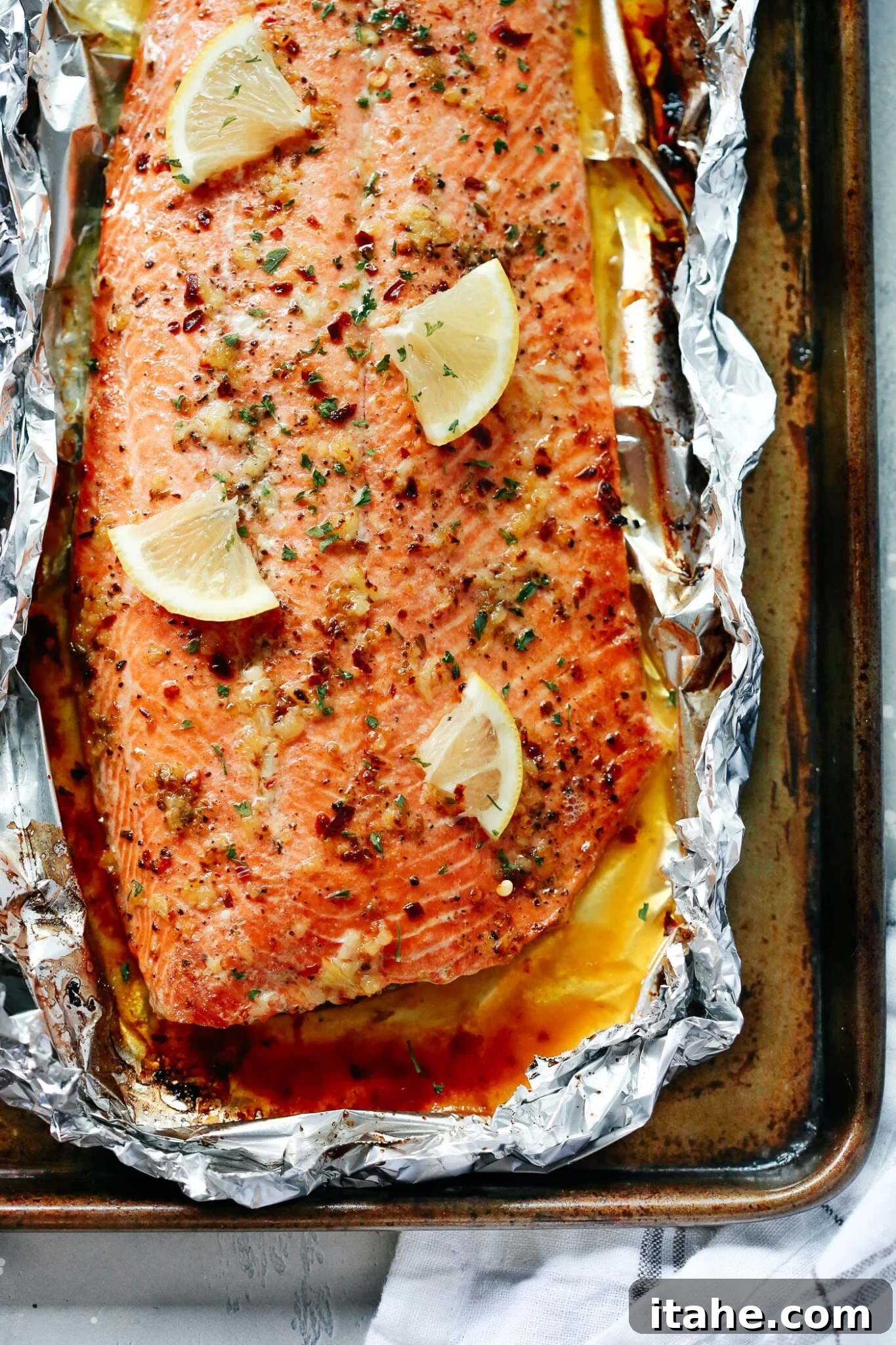
Easy Garlic Butter Baked Salmon in Foil: Your Go-To Weeknight Recipe
Discover the ultimate secret to a perfectly moist, flaky, and incredibly flavorful salmon dinner – our foolproof Baked Salmon in Foil recipe! This isn’t just another fish recipe; it’s a culinary staple that transforms fresh salmon into a delicious masterpiece with minimal effort and maximum taste. Infused with bright lemon juice, rich melted butter, and aromatic fresh garlic, along with a carefully selected blend of spices, this dish highlights the natural, delicate flavors of salmon in every bite. Wrapped snugly in foil, the fish bakes to tender perfection, locking in moisture and ensuring a melt-in-your-mouth experience. Best of all, this no-fuss, no-mess meal is ready in under 30 minutes, making it the ideal solution for busy weeknights when you crave something both healthy and satisfying. The foil packet also means cleanup is an absolute breeze, solidifying its place as a family favorite that you’ll want to make again and again.
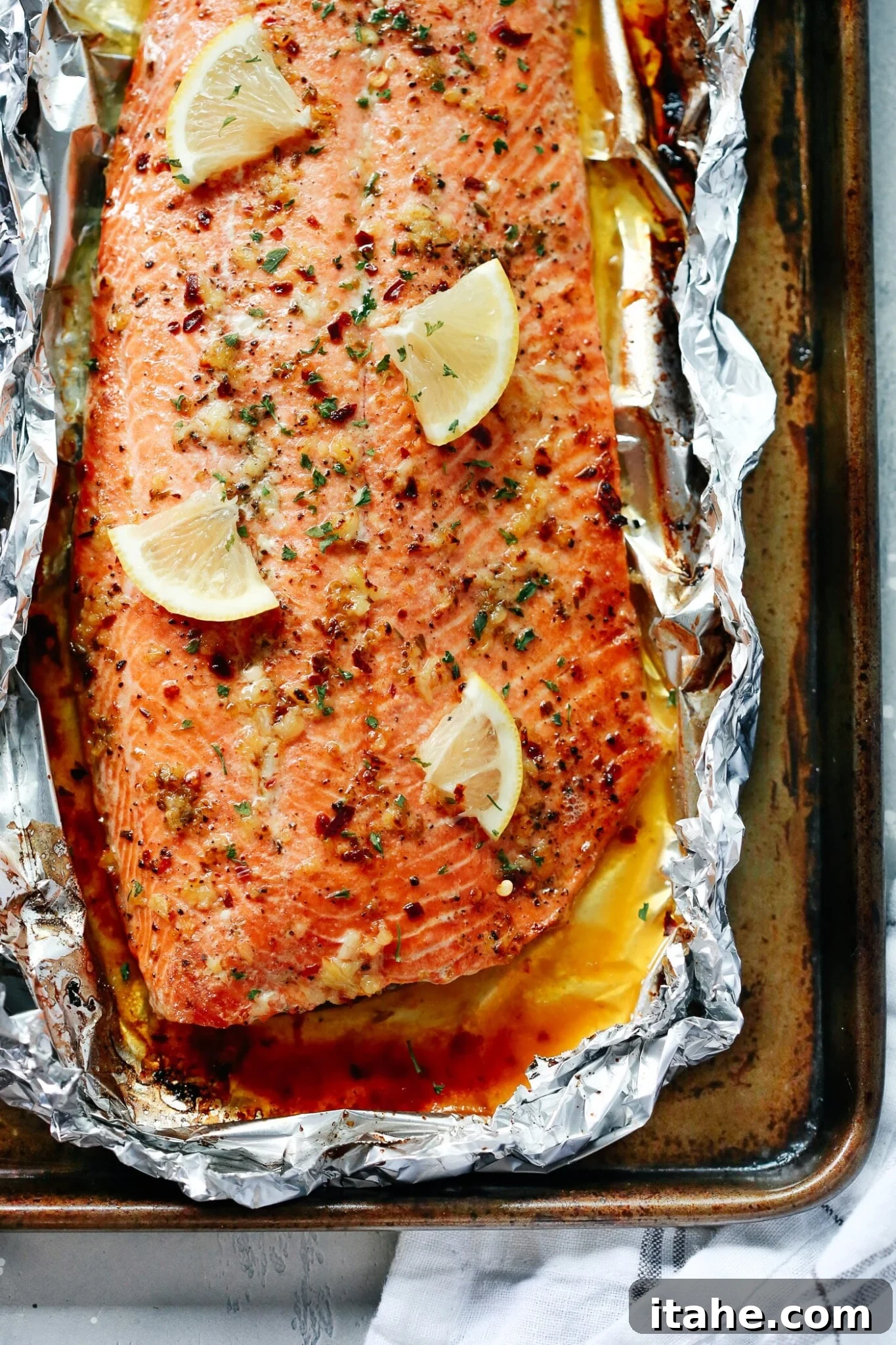
For years, this baked salmon recipe has been a star in my kitchen. Each time I serve it, my family’s requests for seconds are immediate and enthusiastic, leading them to affectionately crown me the “Queen of Salmon Recipes.” It’s a title I wear with pride, fueled by a passion for perfecting new salmon dishes for both my loved ones and my dedicated readers. I believe that healthy eating should never sacrifice flavor or convenience, and this recipe truly embodies that philosophy.
Here at Primavera Kitchen, we celebrate the incredible versatility of salmon. Our extensive collection features over 25 salmon recipes designed to delight every palate and cater to various cooking styles. Whether you’re in the mood for the crisp simplicity of a Pan-Seared Salmon, the sweet and savory notes of Honey Garlic Salmon, the quick char of Broiled Salmon, the family-friendly fun of Air Fryer Salmon Bites, or the hearty satisfaction of Salmon Steaks—you’ll find a recipe that perfectly fits your culinary cravings. But among these diverse options, this Baked Salmon in Foil remains a timeless classic, consistently delivering on taste, texture, and pure cooking joy.
What sets this particular baked salmon recipe apart is its unbeatable combination of deliciousness, ease, and tender flakiness. The garlic butter and lemon sauce permeate every fiber of the fish, creating a symphony of flavors that is both bright and deeply satisfying. Cooking it in foil not only ensures that the salmon stays incredibly moist and succulent but also simplifies the entire process from prep to cleanup. It’s the kind of meal that makes you feel like a gourmet chef without any of the associated stress or mess.
To complete your delightful meal, pair this baked salmon with some vibrant and equally easy side dishes. Consider serving it alongside crisp Roasted Parmesan Green Beans, perfectly tender Air Fryer Broccoli, creamy Mediterranean Mashed Potatoes, elegant roasted asparagus, or a fluffy bed of Perfectly Cooked Rice. These pairings not only complement the rich flavors of the salmon but also contribute to a well-rounded and nutritious dinner.
Essential Ingredients for Perfect Baked Salmon
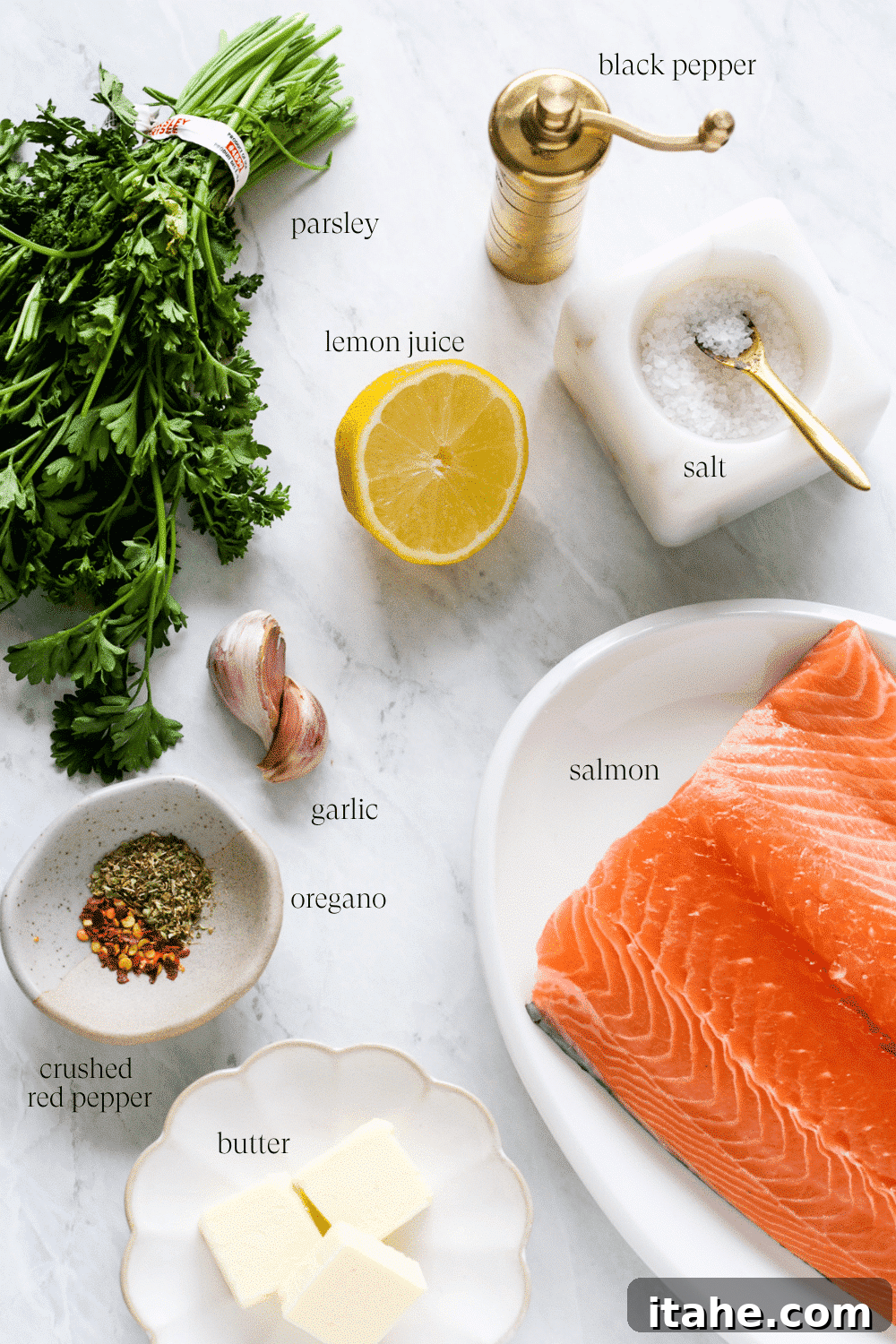
Crafting the perfect baked salmon begins with selecting high-quality ingredients. Each component in this recipe plays a crucial role in developing the rich, delicate flavors and tender texture that make this dish a standout.
Premium Salmon Fillet – After countless culinary experiments, I’ve learned that the foundation of an exceptional salmon dish lies in the quality of the fish itself. For its superior taste, firm texture, and commitment to environmental health, wild-caught salmon is always my preferred choice. Look for vibrant color and a fresh, ocean-like scent, not overtly “fishy.” Opting for a thick, evenly cut fillet will ensure consistent cooking and a magnificent presentation. Salmon is also a powerhouse of nutrition, rich in omega-3 fatty acids, protein, and essential vitamins like D and B12, making it a fantastic choice for a healthy diet.
Fresh Lemon Juice and Garlic – The dynamic duo of fresh lemon and garlic is what truly elevates this salmon. I’ve rigorously tested this recipe with both fresh and bottled lemon juice, and the difference is undeniable: fresh lemon juice provides an unparalleled bright, zesty tang that awakens the palate and cuts through the richness of the fish. Similarly, freshly minced garlic infuses the melted butter with an irresistible, pungent aroma and deep flavor that pre-minced versions simply can’t match. These natural ingredients are key to creating that vibrant, irresistible sauce.
Melted Butter – While other fats can be used, melted butter is my top pick for achieving that luscious, creamy texture and enhancing salmon’s natural flavor profile. It forms the base of our savory garlic butter sauce, which not only keeps the fish incredibly moist but also adds a luxurious richness. For those seeking alternatives, olive oil can be a lighter choice, or ghee for a similar rich flavor with a higher smoke point.
Harmonious Seasoning Blend – My go-to spice blend for this baked salmon includes kosher salt, freshly ground black pepper, dried oregano, and a touch of crushed red pepper for a subtle, delightful kick. This combination creates a well-rounded flavor that complements the salmon without overpowering it. However, the beauty of this recipe lies in its adaptability. I’ve also found that smoked paprika, garlic powder, dried thyme, or a classic Italian seasoning blend work beautifully, allowing you to customize the flavor profile to your personal preference. Don’t be afraid to experiment with your favorite herbs and spices!
How to Choose the Best Salmon!
“Fresh” Isn’t Always Fresh
Unless you’re sourcing directly from a local fisherman or a high-end seafood market, the “fresh” salmon displayed on ice might have traveled a considerable distance. Often, frozen salmon is a superior choice, as it’s typically flash-frozen at sea shortly after being caught, effectively preserving its peak freshness, texture, and nutritional value. Don’t shy away from the freezer aisle!
Pick Your Star Players
When prioritizing superior flavor and quality, King (Chinook), Sockeye, and Coho salmon varieties truly shine. Look for fillets with bright, vibrant pink or red flesh and visible marbling, which indicates a higher fat content and, consequently, a richer, more tender eating experience. These varieties are often considered the real MVPs of the seafood counter for their distinct taste and texture.
Wild Is the Way to Go
Wild-caught salmon not only boasts a more pronounced, natural flavor but also displays a stunning, vibrant color that farmed salmon often lacks. Beyond aesthetics and taste, wild salmon typically offers a leaner profile and is free from the antibiotics and potential pollutants sometimes associated with farmed fish. Choosing wild-caught supports healthier ecosystems and provides a cleaner, more robust product for your plate.
How To Make Baked Salmon: Step-by-Step Guide
Preparing this exquisite baked salmon is incredibly straightforward. Follow these simple steps for a truly effortless and delicious meal:
- If using frozen salmon, thaw it thoroughly. The best method is to transfer it to the refrigerator overnight, placing it on a plate to catch any condensation. For a quicker thaw, submerge the sealed salmon in a bowl of cold water; it should be ready in about an hour, depending on its thickness.
- Preheat your oven to 400ºF (200ºC). Prepare a sturdy baking sheet by lining it with a sheet of aluminum foil. Ensure the foil is large enough to comfortably wrap and seal your salmon fillet completely.
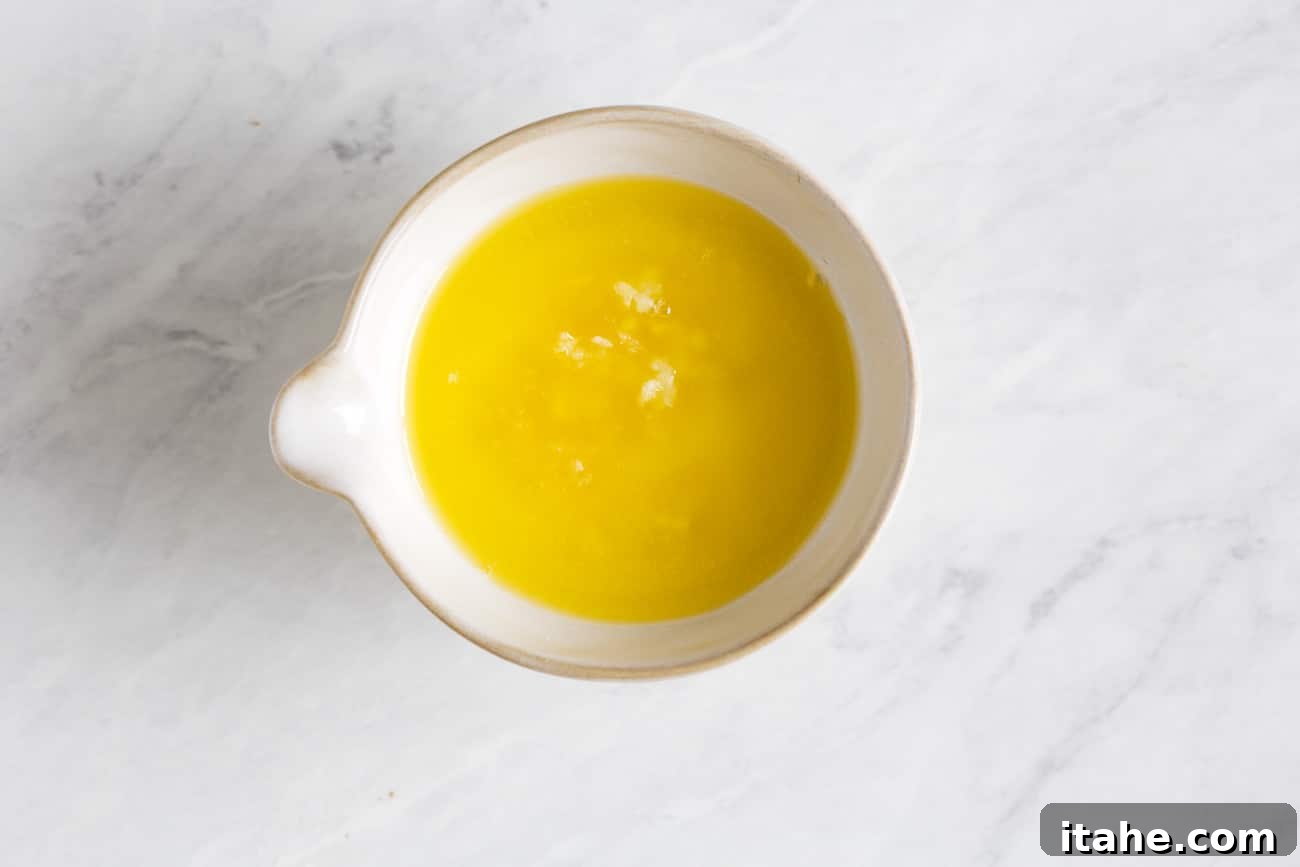
- In a small bowl, combine the fresh lemon juice, minced garlic, and melted butter. Whisk these ingredients together until they are well integrated and form a fragrant, golden mixture. This will be the flavorful sauce that bathes your salmon.
- Retrieve the salmon from the fridge. Pat it thoroughly dry with paper towels to remove any excess moisture. This step is crucial for achieving better searing (if broiling) and ensuring the seasonings adhere well. Place the salmon fillet, skin side down, onto the center of your prepared foil-lined baking sheet. Evenly pour the fragrant butter mixture over the entire surface of the salmon.
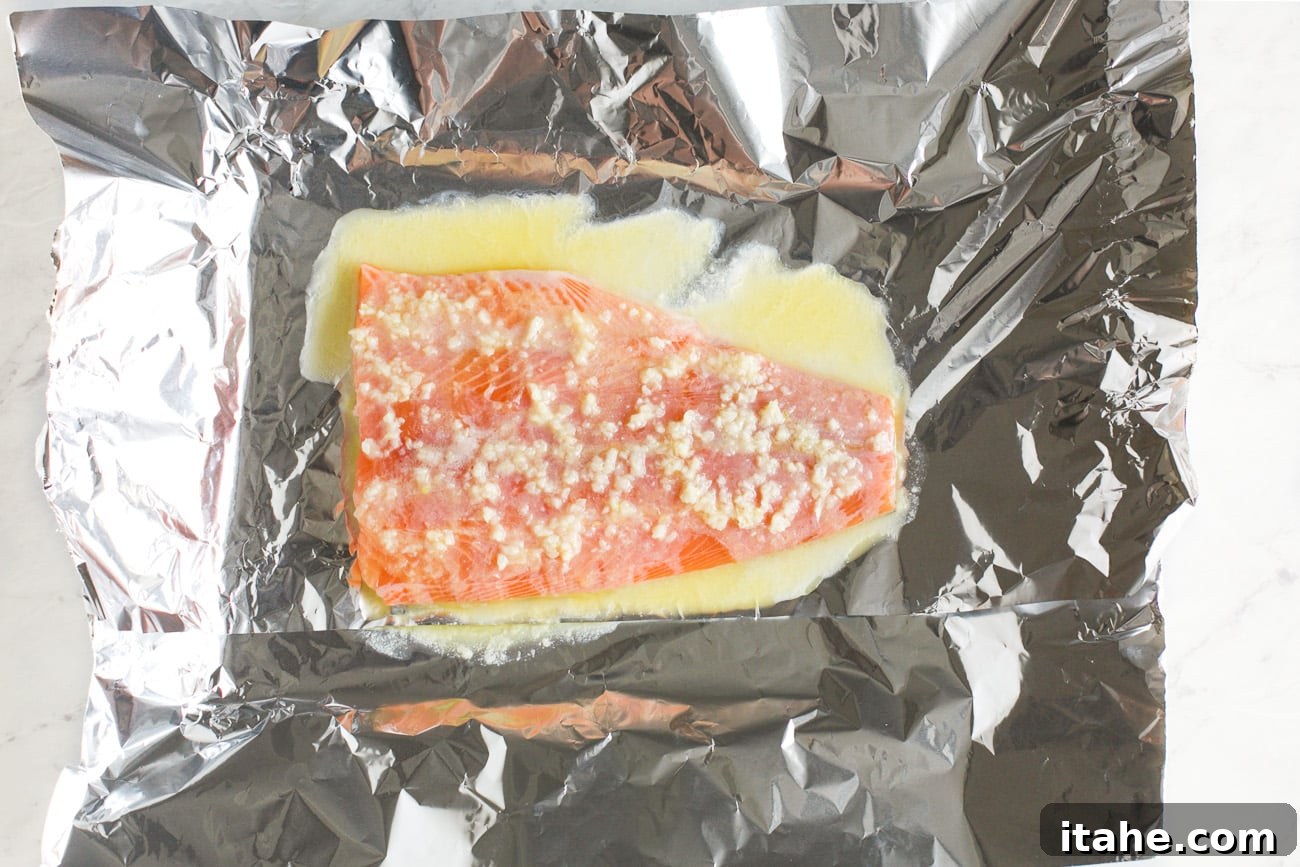
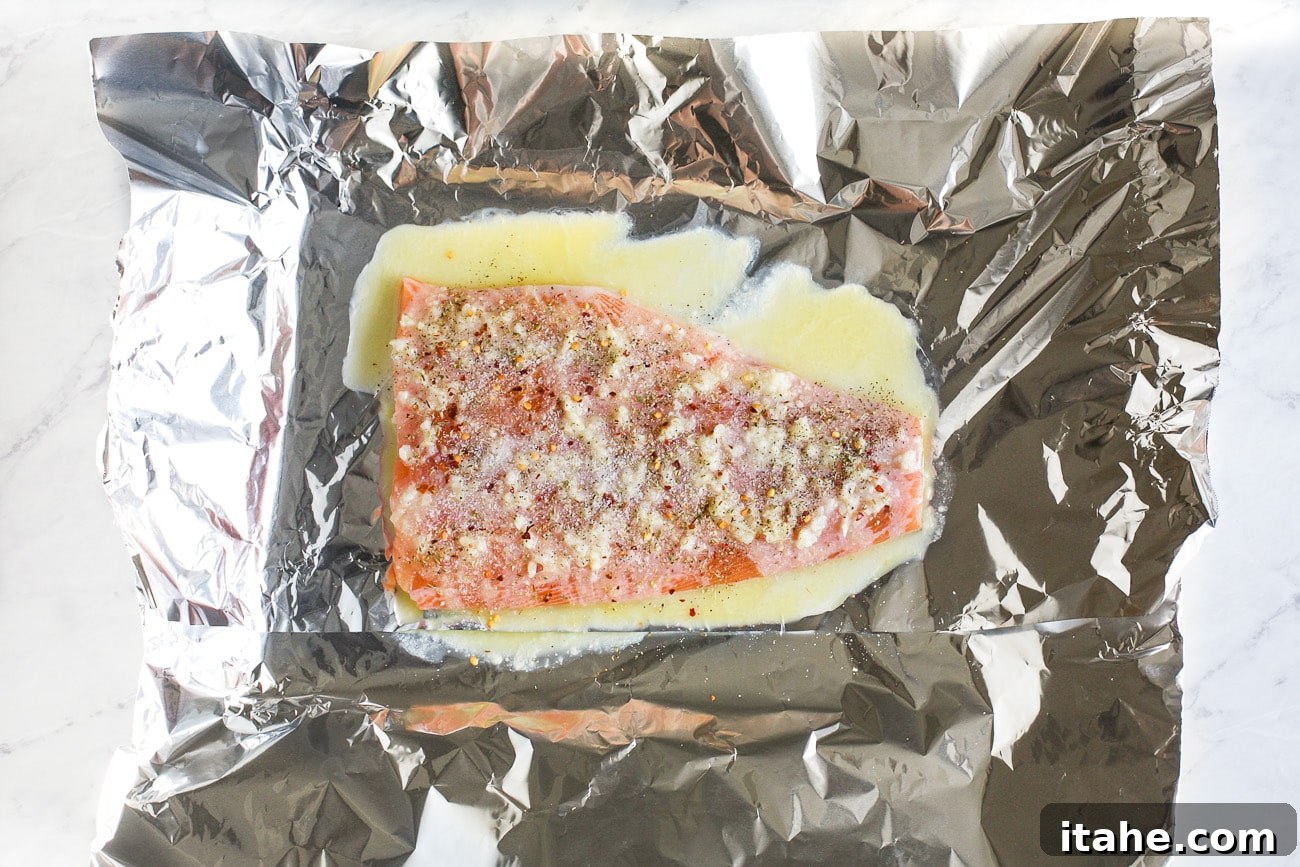
- Generously season the salmon with kosher salt, freshly ground black pepper, dried oregano, and a sprinkle of crushed red pepper flakes for a hint of warmth. Distribute the spices evenly for maximum flavor.
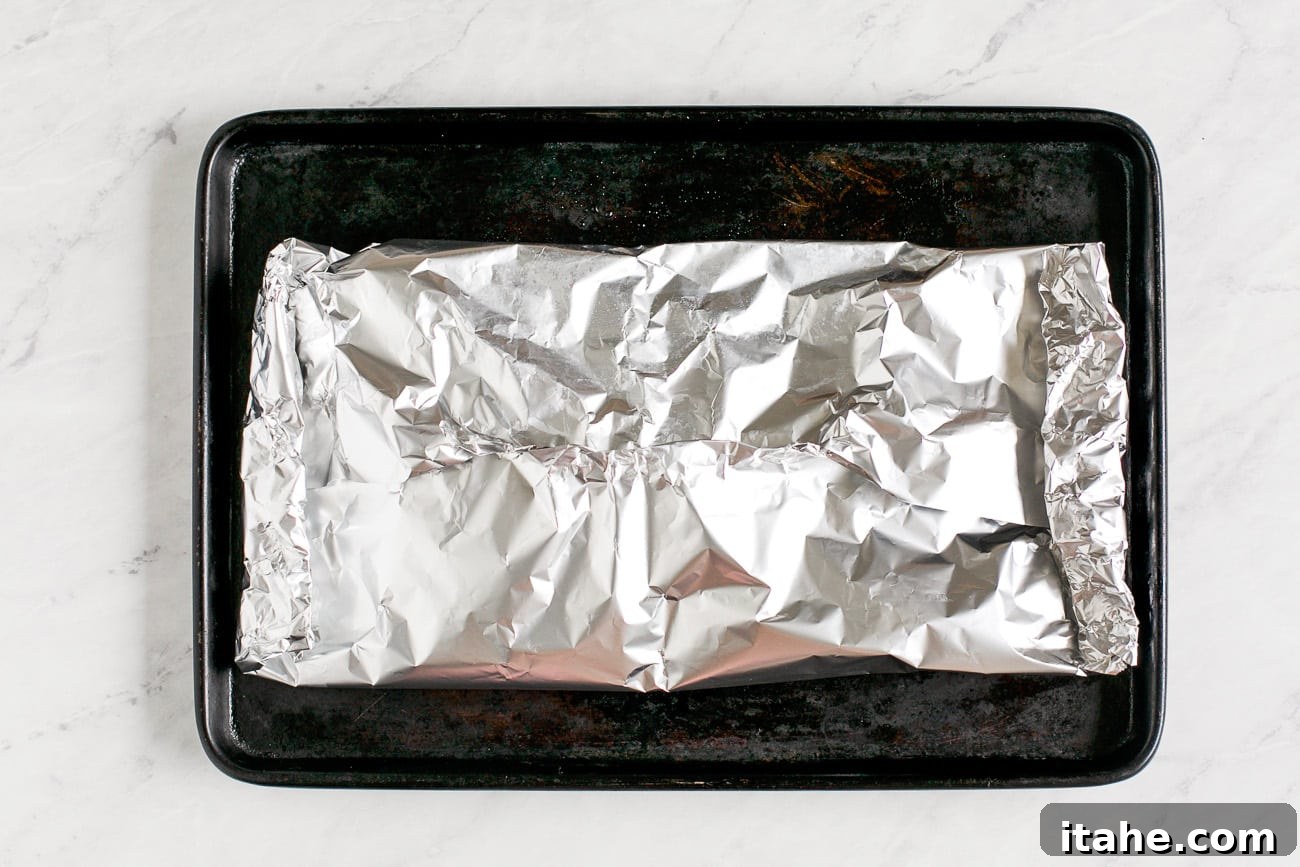
- Carefully fold the sides of the aluminum foil up and over the salmon, creating a sealed packet. Ensure all edges are tightly crimped to prevent any of the delicious garlic butter sauce from leaking out during baking. A well-sealed packet will steam the salmon perfectly, keeping it incredibly moist.
- Place the baking sheet with the foil-wrapped salmon into the preheated oven. Bake for approximately 12-16 minutes. The exact cooking time will vary depending on the thickness of your salmon fillet and your desired level of doneness.
- Once the initial baking time is complete, carefully open the foil packet, exposing the top of the salmon. Return the baking sheet to the oven and broil for an additional 2-3 minutes. This crucial step will give the salmon a beautiful golden crust and slightly caramelized edges. Stay vigilant during broiling, as fish can burn quickly under high heat.
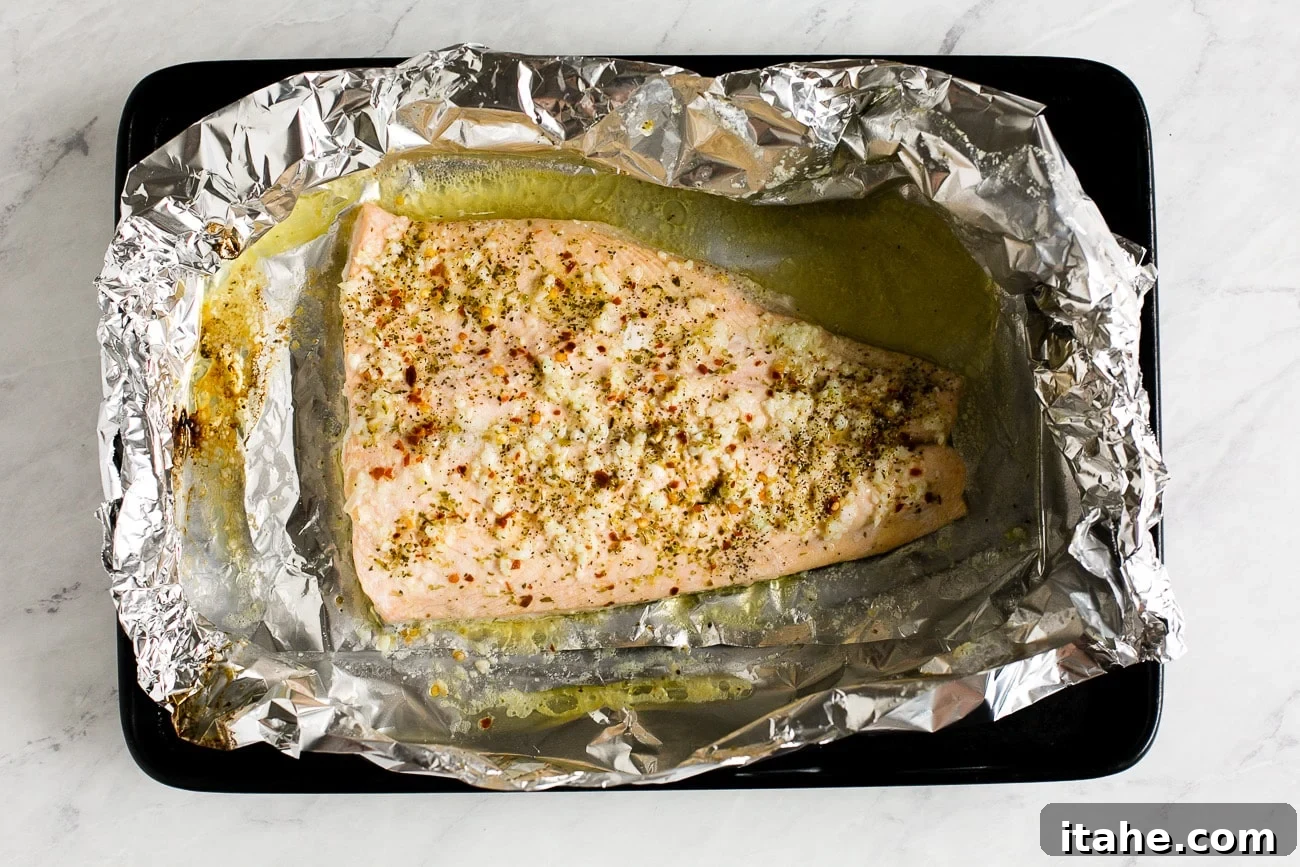
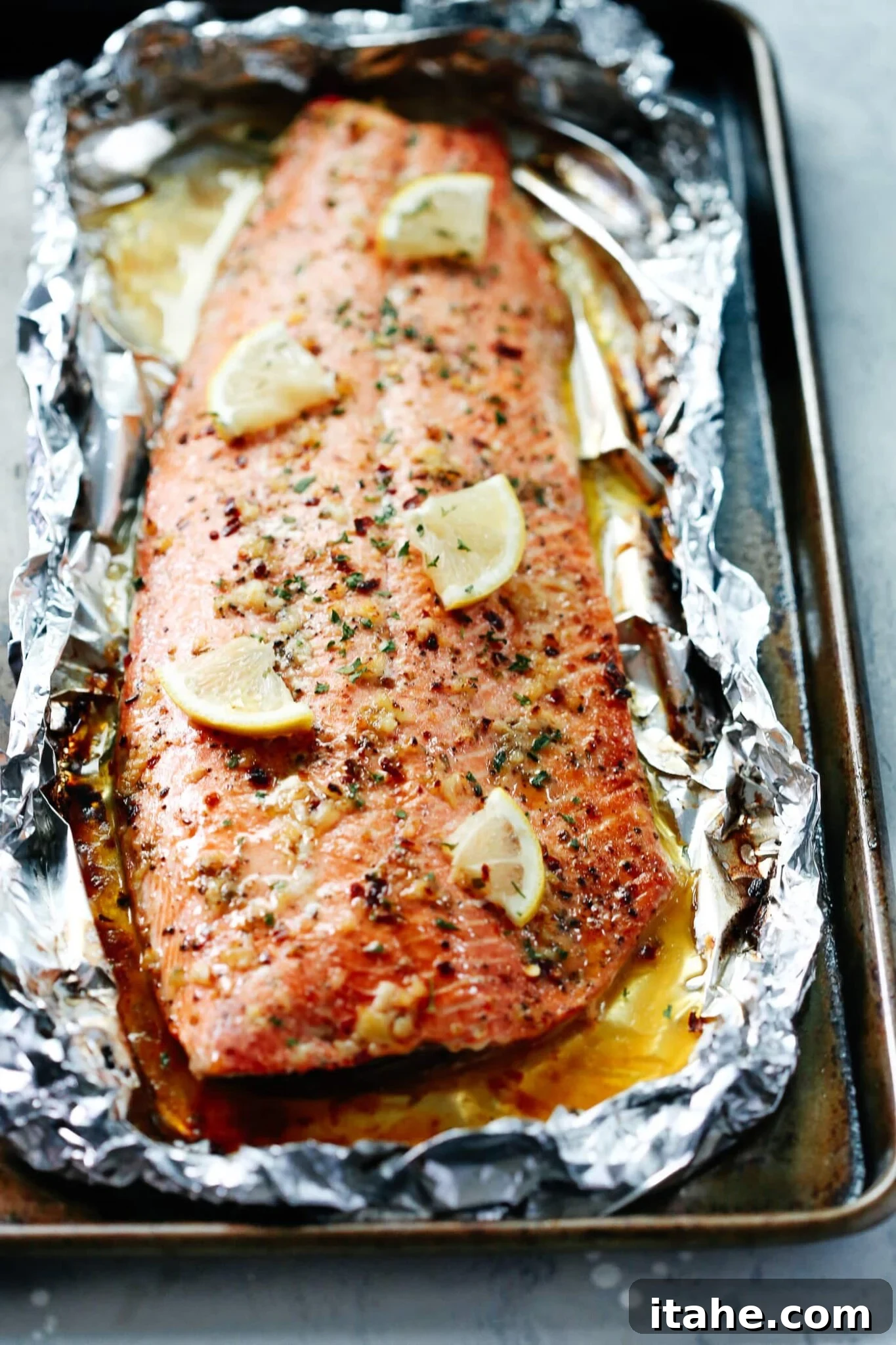
- The salmon is ready when it flakes easily with a fork. For ultimate precision and food safety, use an instant-read thermometer inserted into the thickest part of the fillet. The ideal internal temperature for fully cooked salmon is 145°F (63°C). Once cooked, remove the baking sheet from the oven. Carefully spoon any remaining flavorful garlic butter sauce from the foil packet over the salmon before serving. Garnish with fresh chopped parsley and a few extra lemon slices for a touch of freshness and elegance. Enjoy your perfectly baked salmon!
How Long Do You Cook Salmon in the Oven at 400°F?
The cooking time for salmon in a 400°F (200°C) oven largely depends on the thickness and size of your specific fillet. For a very thick salmon fillet (e.g., over 1 inch), you should anticipate baking it for approximately 15 minutes. However, for a fillet of normal thickness (around 1 inch), 12-13 minutes is typically sufficient. The key indicator of doneness is when the salmon flakes easily with a fork, revealing a tender, juicy interior. Always err on the side of caution to avoid overcooking, which can lead to dry fish.
Mastering Salmon Doneness: A Guide to Perfectly Cooked Fish
Achieving the perfect doneness for salmon is essential for both flavor and texture. Here’s how you can tell when your baked salmon is ready:
The Thermometer Method: Your Best Friend for Precision
For absolute accuracy, an instant-read meat thermometer is invaluable. Insert it into the thickest part of the salmon fillet, avoiding the bone if present:
- 115–125°F (46-52°C): This range signifies medium-rare salmon, characterized by a translucent, moist center.
- 125–140°F (52-60°C): This is for medium to well-done salmon, where the flesh becomes more opaque but remains juicy.
- 140°F (60°C) and above: At this temperature, the salmon is fully cooked. Remove it from the oven immediately to prevent overcooking and retain its moisture. The USDA recommends a minimum internal temperature of 145°F (63°C) for food safety.
The Fork Test: A Reliable Visual Cue
If you don’t have a thermometer handy, the fork test is a classic and effective method. Gently insert a fork into the thickest part of the salmon and twist it slightly. The flesh should separate easily into flakes. When it’s done, the salmon will transition from translucent to opaque throughout, though a slightly pink center is acceptable for medium-rare preferences.
Know Your Preference: Salmon Doneness is Personal
Much like a steak, the ideal doneness for salmon is a matter of personal taste. Some prefer a slightly rarer, juicier texture, while others prefer it fully cooked through. Don’t hesitate to experiment with different cooking times and internal temperatures to discover what you enjoy most. Remember, fish continues to cook slightly after it’s removed from the heat (carryover cooking), so taking it out a few degrees before your target temperature is often a good strategy.
Creative Ways to Use Leftover Salmon
- Salmon Tacos or Wraps: Easily transform shredded leftover salmon into delicious tacos or fresh lettuce wraps, topped with your favorite salsa, avocado, and a squeeze of lime.
- Flavorful Salmon Pasta: Roughly chop the leftover salmon and gently fold it into a warm pasta dish with a light cream sauce, olive oil, or pesto for a quick and elegant meal.
- Refreshing Salmon Salad: Break up the salmon with a fork and toss it with mixed greens, cherry tomatoes, cucumbers, and a light vinaigrette for a healthy and satisfying lunch, or create a classic Greek salad with feta and olives.
- Smart Salmon Meal Prep: Portion out your cooked salmon with roasted vegetables or grains for nutritious and convenient lunches throughout your work week. Cooked salmon stores well in the refrigerator for up to 4 days.
- Easy Salmon Patties: Flake the salmon and combine it with breadcrumbs, an egg, and a few seasonings to create quick and delicious salmon patties, perfect for a light dinner or appetizer.
How To Store & Reheat Leftover Baked Salmon
Proper storage and reheating are key to enjoying your delicious baked salmon long after the first meal.
To Store — Allow any leftover salmon to cool completely before transferring it to an airtight glass container. It can be safely stored in the refrigerator for 3-4 days. For convenient meal prep, portion it out into individual containers with your favorite sides for quick and healthy lunches throughout the week.
To Freeze — For longer storage, place the cooled salmon in a freezer-friendly airtight container or heavy-duty freezer bags, ensuring as much air as possible is removed to prevent freezer burn. It will keep well in the freezer for up to 4 months. When ready to use, thaw the salmon in the refrigerator overnight.
To Reheat — To best preserve its moisture and flavor, gently reheat leftover salmon. You can warm it in the microwave on a low setting for short intervals until just heated through. Alternatively, for a slightly crisper exterior, add a little olive oil to a hot pan on the stovetop over medium-low heat and gently cook the salmon for a few minutes on each side until it’s warmed through without drying out.
More Salmon Recipes to Elevate Your Cooking:
Blackened Salmon Recipe
15 mins
Air Fryer Salmon
14 mins
Maple Mustard Salmon
30 mins
Pin
Garlic Butter Baked Salmon – Foil Packet & Full of Flavor
Video
Ingredients
- 1¼ pounds salmon fillet
- 2 tablespoons lemon juice
- 2 cloves garlic minced
- 3 tablespoons melted butter or melted ghee
- ½ teaspoon salt
- ¼ teaspoon black pepper
- ¼ teaspoon dried oregano
- 1/4 teaspoon crushed red pepper
- 1 tablespoon chopped parsley to garnish
- lemon slices to garnish
Instructions
-
Preheat oven to 400ºF (200°C). Line a baking sheet with aluminum foil. The piece of foil should be generous enough to easily fold over and fully seal the fish.
-
In a small bowl, combine fresh lemon juice, minced garlic, and melted butter or melted ghee. Whisk everything together until thoroughly combined.
-
Place the salmon fillet, skin side down, on the center of the prepared foil-lined baking sheet. Pour the entire butter mixture evenly over the salmon.
-
Season the salmon generously with salt, black pepper, dried oregano, and crushed red pepper flakes.
-
Carefully fold the sides of the foil over the salmon, crimping the edges tightly to create a sealed packet. Ensure it is well-sealed to prevent the flavorful sauce from leaking out during baking. Place the baking sheet into the oven, and bake until cooked through, typically about 12-16 minutes. Remember, the precise cooking time will vary based on the thickness of your salmon fillet.*
-
After baking, carefully open the foil packet to expose the top of the fish. Return the baking sheet to the oven and broil the salmon for 2-3 minutes to achieve a beautiful golden crust. Watch it closely to prevent burning!
-
Remove the baking sheet from the oven. Before serving, use a spoon to generously pour any leftover garlic butter sauce from the foil packet over the salmon. Garnish with fresh chopped parsley and elegant lemon slices for a final touch.
Notes
- When wrapping the salmon, avoid sealing the foil too tightly against the fish. If the foil is too snug, it can sometimes stick to the salmon, making it less attractive when served. A slight dome over the fish is ideal for steaming.
- Always exercise caution and avoid using parchment paper when broiling salmon. Parchment paper is generally not heat-safe for high broiler temperatures and can easily scorch or catch fire.
- If you find yourself continually craving delicious salmon recipes, explore our extensive collection of tempting salmon dishes for more inspiration and culinary adventures.
Nutrition
Nutrition information is automatically calculated, so should only be used as an approximation.