
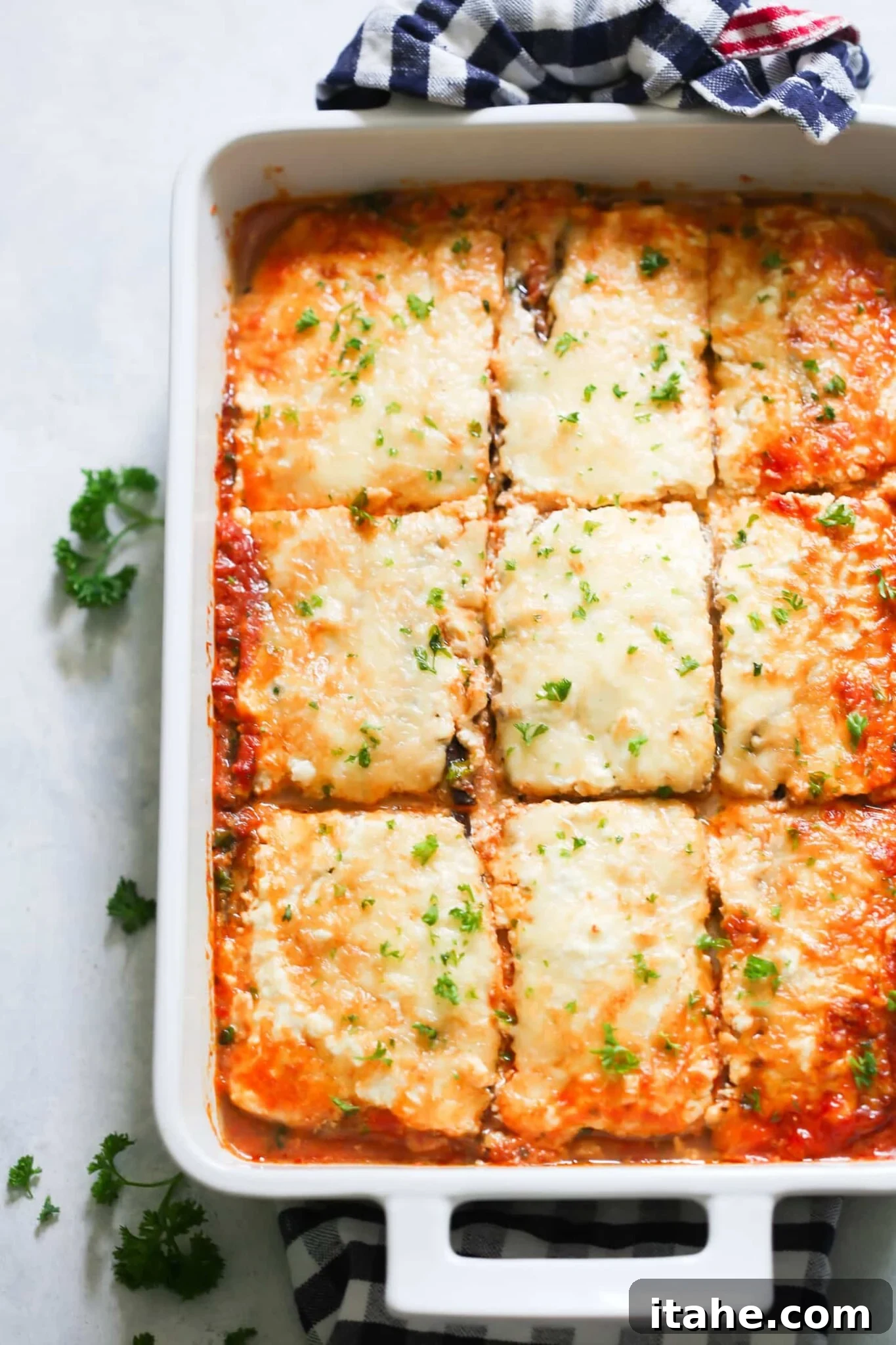
Welcome to a culinary revelation: our ultimate **Eggplant Lasagna** recipe! Bid farewell to traditional pasta noodles and embrace the tender, flavorful embrace of perfectly sliced eggplant. The result is a dish that’s not only significantly lighter and **lower in carbs**, but also remarkably satisfying and packed with an explosion of rich, Italian-inspired flavors. Crafted with a vibrant homemade tomato sauce, each layer boasts a symphony of tangy freshness, complemented by the luxurious melt of diverse cheeses. This isn’t just a meal; it’s a comforting, delicious experience that promises to impress even the most discerning palates and stands as a fantastic **gluten-free** alternative to a beloved classic.
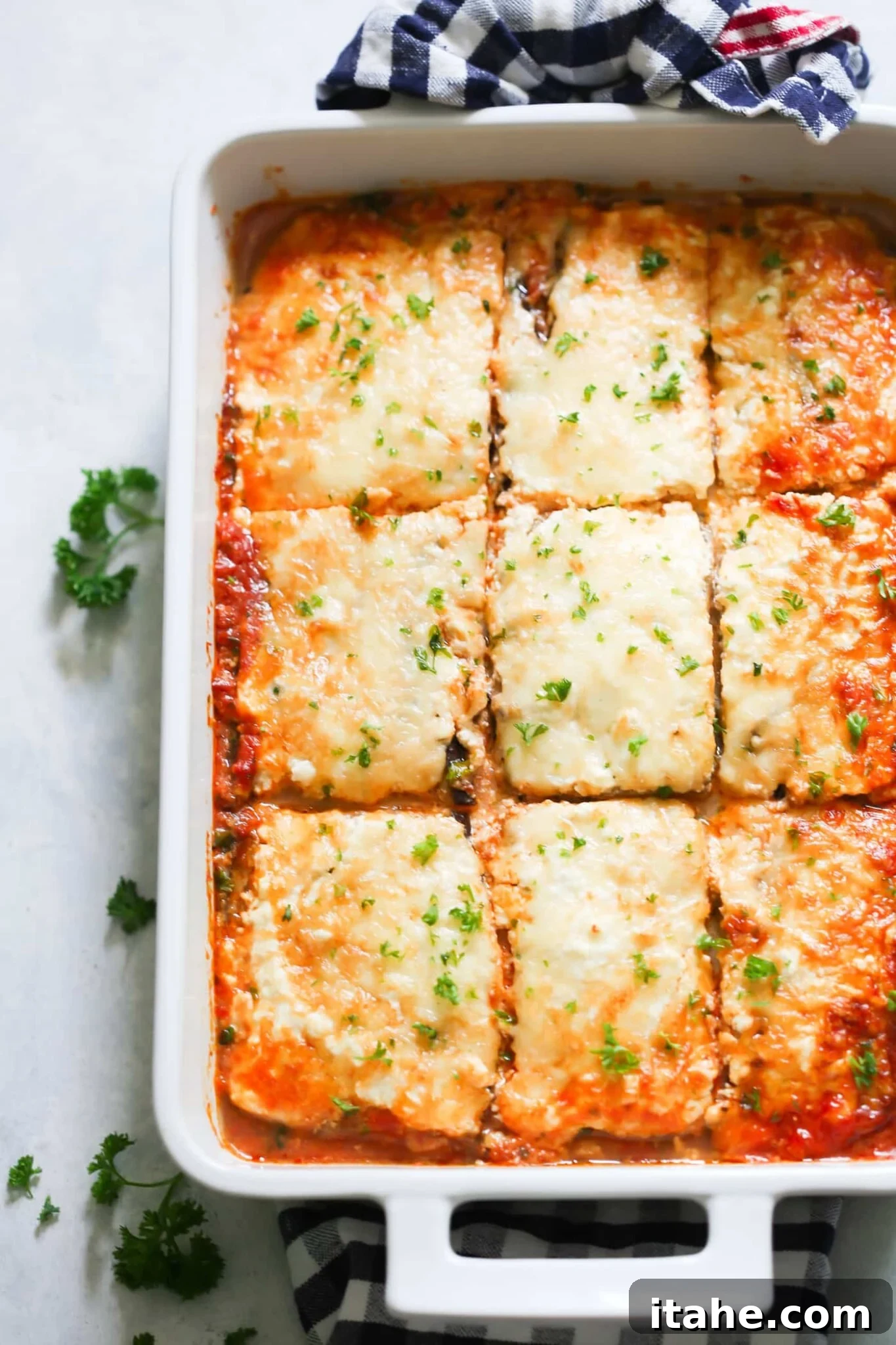
For years, I’ve found immense joy in reimagining classic pasta dishes by substituting traditional noodles with fresh, wholesome vegetables. Whether it’s the crispness of zucchini or the tender texture of eggplant, these alternatives not only reduce carbohydrates and calories but also infuse the dish with a delightful, earthy flavor profile. This approach results in a lighter, yet equally indulgent meal, making healthy eating both easy and incredibly delicious.
Why Choose Eggplant Lasagna? A Lighter, Healthier Twist on a Classic
In the quest for healthier eating without sacrificing flavor, eggplant lasagna emerges as a true culinary champion. Swapping out wheat-based lasagna noodles for thinly sliced eggplant brings a multitude of benefits. Firstly, it dramatically reduces the **carbohydrate count**, making it an ideal choice for those following **low-carb**, **keto-friendly**, or **gluten-free** diets. Eggplant is naturally low in calories and rich in dietary fiber, vitamins, and minerals, transforming a traditionally heavy dish into a wholesome, nutrient-dense meal.
Beyond its nutritional advantages, eggplant contributes a unique depth of flavor and a wonderfully tender texture that absorbs the rich tomato sauce and creamy cheese layers beautifully. When properly prepared (a technique we’ll delve into), eggplant softens to a melt-in-your-mouth consistency that perfectly mimics the comforting feel of pasta, yet with a distinctively fresh taste. This innovative take on lasagna proves that health-conscious cooking can be incredibly satisfying and utterly delicious, making it a go-to recipe for anyone seeking a guilt-free indulgence.
A Personal Culinary Journey with Eggplant Lasagna
My kitchen often serves as a laboratory for delicious, low-carb creations, particularly when it comes to lasagna. While my husband is a devoted fan of my Spinach and Zucchini Lasagna, Slow Cooker Zucchini Lasagna, and Zucchini Lasagna Skillet, his palate has always been less enthusiastic about eggplant. This personal preference meant that for quite some time, eggplant lasagna, a dish I deeply adore, took a back seat in our meal rotation. As much as I enjoy cooking, the idea of preparing an entire casserole just for myself often felt less appealing.
However, fate, or perhaps a stroke of culinary serendipity, intervened a few weeks ago. With my husband traveling for work, my wonderful mom flew in from Brazil to visit us in Canada for three weeks. During a grocery run, her eyes lit up at the sight of fresh eggplants. “Can we buy them and make eggplant lasagna?” she asked, her voice filled with an eagerness I hadn’t heard in ages. I was overjoyed! It was the perfect opportunity to finally indulge in this cherished dish. We promptly gathered our ingredients, returned home, and spent a delightful afternoon crafting this spectacular low-carb eggplant lasagna. We savored every bite throughout the week, pairing it with crisp Green Arugula Salad and warm, crusty Garlic Bread. It was a testament to how simple ingredients and good company can transform a meal into a truly memorable experience.
Unveiling the Star Ingredients for the Perfect Eggplant Lasagna
The secret to an exceptional eggplant lasagna lies in selecting and preparing each ingredient with care. From the foundation of the eggplant slices to the rich, creamy fillings, every component plays a crucial role in creating a harmonious and unforgettable dish. Here’s a closer look at the key players that make this recipe truly special:
The Foundation: Fresh Eggplant Slices
Eggplants: The star of our show! Choosing fresh, firm eggplants is paramount. After extensive testing, I’ve found that slicing eggplants precisely 1/8-inch thick yields the ideal texture for lasagna. This thinness ensures they cook evenly, become wonderfully tender without turning mushy, and maintain a satisfying structure within the layers. For unparalleled consistency, I highly recommend using a mandoline slicer; it makes quick work of creating uniform slices, which is key to a balanced lasagna. Don’t worry about bitterness; salting, as we’ll discuss, takes care of that, focusing instead on its earthy sweetness.
Creamy Richness: Ricotta Cheese
Part-Skim Ricotta: This ingredient is essential for that signature creamy, indulgent filling. I personally prefer part-skim ricotta because it provides a beautiful creamy texture without making the lasagna overly heavy. It strikes a perfect balance, allowing the other flavors to shine through. However, if you’re inclined towards an even richer, more decadent filling, feel free to use full-fat ricotta. The goal is a luscious, spreadable mixture that binds the layers together with its mild, milky essence.
Savory Depth: Parmesan Cheese
Parmesan Cheese: Freshly grated Parmesan is non-negotiable for superior flavor and melt. Pre-grated cheeses often contain anti-caking agents that hinder smooth melting and mute the flavor. By grating your own, you unlock a sharp, nutty, and salty punch that beautifully complements the other ingredients. Be sure to set aside a generous portion to sprinkle over the top layer before baking; it will create a golden, bubbly crust that adds a delightful textural contrast and visual appeal.
The Heart of the Dish: Homemade Tomato Sauce
Homemade Tomato Sauce: The quality of your tomato sauce can make or break a lasagna. My go-to recipe features crushed San Marzano tomatoes—known for their sweet, less acidic flavor—simmered with sautéed onion, aromatic garlic, dried oregano, and a touch of garlic powder. This simple sauce comes together in just about 20 minutes, offering a depth of flavor that store-bought varieties often lack. If time is a constraint, a high-quality marinara sauce can certainly be used, but for the most authentic and robust taste, a homemade version is truly unparalleled.
Melty Perfection: Mozzarella Cheese
Shredded Mozzarella Cheese: Like Parmesan, fresh is best here. I strongly advocate for shredding your own block of part-skim mozzarella. Just like pre-grated Parmesan, pre-shredded mozzarella often contains anti-caking agents that prevent it from melting smoothly and achieving that coveted gooey, stretchy texture. Freshly shredded mozzarella, on the other hand, melts into luscious, bubbling pools of cheesy goodness, creating an irresistible top layer and creamy interior pockets throughout your lasagna.
Pro Tip for a Heartier Meal: Elevate your eggplant lasagna by incorporating a rich, homemade Instant Pot meat sauce. Adding ground beef or Italian sausage to your tomato base creates a more substantial, protein-packed dish that’s perfect for satisfying meat-lovers while maintaining the low-carb integrity of the recipe. This variation introduces an extra layer of savory depth, making the lasagna even more robust and filling.
Crafting Your Masterpiece: Step-by-Step Eggplant Lasagna Guide
Creating this delicious eggplant lasagna is a rewarding process, and following these steps carefully will ensure a perfect, flavorful, and structurally sound dish every time.
- Preheat your oven to 375°F (190°C). Prepare your eggplant by slicing it into even 1/8-inch thick pieces. For consistent results, a mandoline slicer is highly recommended. This ensures uniform cooking and a delightful texture in every bite, preventing some slices from being undercooked while others are overcooked.
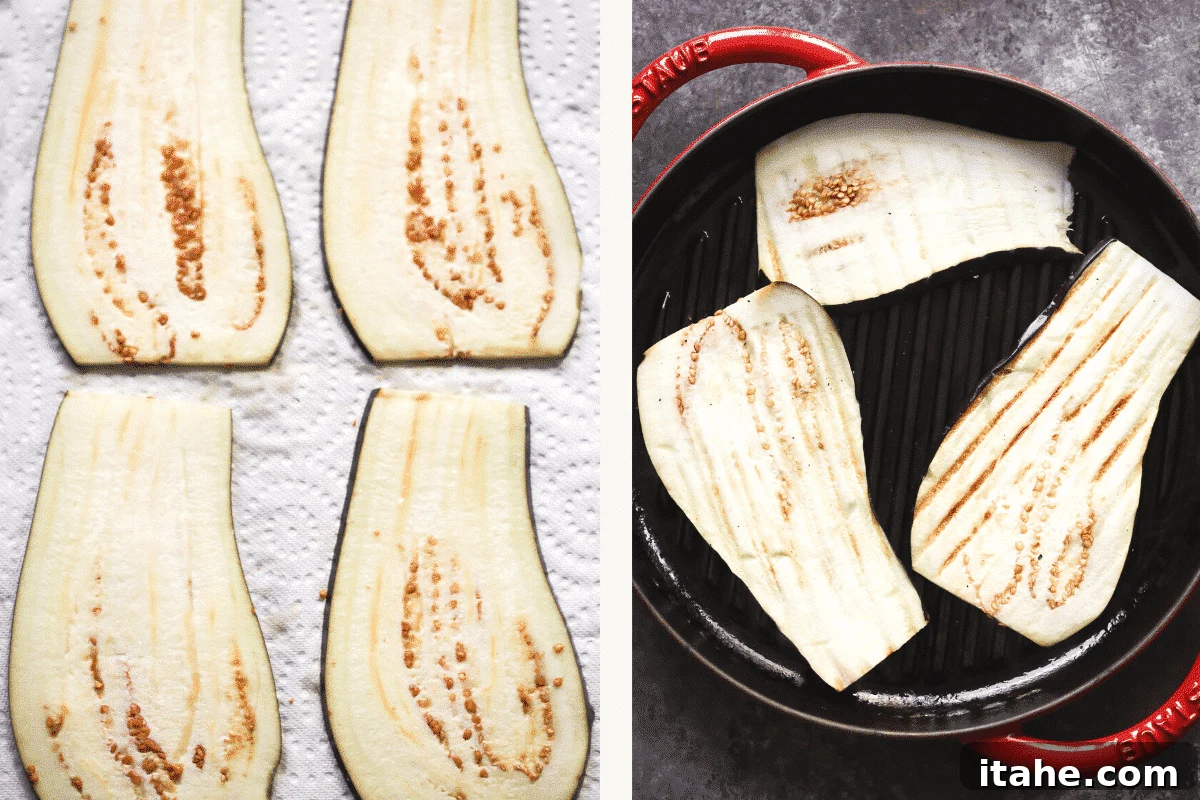
- Generously sprinkle coarse salt on both sides of each eggplant slice. Arrange them in a single layer on paper towels or a wire rack set over a baking sheet. Allow them to rest for approximately 10-15 minutes to draw out excess moisture. This critical step, often called “sweating” the eggplant, is vital for preventing a watery lasagna. Then, firmly pat both sides dry with clean paper towels to remove both the expelled moisture and any residual salt.
- Heat a grill pan or a large skillet over medium-high heat. Cook the eggplant slices for about 3 minutes per side until they are slightly tender, flexible, and have beautiful grill marks. This pre-cooking step not only further reduces moisture but also begins to tenderize the eggplant and adds a delicious smoky depth of flavor that enhances the overall taste of the lasagna.
- In a medium mixing bowl, combine the part-skim ricotta cheese, freshly grated Parmesan cheese, and one large egg. Stir until all ingredients are well incorporated and form a smooth, creamy mixture. The egg acts as a binder, helping the ricotta filling hold its structure during baking.
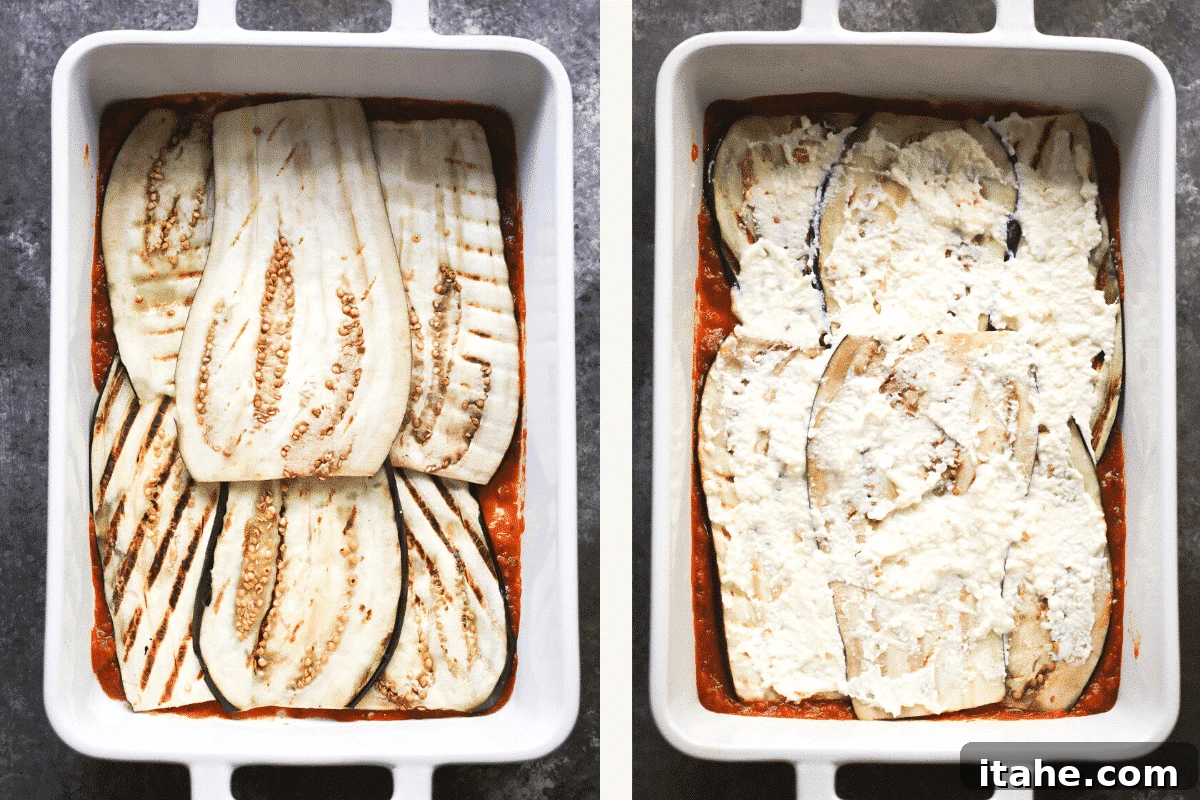
- To begin assembling your lasagna, spread a thin, even layer of homemade tomato sauce at the bottom of a large casserole dish (a 9×13 inch dish works perfectly). This provides a flavorful base and helps prevent the first layer of eggplant from sticking.
- Arrange a single layer of the grilled eggplant slices over the sauce, creating your “noodle” base. Overlap them slightly if necessary to cover the entire surface. Evenly spread about one-third of the ricotta cheese mixture over the eggplant layer, then follow with a generous sprinkle of shredded mozzarella cheese. Repeat these layers—eggplant, ricotta mixture, mozzarella—until you have used up all your ingredients, ensuring each layer is distinct and well-covered. Finish with a final layer of eggplant.
- Top the final eggplant layer with the remaining tomato sauce, ensuring it’s evenly distributed. Then, create a beautiful golden crust by generously sprinkling shredded mozzarella and a final flourish of freshly grated Parmesan cheese. If desired, season lightly with freshly ground black pepper for an extra kick.
- Cover your baking dish tightly with aluminum foil. This helps to steam the lasagna and cook the eggplant through evenly without drying out the top. Bake in the preheated oven for 40 minutes. After this time, remove the foil and continue baking for an additional 10-15 minutes, or until the cheese is bubbling, melted, and beautifully golden brown.
- Once baked, resist the urge to cut into it immediately! Allow your delicious, **gluten-free eggplant lasagna** to rest on a wire rack for at least 10-20 minutes before slicing and serving. This resting period is essential to allow the layers to set and the internal temperature to equalize, ensuring that when you cut into it, the slices hold their shape beautifully instead of falling apart. Garnish with fresh parsley or basil for a touch of vibrant color and a burst of fresh aroma. Enjoy your culinary masterpiece!
Expert Tips for Eggplant Lasagna Success
- **Preparation Ahead:** To save time on busy days, you can assemble the entire eggplant lasagna ahead of time, up to one day in advance. Cover it tightly with plastic wrap or foil and refrigerate. Before baking, let it sit on the counter for about 30 minutes to come closer to room temperature, which helps with even baking.
- **Partial Prep:** Alternatively, you can pre-cook (grill or roast) your eggplant slices and prepare your ricotta filling a day in advance. Keep them refrigerated in separate airtight containers. Then, simply assemble and bake the lasagna the following day for a quicker dinner.
- **The Crucial Rest:** Never skip the resting period after baking! Letting the lasagna sit for 10-20 minutes allows the layers to set, the cheese to firm up slightly, and the juices to redistribute. This ensures that when you cut into it, the slices hold their shape beautifully instead of falling apart into a messy pile on your plate.
- **Choosing the Right Eggplant:** Opt for firm, glossy eggplants that feel heavy for their size. Smaller to medium-sized eggplants tend to have fewer seeds and less bitterness, which is ideal for this recipe. Avoid any eggplants that feel soft or spongy.
- **Mandoline Magic:** While not strictly necessary, a mandoline slicer is a game-changer for achieving uniformly thin eggplant slices. Consistent thickness ensures even cooking and prevents some parts from being crunchy while others are mushy. If using a knife, take your time to slice them as evenly as possible.
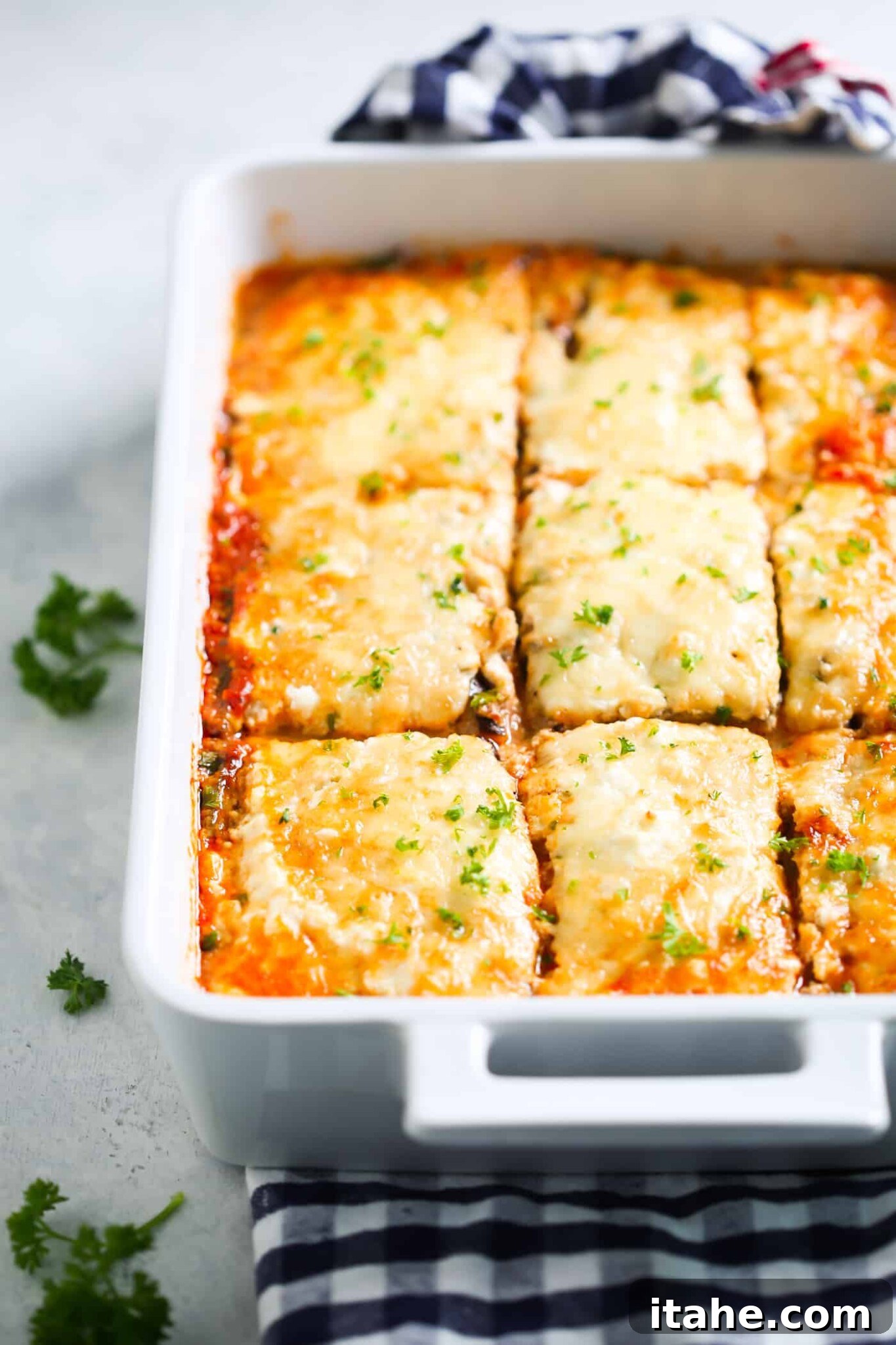
Mastering the Art of Non-Soggy Eggplant Lasagna
One of the most common concerns when making eggplant lasagna, or any vegetable-based lasagna, is avoiding a watery or soggy result. Eggplant, by nature, contains a lot of moisture, which if not properly managed, can lead to a soupy dish. Fortunately, with a few simple yet crucial steps, you can achieve a firm, flavorful lasagna every time. These techniques are designed to draw out excess moisture from the eggplant, ensuring your dish holds its structure beautifully and tastes incredible.
- Salt and Sweat: The first and most vital step is to salt your eggplant slices. Sprinkle coarse salt generously over both sides of the eggplant. The salt works through osmosis, drawing out moisture from the eggplant’s cells. You’ll see beads of water form on the surface, indicating the process is working. This also helps to reduce any potential bitterness in the eggplant.
- Allow to Rest: After salting, let the eggplant slices sit for at least 10-15 minutes. This resting period is essential for the salt to effectively draw out the moisture. Don’t rush this step!
- Thoroughly Pat Dry: Before grilling or baking, use several layers of paper towels to firmly pat both sides of each eggplant slice until they are completely dry. This removes both the extracted moisture and any residual salt, preventing an overly salty dish. Squeeze gently if necessary to release more water.
- Pre-Cook the Eggplant: The final and perhaps most important step is to pre-cook the eggplant. Grilling (as recommended in this recipe) or roasting the slices for about 3 minutes per side serves multiple purposes. It not only removes additional moisture but also begins to tenderize the eggplant, adds a lovely char and smoky depth of flavor, and initiates caramelization. This pre-cooking helps the eggplant hold its shape and prevents it from releasing too much water during the final bake, ensuring a firm and delicious lasagna.
By diligently following these four steps, you’ll eliminate the risk of a soupy lasagna and ensure each bite is perfectly firm, packed with delicious flavor, and beautifully layered. This small investment of time in preparation makes all the difference in the final outcome of your **low-carb eggplant lasagna**.
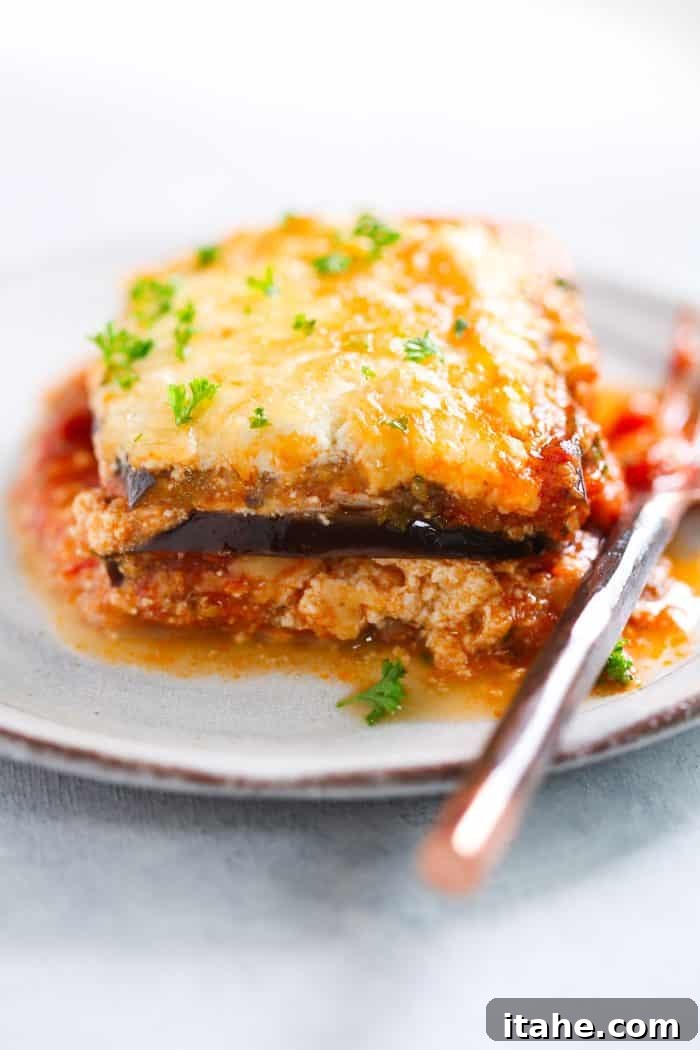
The Ultimate Eggplant Lasagna Recipe: A Low-Carb, Gluten-Free Delight
Recipe Details
Eggplant Lasagna with Layers of Ricotta & Homemade Tomato Sauce
Rating: 3.52 out of 5 stars (from 168 votes)
Author: Olivia Ribas
Servings: 12 people
Prep Time: 20 minutes
Cook Time: 50 minutes
Total Time: 1 hour 10 minutes
This Eggplant Lasagna recipe is a game-changer, swapping traditional lasagna noodles for tender, eggplant slices. The result is a lighter, yet equally satisfying dish, packed with flavor. Made with homemade tomato sauce, it’s rich, tangy, and bursting with fresh ingredients. The layers of melted cheese and savory sauce meld perfectly with the eggplant, creating a comforting and delicious meal that’s sure to impress!
Ingredients
- 2 large eggplants, sliced 1/8″ thick (a mandoline helps create perfect slices)
- Coarse salt
- 15 ounces part-skim ricotta cheese
- 1 large egg
- ½ cup freshly grated Parmesan cheese (reserve some for topping)
- 4 cups homemade tomato sauce or your favorite marinara
- 16 ounces part-skim mozzarella cheese, shredded
- 2 tablespoons fresh parsley, chopped (for garnishing)
Instructions
- Preheat oven to 375°F (190°C). Arrange eggplant slices in a single layer on a clean surface. For consistent slices, use a mandoline if available.
- Sprinkle slices generously with coarse salt and let them sit for 10-15 minutes to draw out moisture. Pat both sides dry with paper towels to remove excess moisture and salt.
- In a grill pan or large skillet over medium-high heat, cook eggplant slices for about 3 minutes per side until tender and lightly grilled. This step is crucial for preventing a watery lasagna.
- In a medium bowl, combine ricotta cheese, Parmesan cheese, and the egg. Stir well until thoroughly mixed and creamy.
- To assemble, spread a thin layer of tomato sauce on the bottom of a casserole dish (9×13 inches recommended). Arrange 5-6 grilled eggplant slices over the sauce to form the first layer.
- Evenly spread a portion of the ricotta mixture over the eggplant, then sprinkle with shredded mozzarella cheese. Repeat these layers—eggplant, ricotta mixture, mozzarella—until all ingredients are used, ending with an eggplant layer.
- Top the final eggplant layer with the remaining tomato sauce, followed by mozzarella and Parmesan cheeses. Season with black pepper if desired.
- Cover the baking dish tightly with aluminum foil and bake for 40 minutes. Remove the foil and bake for an additional 10-15 minutes, or until the cheese is melted, bubbly, and golden brown.
- Let the lasagna rest on a wire rack for at least 10-20 minutes before slicing and serving. This allows the layers to set for clean cuts. Garnish with fresh parsley or basil. Enjoy!
Notes
To Store: Allow leftovers to cool completely. Tightly wrap your casserole dish with foil or plastic wrap, or transfer individual portions to airtight containers. Store in the refrigerator for 3-5 days.
To Freeze: This lasagna freezes beautifully! You can freeze the entire baked dish by wrapping it tightly in several layers of foil and then plastic wrap, for up to 3 months. Alternatively, freeze individual slices in freezer-safe containers for convenient single-serving meals. Thaw overnight in the refrigerator before reheating.
To Reheat: Reheat leftover lasagna in the microwave for quick individual servings, or bake at 300°F (150°C) covered with foil until heated through completely (about 20-30 minutes for a large piece). Uncover for the last few minutes if you prefer a crispier cheese top.
Nutrition (per serving)
Serving: 1/9, Calories: 223kcal, Carbohydrates: 10.6g, Protein: 18.5g, Fat: 12.4g, Cholesterol: 53mg, Sugar: 4.4g
Nutrition information is automatically calculated and should only be used as an approximation.
Variations & Serving Suggestions to Elevate Your Eggplant Lasagna
This eggplant lasagna recipe is wonderfully versatile, offering numerous avenues for customization to suit various tastes and dietary needs. Don’t hesitate to get creative in the kitchen!
- Make it Meaty: For a more substantial and protein-rich meal, incorporate your favorite ground meat. Sauté ground beef, Italian sausage, or a combination, season it well, and mix it into your homemade tomato sauce before layering. This adds incredible depth and makes the dish even more hearty.
- Spice it Up: If you enjoy a bit of heat, add a pinch of red pepper flakes to your tomato sauce. A dash of dried basil or a bay leaf while simmering the sauce can also enhance its aromatic profile.
- Herbaceous Additions: Fresh herbs are always a welcome addition. Beyond parsley and basil for garnish, consider finely chopped fresh oregano or a sprinkle of marjoram in your ricotta mixture for an extra layer of Mediterranean flavor.
- Cheese Swaps: While ricotta, Parmesan, and mozzarella are classic, feel free to experiment with other cheeses. A layer of provolone can add a sharper, meltier texture, or a sprinkle of smoked mozzarella could introduce a unique smoky note. For a lighter touch, some goat cheese could be crumbled into the ricotta layer.
- Dairy-Free Option: To make this dish dairy-free, substitute the ricotta with a plant-based cashew ricotta or a firm tofu puree seasoned with nutritional yeast, garlic powder, and lemon juice. Use your favorite dairy-free mozzarella shreds and a plant-based Parmesan alternative.
- Extra Veggies: Boost the nutrient content by finely dicing other vegetables like bell peppers, mushrooms, or spinach and sautéing them before stirring into the tomato sauce or the ricotta mixture. Ensure any added vegetables are well-drained to prevent extra moisture.
What to Serve With Your Eggplant Lasagna: This rich and flavorful lasagna is a meal in itself, but it pairs beautifully with light, fresh sides to balance its richness:
- A simple, crisp green salad with a vinaigrette dressing (like the arugula blackberry salad mentioned earlier).
- Crusty garlic bread or a warm focaccia to soak up any extra sauce.
- Steamed or roasted green beans, asparagus, or broccoli for a vibrant vegetable accompaniment.
- A glass of medium-bodied red wine, such as a Chianti or Merlot, would perfectly complement the robust flavors of the lasagna.
Frequently Asked Questions About Eggplant Lasagna
- Can I use frozen eggplant slices?
- While fresh is always recommended for the best texture, if using frozen eggplant, make sure to thaw it completely and squeeze out as much excess moisture as possible before salting and grilling. Frozen eggplant can sometimes result in a softer texture.
- Do I have to grill the eggplant? Can I bake or pan-fry it instead?
- Grilling is highly recommended for flavor and moisture removal. You can also roast the eggplant slices in the oven at 400°F (200°C) for 15-20 minutes, flipping halfway, or pan-fry them in a little olive oil until tender and browned. The key is to pre-cook them to reduce moisture and enhance flavor before assembling the lasagna.
- How can I make this lasagna spicier?
- For a spicier kick, add red pepper flakes to your tomato sauce, or incorporate a pinch of cayenne pepper into the ricotta mixture. You could also use a spicy Italian sausage if opting for a meaty variation.
- Is this recipe suitable for meal prepping?
- Absolutely! Eggplant lasagna is an excellent choice for meal prepping. You can assemble it ahead of time (as detailed in the “Expert Tips”) or bake it completely and then portion it into individual containers for quick, healthy meals throughout the week. It reheats beautifully.
- My eggplant lasagna turned out watery. What went wrong?
- The most common cause of watery eggplant lasagna is insufficient moisture removal from the eggplant. Ensure you’ve thoroughly salted the eggplant slices, allowed them enough time to “sweat” out moisture, patted them completely dry, and pre-cooked them (grilled or roasted) before layering. Skipping or rushing any of these steps can lead to a soupy result.
- Can I add spinach to this recipe?
- Yes, spinach is a wonderful addition! If using fresh spinach, sauté it briefly to wilt and squeeze out all excess water before mixing it into the ricotta cheese layer. If using frozen spinach, thaw it completely and squeeze very, very dry before adding.
Did You Make This Delicious Eggplant Lasagna?
We absolutely love seeing your culinary creations! Follow @primaverakitchen on Instagram, snap a gorgeous photo of your homemade eggplant lasagna masterpiece, and tag it with #primaverakitchen. Share your cooking success and inspire fellow food enthusiasts with your delicious results!