
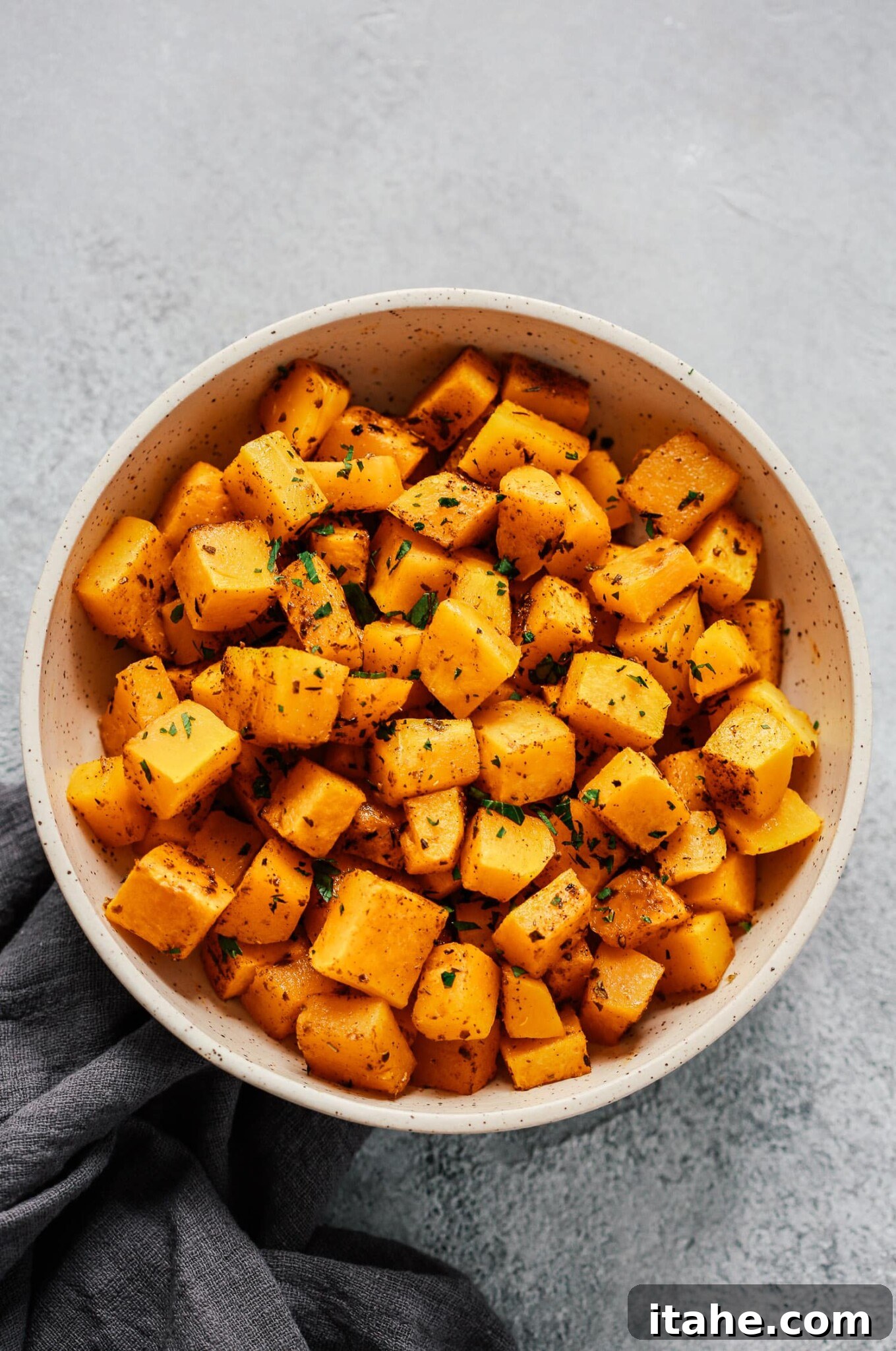
Discover the Delight of Perfectly Roasted Butternut Squash: An Easy & Healthy Side Dish
Roasted butternut squash is a truly delightful and visually appealing side dish that effortlessly complements a wide array of main courses, from succulent beef and tender chicken to delicate fish. This comprehensive guide will walk you through a remarkably easy and straightforward method to achieve perfectly roasted butternut squash, turning a humble vegetable into a star on your plate.
My culinary journey with butternut squash runs deep, as evidenced by the diverse collection of butternut squash recipes I’ve shared. This incredible vegetable boasts a natural sweetness and creamy texture that makes it incredibly versatile. Some of my personal favorites include Roasted Butternut Squash Mash, a comforting and flavorful twist; a quick and satisfying 20-Minute Butternut Squash Soup; the hearty and wholesome No Bean Butternut Squash Chili; and the vibrant Roasted Butternut Squash Cauliflower Salad. Each recipe showcases a unique facet of this amazing winter squash.
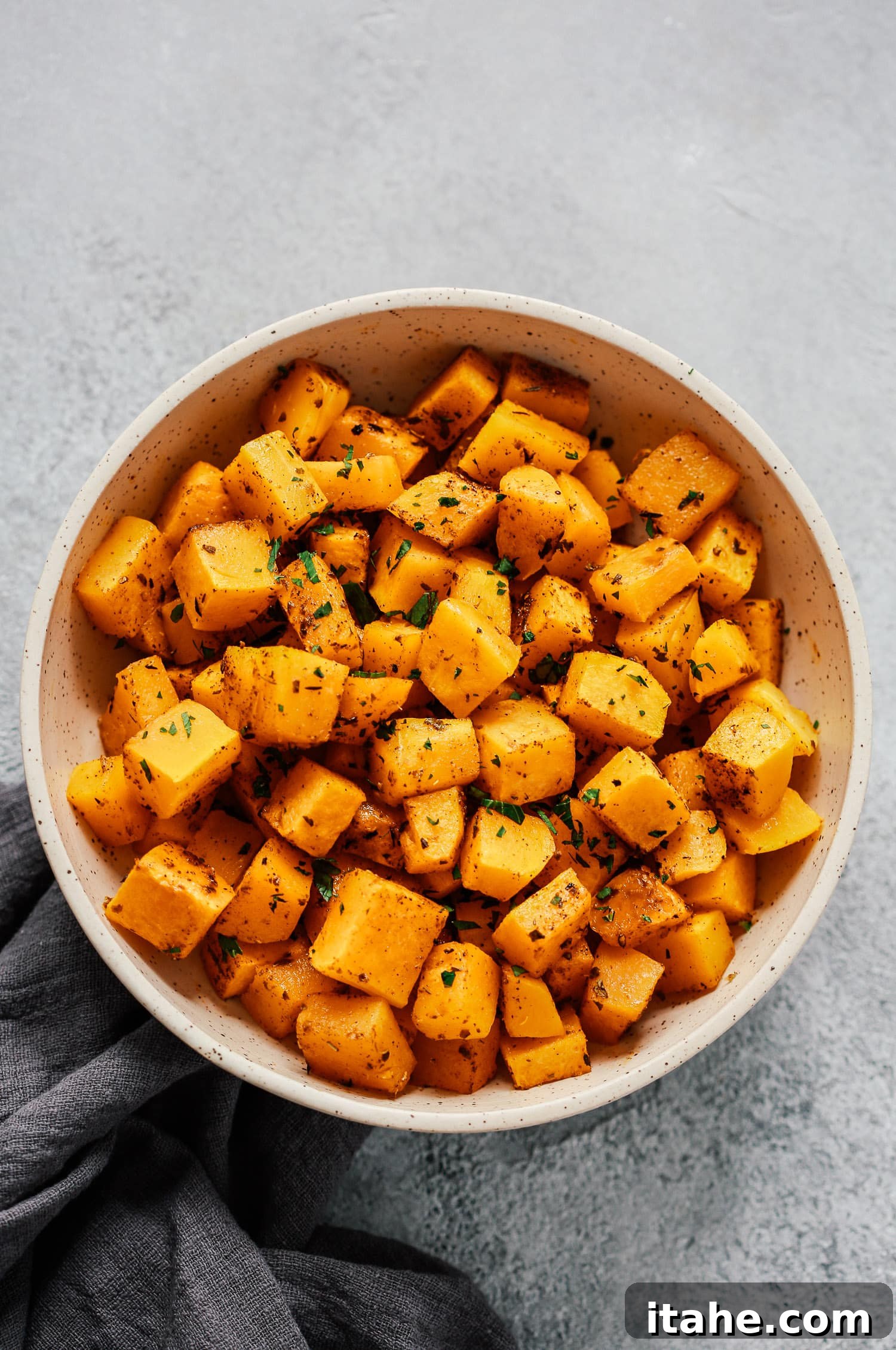
Among all the delicious ways to prepare this vibrant squash, roasting remains my absolute favorite. This method brings out its inherent sweetness and creates a beautifully caramelized exterior with a tender, melt-in-your-mouth interior. What makes this roasted butternut squash recipe even more appealing is its incredible adaptability. You can effortlessly transform its flavor profile by experimenting with different seasonings and spices before roasting. Think beyond the basic salt and pepper – a pinch of earthy cumin, aromatic garlic powder, fragrant coriander, or even warming spices like cinnamon, cloves, and nutmeg can elevate your squash to a whole new level of deliciousness. The possibilities are truly endless, allowing you to tailor the flavors to perfectly suit your meal or your mood.
This simple yet sophisticated roasted butternut squash dish pairs wonderfully with a variety of main courses. Imagine it alongside a perfectly cooked chicken breast, complementing the rich flavors of baked salmon, or adding a touch of sweetness to savory pork chops. It’s not just a side; it’s a culinary enhancement that brings color, flavor, and nutrition to any plate. Enjoy the simplicity and the incredible taste!
How to Peel Butternut Squash with Ease and Safety
Peeling butternut squash can sometimes seem like a daunting task due to its tough skin and awkward shape. However, with the right tools and technique, it becomes surprisingly simple and safe. My preferred tool for this job is a sharp vegetable peeler, specifically a Y-peeler, because it offers superior grip and control, making the process much easier than using a knife. A good vegetable peeler allows you to comfortably hold the squash while removing the skin efficiently, significantly reducing the risk of accidental cuts. Furthermore, a peeler is designed to remove just the right amount of skin, minimizing waste and preserving more of the squash’s precious flesh. If you don’t have a peeler, a very sharp chef’s knife can work, but exercise extreme caution.

Mastering the Art of Cutting Butternut Squash
Once your butternut squash is peeled, the next step is to cut it into manageable pieces, ready for roasting. This process involves a few key steps to ensure both safety and even cooking.
- Initial Peel: As mentioned, begin by using a sharp vegetable peeler or a sturdy knife to remove the tough outer skin. Make sure the squash is stable on your cutting board.
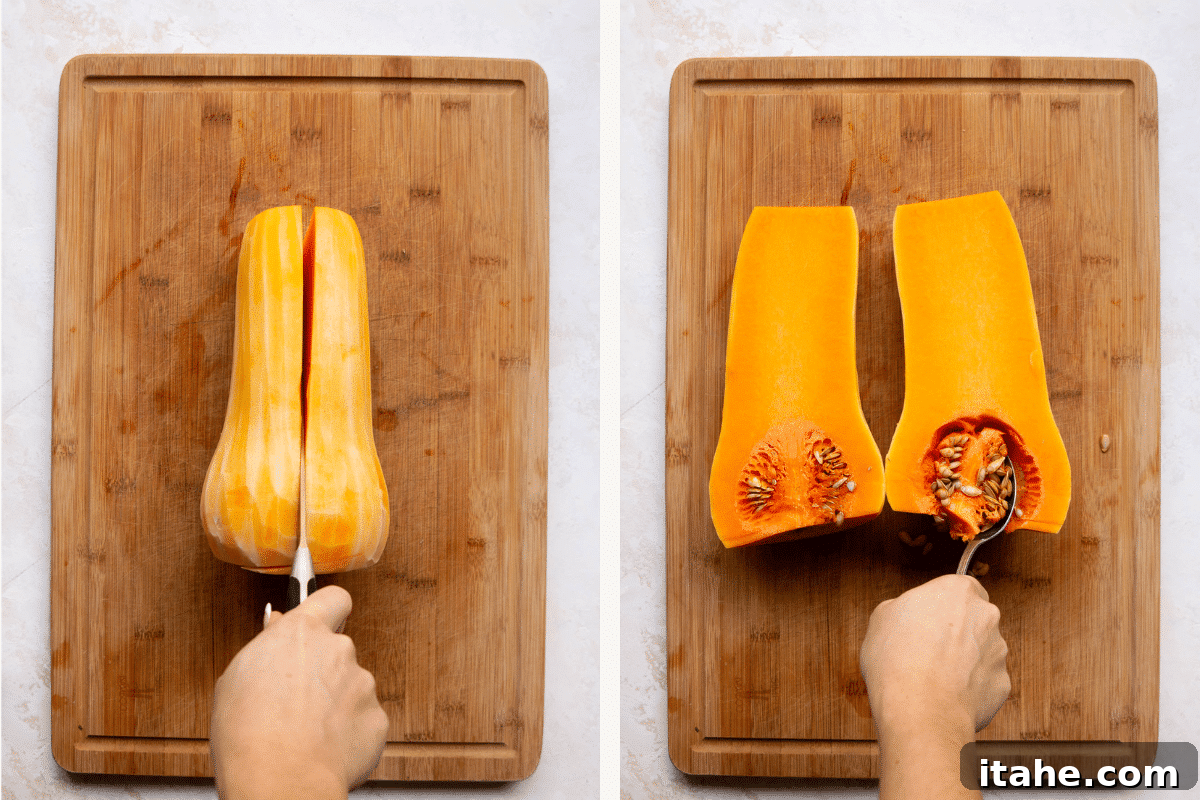
- Halving the Squash: Carefully cut the squash lengthwise from the top (stem end) to the bottom (blossom end). Butternut squash has a bulbous end and a narrower neck. Cutting it lengthwise will expose the seed cavity.
- Seed Removal: Once halved, you’re ready to scoop out the seeds and fibrous strands from the bulbous section. A sturdy spoon works perfectly for this, easily scraping away the pulp. For an even cleaner job, a melon baller or a stainless steel ice cream scoop can also be incredibly effective, ensuring you get all the stringy bits out.
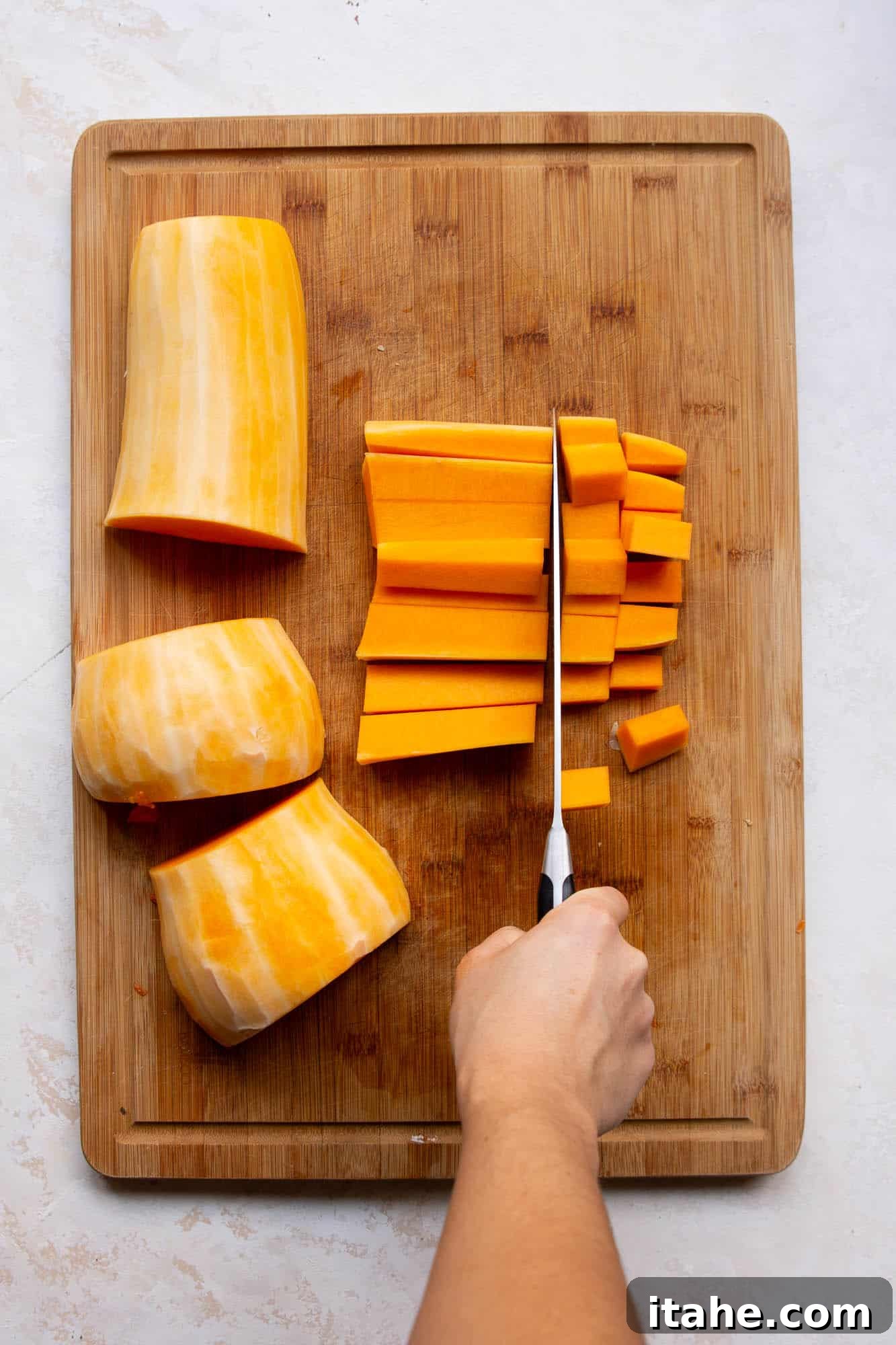
- Dicing for Even Roasting: To ensure uniform cooking, consistency in your dice is crucial. Lay each squash half flat-side down on your cutting board for stability. First, cut the squash into three main parts: the long, solid neck section, and the two half-ring portions from the bulbous end. The half-ring sections, being curved, can be trickier to cut evenly. To address this, I recommend cutting them on a slight angle to create more uniform pieces. For the flatter top and bottom pieces of the bulb, simply cut them in half and then proceed to dice these pieces into roughly 1-inch cubes. Aim for cubes that are as close in size as possible; this precision will prevent some pieces from becoming overly soft while others remain undercooked, guaranteeing a perfect roast every time.
The Simple Ingredients for Irresistible Roasted Butternut Squash
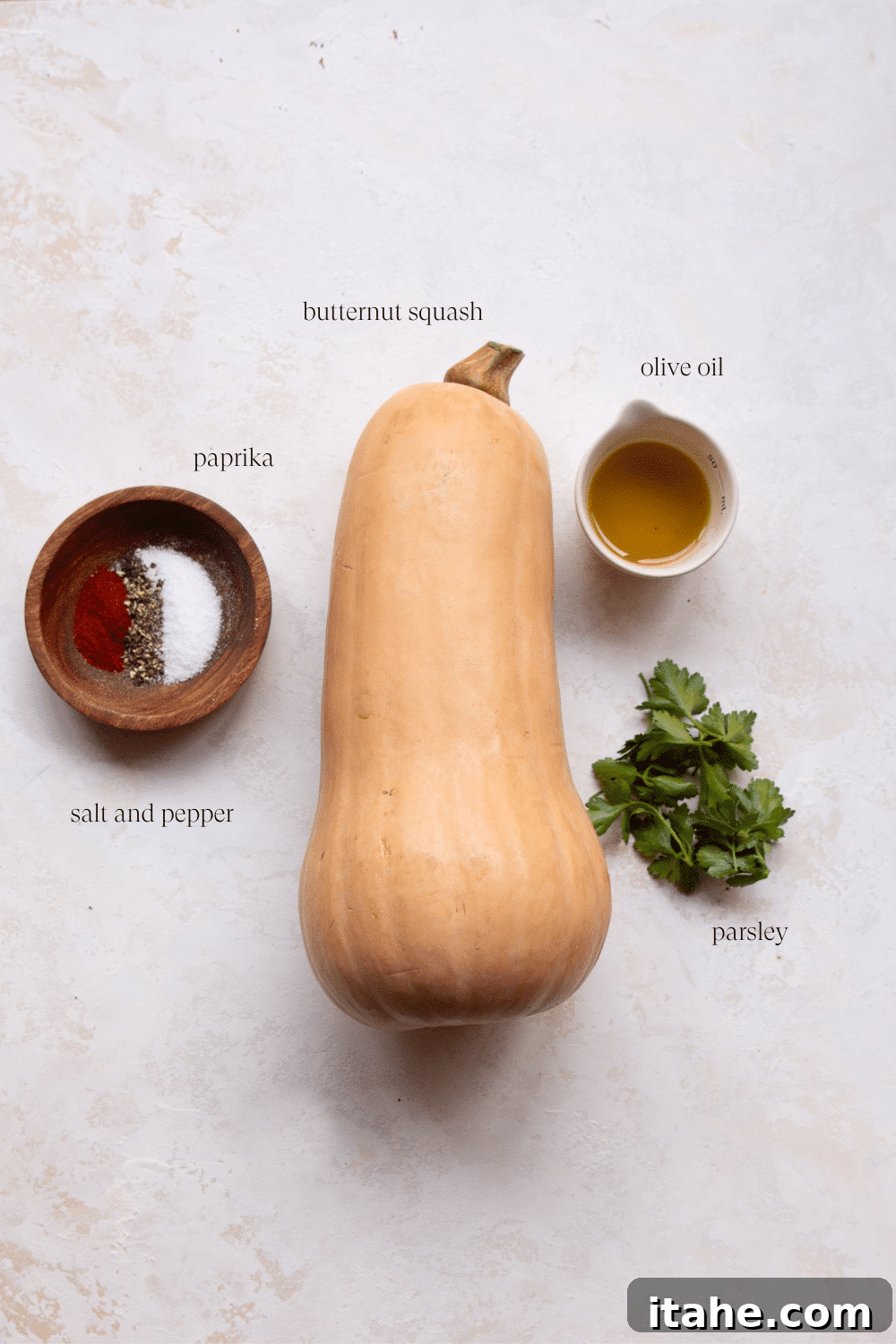
Creating a truly delicious roasted butternut squash dish doesn’t require a long list of exotic ingredients. In fact, its beauty lies in the simplicity of its components, allowing the natural sweetness of the squash to shine through. Here’s a closer look at the key players:
- Butternut Squash: This is, without a doubt, the star of our dish. When selecting your butternut squash, look for one that feels heavy for its size, has a dull, uniform beige color, and is free of soft spots or deep cuts. A fresh, ripe squash will offer the best flavor and texture once roasted.
- Olive Oil: A good quality extra virgin olive oil is highly recommended as it imparts a wonderful flavor and helps the squash caramelize beautifully. However, if you prefer, other healthy oil options like avocado oil (known for its high smoke point) or even melted coconut oil can be used. These oils help in achieving that desirable crispy exterior while keeping the inside tender.
- Salt and Black Pepper: These fundamental seasonings are crucial for enhancing the squash’s natural flavors. I always suggest using coarse salt (like kosher or sea salt) for a better texture and freshly ground black pepper for its superior aroma and pungent kick. Adjust the amounts to your personal preference.
- Paprika: While not strictly essential for flavor, a dash of paprika adds a beautiful warmth and a subtle pop of vibrant color to the roasted squash. It gives the dish a lovely, inviting hue that makes it even more appetizing. You can use sweet paprika, or for a touch of smoky flavor, smoked paprika is an excellent choice.
- Fresh Parsley: A garnish of fresh parsley after roasting adds a burst of freshness and a delicate herbaceous note that brightens the entire dish. If fresh parsley isn’t available, dried parsley can be used during the seasoning process, though its flavor will be less vibrant. Alternatively, feel free to experiment with other fresh herbs like rosemary or thyme, which also complement butternut squash wonderfully.
Step-by-Step Guide: How to Roast Butternut Squash to Perfection
Achieving perfectly roasted butternut squash is a simple process that yields incredibly flavorful results. Follow these steps for a golden-brown, tender, and delicious side dish:
- Prepare Your Oven and Baking Sheet: Begin by preheating your oven to a moderately high temperature of 425ºF (220ºC). While the oven heats, line a large baking sheet with parchment paper. This step is crucial; parchment paper prevents the squash from sticking to the pan and burning, ensuring easy cleanup and perfectly roasted pieces. Set the prepared baking sheet aside.
- Peel the Butternut Squash: Place your whole butternut squash on a sturdy cutting board. Using a sharp vegetable peeler, carefully remove the tough outer skin. While a sharp chef’s knife can be used, a vegetable peeler is generally safer and more efficient for this task, allowing for better control and less waste.
- Halve and Deseed: Once peeled, carefully cut the butternut squash in half lengthwise. With a spoon, melon baller, or ice cream scoop, remove all the seeds and fibrous strings from the cavity. (Refer to the detailed instructions above on cutting techniques for more information).
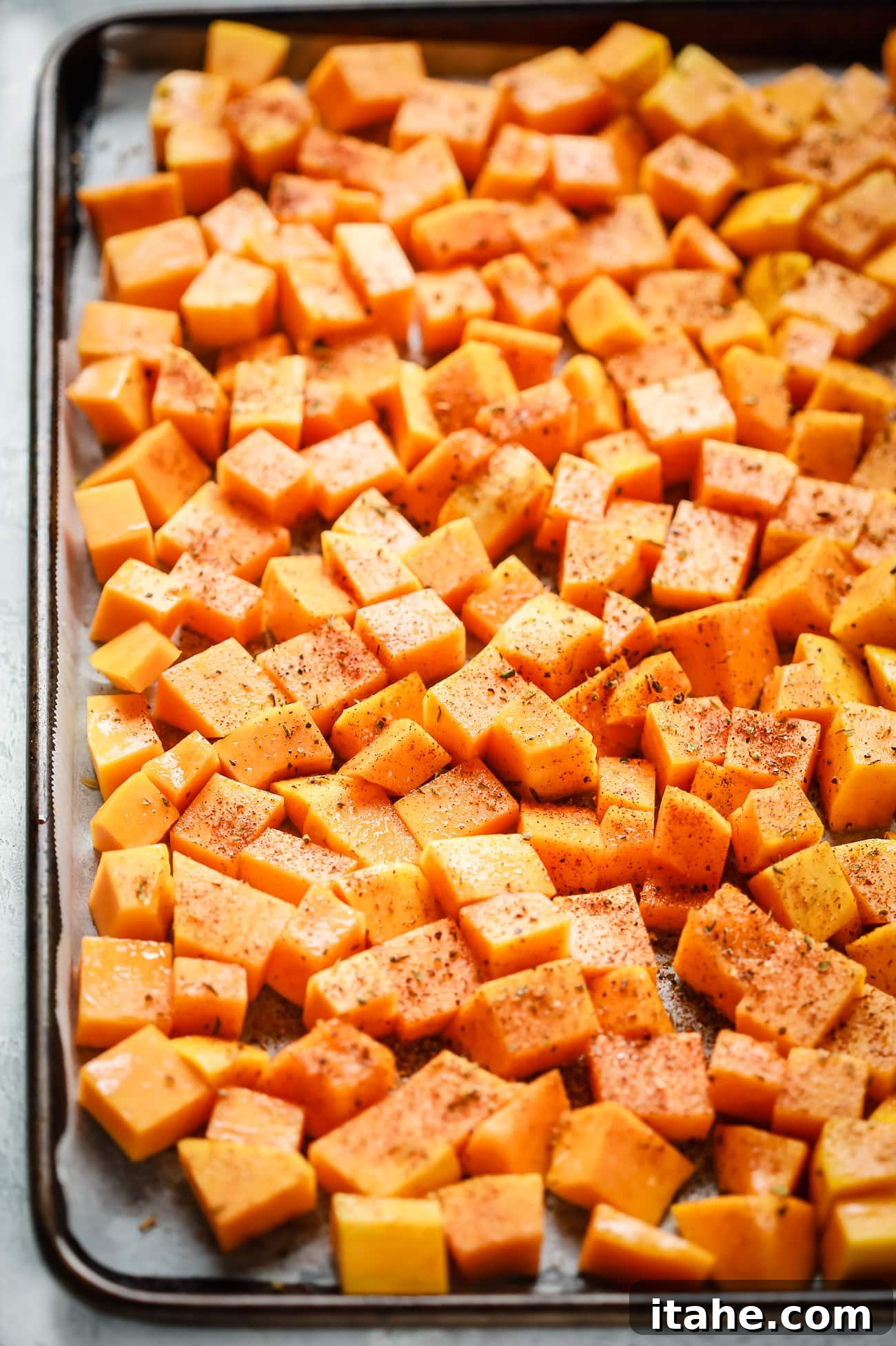
- Dice for Even Cooking: Dice the peeled and deseeded butternut squash into bite-sized pieces, aiming for cubes of approximately 1-inch in size. Uniformity in size is key here, as it ensures that all pieces cook evenly at the same rate. Once diced, arrange the butternut squash cubes in a single layer on your prepared baking sheet. Avoid overcrowding the pan; adequate space between the cubes allows for proper air circulation, which promotes caramelization and prevents the squash from steaming and becoming mushy.
- Season Generously: Drizzle the diced butternut squash with about 2 tablespoons of olive oil. Then, generously season with salt, freshly ground black pepper, and a sprinkle of paprika. This forms the foundational flavor profile. Feel free to add any other seasonings or spices you prefer at this stage, such as garlic powder, onion powder, or a touch of dried herbs. Use your hands to toss the squash pieces gently, ensuring each cube is thoroughly coated with oil and seasoning.
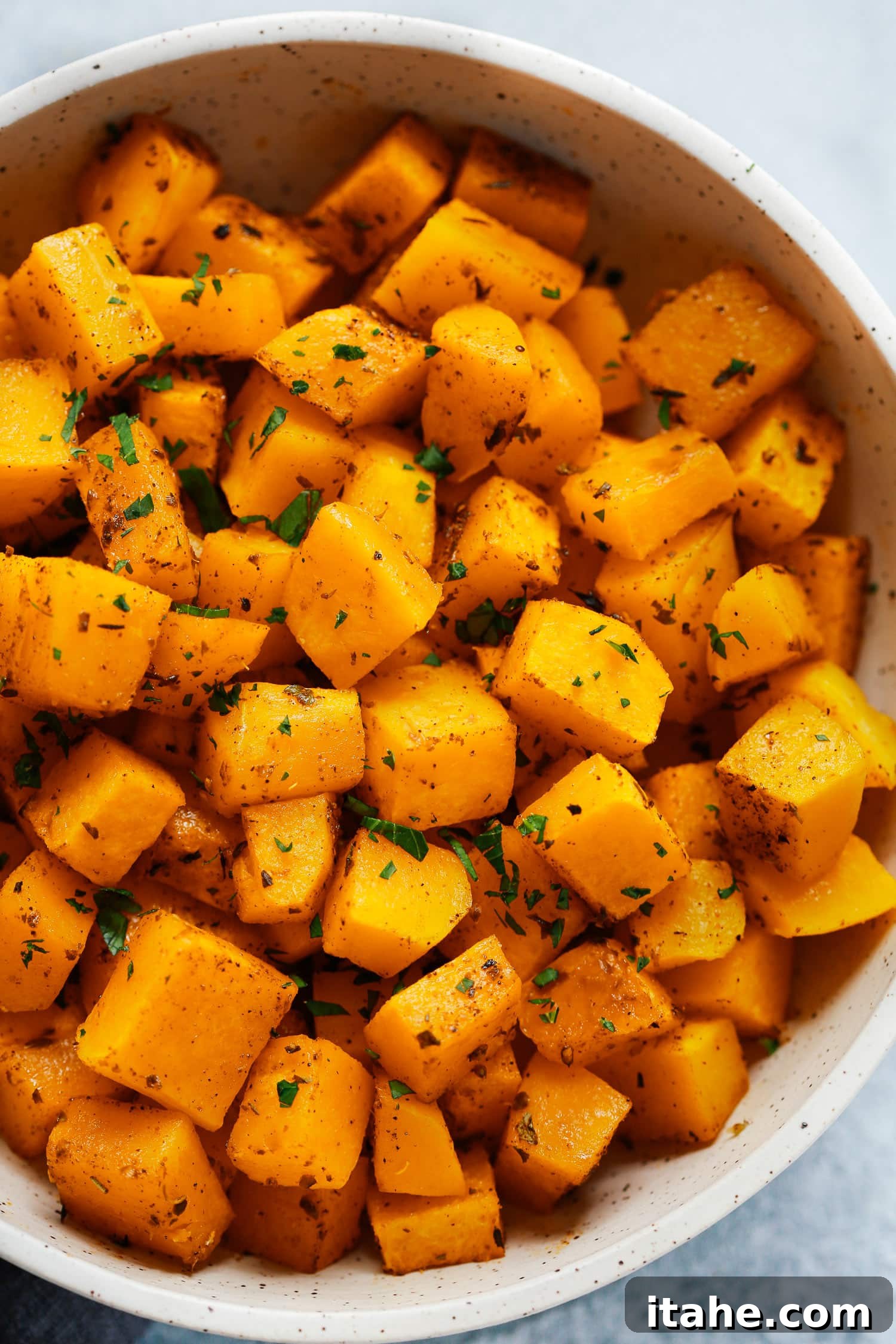
- Roast to Perfection: Place the baking sheet into your preheated oven. Roast for 15-20 minutes, or until the squash is tender when pierced with a fork and has developed beautifully caramelized edges. The exact roasting time will vary depending on the size and thickness of your butternut squash cubes, so keep an eye on it. Once roasted, remove from the oven, garnish with fresh parsley for a burst of fresh flavor, and serve immediately with your favorite protein or as a standalone healthy side dish. For example, it pairs exceptionally well with a savory pork tenderloin. Yum!
Expert Tips for the Best Roasted Butternut Squash Every Time
- Chop Evenly: The golden rule for perfectly roasted vegetables is consistency in size. Cut your butternut squash into pieces that are as uniform as possible. This ensures that every single cube cooks at the same rate, preventing some pieces from becoming overly soft and others from remaining undercooked. Aim for roughly 1-inch cubes for optimal results.
- Generous Seasoning: Don’t be shy with your seasonings! A generous coating of olive oil is essential for proper caramelization and helps the spices adhere. Beyond salt, pepper, and paprika, consider a dash of warming spices like cinnamon or nutmeg for a sweeter profile, or a sprinkle of brown sugar to enhance its natural sweetness and create a lovely glaze. Experiment to find your favorite flavor combination.
- High Temperature: Roasting at a moderately high temperature, ideally around 400-425°F (200-220°C), is key to achieving that desirable crispy exterior and tender interior. High heat helps to caramelize the sugars in the squash, bringing out its natural sweetness and creating those irresistible browned edges.
- Proper Spacing is Crucial: One of the most common mistakes in roasting is overcrowding the baking sheet. Ensure there’s ample space between each butternut squash cube on the pan. When vegetables are too close together, they release moisture and steam instead of roasting, resulting in soft, soggy pieces rather than crispy, caramelized ones. Use two baking sheets if necessary to give your squash room to breathe.
Creative Variations to Elevate Your Roasted Butternut Squash
While the classic roasted butternut squash recipe is delicious on its own, it also serves as a fantastic canvas for culinary creativity. Don’t hesitate to experiment with different flavors to suit your palate or complement your meal:
- Herbaceous Twist: If you don’t have fresh parsley on hand, or simply want a different flavor profile, a blend of dried rosemary and thyme adds a wonderful earthy, aromatic touch. You can also experiment with fresh sage or marjoram.
- Sweet & Savory Indulgence: For those who enjoy a hint of sweetness with their savory dishes, consider adding a drizzle of maple syrup or honey, combined with a little melted butter, before roasting. This creates a beautiful glaze that caramelizes further in the oven, enhancing the squash’s natural sweetness. A sprinkle of brown sugar can also achieve a similar effect, leading to a truly delicious, slightly candied finish.
- Spicy Kick: If you crave a bit of heat, toss the squash with a pinch of cayenne pepper, red pepper flakes, or a dash of chili powder along with your other seasonings. This adds a warming, zesty element that contrasts beautifully with the squash’s sweetness.
- Garlic & Herb Infusion: Roast the squash with minced garlic cloves and fresh sprigs of rosemary or thyme. The garlic will soften and mellow, infusing the squash with its pungent, savory notes, while the herbs provide a delightful fragrance.
- Cheese Please!: A few minutes before the squash is done roasting, sprinkle some grated Parmesan cheese over the top. The cheese will melt and become golden and slightly crispy, adding a salty, umami depth.
- Alternative Squashes: This roasting method isn’t exclusive to butternut squash. It works equally well with other winter squashes like acorn squash or delicata squash. Acorn squash, for example, offers a slightly nuttier flavor, while delicata squash can even be roasted with its skin on for added texture.
What To Serve With Roasted Butternut Squash: Perfect Pairings
Roasted butternut squash is a chameleon in the culinary world, effortlessly pairing with a vast array of main dishes and enhancing every meal. Its sweet and savory notes, along with its comforting texture, make it an ideal companion for almost any protein or vibrant salad. Here are some inspired pairing suggestions:
Chicken Recipes: The robust flavor of roasted butternut squash is a phenomenal match for chicken, offering a balance of sweetness to savory poultry. It’s particularly delightful when served with my savory roasted whole chicken, complementing the herbs and buttery tenderness. It also shines alongside a simple, yet flavorful, baked chicken breast, adding moisture and vibrant color. For a richer pairing, consider it with my super juicy baked chicken thighs, where its earthiness stands up beautifully to the dark meat.
Seafood Delights: The delicate sweetness of roasted butternut squash provides a beautiful counterpoint to the fresh flavors of seafood. This recipe makes a perfect side dish for a delicious shrimp scampi, offering a hearty balance. It’s also an exceptional accompaniment to easy oven-baked salmon, complementing its richness, or a flaky baked salmon in foil. For a lean white fish, roasted squash adds depth and color to a simple garlic butter cod recipe.
Hearty Pork Recipes: The inherent sweetness of butternut squash cuts through the richness of pork, creating a harmonious and satisfying meal. Who doesn’t love a good Baked Pork Chops recipe? This roasted squash dish goes incredibly well with pork chops, balancing the savory meat with its gentle sweetness and inviting texture.
Fresh & Vibrant Salads: For a lighter, yet equally satisfying meal, combine your roasted butternut squash with a crisp, refreshing salad. Other delicious sides that beautifully complement the roasted squash include a peppery arugula blackberry salad, providing a fresh contrast. A hearty quinoa salad adds protein and texture, while a vibrant black bean mango salad offers a fruity and zesty complement, creating a well-rounded and exciting plate.
The Incredible Health Benefits of Butternut Squash
Beyond its delicious taste and versatility, butternut squash is a nutritional powerhouse that offers a myriad of health benefits. Incorporating this vibrant vegetable into your diet is a fantastic way to boost your overall well-being:
- Rich in Vitamins: Butternut squash is an excellent source of several essential vitamins. It’s particularly high in Vitamin A, primarily in the form of beta-carotene, which is crucial for vision, immune function, and skin health. It also provides a significant amount of Vitamin C, a powerful antioxidant that supports the immune system, and B vitamins, vital for energy metabolism.
- Packed with Fiber: This squash is loaded with dietary fiber, which is essential for digestive health. Fiber helps promote regular bowel movements, prevents constipation, and can contribute to a feeling of fullness, aiding in weight management.
- Abundant in Minerals: Butternut squash contains important minerals such as potassium, which is vital for maintaining healthy blood pressure and fluid balance; magnesium, involved in over 300 bodily reactions; and manganese, an essential trace mineral.
- Powerful Antioxidants: The vibrant orange flesh of butternut squash is indicative of its rich antioxidant content, including carotenoids like beta-carotene, alpha-carotene, and beta-cryptoxanthin. These compounds help combat oxidative stress in the body, protecting cells from damage and potentially reducing the risk of chronic diseases.
- Low in Calories, High in Nutrients: Butternut squash is a relatively low-calorie vegetable that offers a high density of nutrients, making it an excellent choice for healthy eating and those looking to maintain or lose weight.
By enjoying roasted butternut squash, you’re not just treating your taste buds; you’re nourishing your body with a wealth of beneficial nutrients.
Roasted Butternut Squash
Olivia Ribas
6 people
10
20
30
Ingredients
- 3 lb butternut squash
- 2 tbsp olive oil
- 1/2 tsp salt
- 1/4 tsp black pepper
- ½ tsp paprika
- Fresh parsley to taste
Instructions
- Preheat oven to 425ºF. Line a baking sheet with parchment paper. Set aside.
- Place butternut squash on a cutting board and using a vegetable peeler, peel your butternut squash.
- Once it’s peeled, cut your butternut squash in half and remove the seed. (more info about cutting a butternut squash, above on the post.)
- Dice your butternut squash into bite-sized pieces roughly the same size so that they bake evenly.
- Place butternut squash on the prepared baking sheet and drizzle on olive oil and season with salt, pepper and paprika.
- Toss with your hands and then place in oven.
- Roast for 15-20 minutes. Time will depend on the size of the butternut squash cubes.
- Garnish with fresh parsley.
Notes
- If you have trouble cutting the butternut squash, you can microwave it for a few minutes to help soften it, making it easier and safer to cut.
- For the best results, avoid overcrowding the sheet pan. The more space you allow between each cube, the better they will roast, leading to crispy, caramelized edges rather than steamed, soggy squash.
- Always try to cut the butternut squash as uniformly as possible. This ensures that all pieces cook at the same rate, preventing some from becoming too soft while others are still firm.
- To store: Store any leftover roasted butternut squash in an airtight container in the refrigerator for up to 4 to 5 days.
- To freeze: For longer storage, freeze roasted butternut squash in a freezer-safe bag or container for up to 3 months. Ensure it’s completely cooled before freezing.
- To reheat: Reheat leftover squash gently in the microwave until warm, or for a crisper texture, spread it on a baking sheet and warm in a preheated oven at 350°F (175°C) for about 10-15 minutes.
Nutrition
Nutrition information is automatically calculated, so should only be used as an approximation.
Frequently Asked Questions About Roasting Butternut Squash
Here are some common questions and helpful answers to ensure your roasted butternut squash turns out perfectly every time:
- Can I roast butternut squash with the skin on? While butternut squash skin is edible after roasting, it can be quite tough and unappetizing for some. For the best texture and flavor, especially if you plan to dice it, it’s generally recommended to peel the squash first. However, if you’re roasting larger halves or wedges, you can leave the skin on and scoop out the flesh after cooking.
- How do I choose a good butternut squash? Look for a squash that is firm, heavy for its size, and has a smooth, dull skin without any soft spots, mold, or deep cuts. A uniform beige or light tan color is ideal. Avoid squash with shiny skin, as this can indicate it was picked too early.
- What can I use instead of olive oil? If you don’t have olive oil, or prefer an alternative, avocado oil, grapeseed oil, or melted coconut oil are excellent substitutes. These oils have relatively high smoke points, making them suitable for roasting at higher temperatures, and they impart a lovely flavor to the squash.
- Can I prepare butternut squash ahead of time? Yes, you can! You can peel and dice the butternut squash up to 2-3 days in advance. Store the diced squash in an airtight container or a sealed bag in the refrigerator. This can be a great time-saver for meal prep.
- How do I know when the squash is done roasting? Roasted butternut squash is perfectly cooked when it’s fork-tender and has developed beautiful golden-brown, caramelized edges. The natural sugars in the squash will caramelize, giving it a slightly sweet and nutty flavor.
- Can I add other vegetables to the roasting pan? Absolutely! Butternut squash roasts well with other root vegetables like carrots, parsnips, or sweet potatoes. Just ensure all vegetables are cut into similar-sized pieces so they cook evenly. You might also consider adding Brussels sprouts or broccoli florets, but these might cook faster, so add them halfway through the roasting process.
Conclusion: Your Go-To Recipe for a Versatile & Flavorful Side
Roasted butternut squash is more than just a side dish; it’s a celebration of simple, wholesome ingredients transformed into something extraordinary. Its natural sweetness, tender texture, and incredible versatility make it a perfect addition to any meal, whether you’re planning a casual weeknight dinner or a festive holiday spread. With our easy-to-follow guide on peeling, cutting, and roasting, along with creative variations and expert tips, you now have all the knowledge to prepare this vibrant dish to perfection every time. So, go ahead, pick up a beautiful butternut squash, gather your seasonings, and get ready to enjoy a healthy, delicious, and effortlessly elegant side that’s sure to impress!