Agentic AI Pushes Enterprises to Reconsider On-Premises Compute
CPU-heavy AI workloads, data control and isolation needs are renewing the case for owning infrastructure, while open-weight models make on-premises deployment more practical.
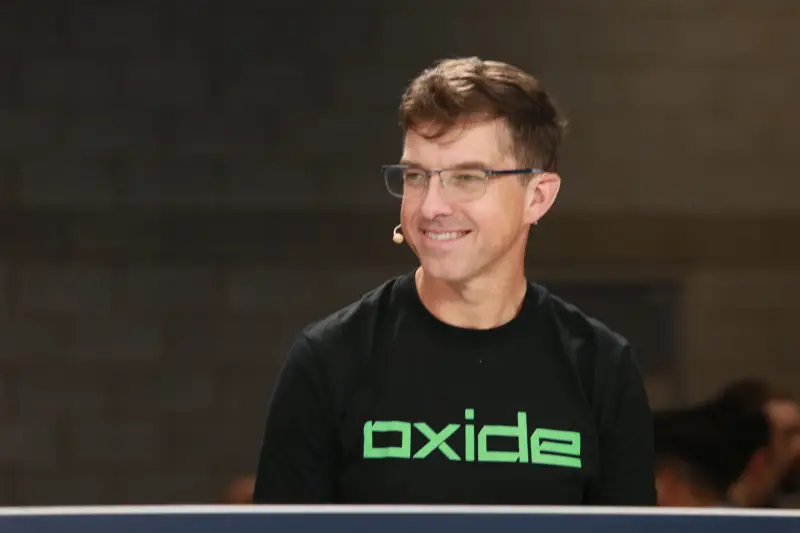
Agentic AI is putting a familiar infrastructure question back on the table: when workloads grow, does it still make sense to rent compute, or should an enterprise own the hardware? For Oxide Computer Co. co-founder and chief technology officer Bryan Cantrill, the answer depends on scale, economics and how much control a company needs over its data and systems.
Cloud services remain useful, but Cantrill argues that renting shouldn’t be the only operating model. “You get to a certain scale, as it turns out, you want to own your own computer,” he said. Oxide’s business is built around that premise. In October, the company raised $445 million to expand production of its data center racks.
The renewed interest in on-premises infrastructure isn’t simply a reaction to cloud bills. Agentic workloads can create substantial demand for compute, including CPU-heavy tasks. For enterprises running those workloads at scale, owning infrastructure may make the economics more attractive. Keeping models and data inside a company’s own environment can also reduce the need to send sensitive information elsewhere.
Model placement becomes a data decision
The model plane—the layer that determines where AI models run—is central to that shift. Open-source projects such as Upbound Inc.’s Modelplane can route inference across clouds. That flexibility can help operators place workloads where they fit best. But some enterprises want the option to run models on hardware they control.
Cantrill sees growing interest in open-weight models as one reason for that preference. “There is a real enterprise drive towards open-weight models, and I think you’re going to see more and more of that as people want to run the models on-prem and allow their data to not actually leave,” he said.
That makes model placement a data governance choice as well as an infrastructure decision. IT teams weighing an on-premises deployment need to consider where model execution happens, what information workloads process and which systems share the underlying resources. The source of the model is only part of the picture; the hardware and operating environment matter too.
Open-weight models can give organizations more choices about how and where models run. They don’t, by themselves, settle questions about isolation or infrastructure capacity. Teams still need to determine whether their environment can support the workloads, and whether their design keeps one tenant’s activity from exposing another tenant’s data.
Isolation has to hold on shared hardware
Security is another factor behind the on-premises argument. Oxide removed the UEFI BIOS and baseboard management controller from its rack design, a choice Cantrill said was intended to reduce the attack surface. The company also designed for multi-tenancy from the outset, aiming to isolate workloads that share a computer and network.
That requirement grows more demanding when tenants may be adversarial. “They’re going to be sharing the same computer, sharing the same network, and they need to do that … without violating the confidentiality, without breaching one another,” Cantrill said.
For administrators, multi-tenancy is therefore more than a way to divide capacity among teams. It has to enforce boundaries between workloads even when those workloads run on shared infrastructure. The design choices Cantrill describes—removing components and building in isolation—are meant to address that concern at the platform level.
The same racks could also support established virtualization workloads. Cantrill pointed to customers dissatisfied with pricing changes at Broadcom Inc.’s VMware business as one group that may look for alternatives. Running both legacy virtual machines and newer AI applications on a general-purpose platform could help enterprises consolidate infrastructure, provided the platform meets the needs of each workload.
What IT teams should weigh
Owning infrastructure gives an organization more direct control over where compute runs, but the decision still turns on the practical requirements of its environment. Cost is a major consideration in Cantrill’s case for bringing workloads in-house. So are security and latency, particularly when systems need to remain close to enterprise data or services.
On-premises cloud computing aims to retain the flexibility associated with elastic compute while placing the equipment in a company’s own data center. That can appeal to organizations that want to run AI and existing applications on shared infrastructure while maintaining control over the environment. It also means those organizations need to plan for the hardware and workload requirements that come with operating their own systems.
Cantrill described the objective as having flexibility for economic, security and latency reasons, while keeping infrastructure in the enterprise data center. His view is that control over the computing environment becomes more valuable as organizations reach a certain scale.
The practical question for IT leaders is where their workloads cross that threshold. Agentic AI adds pressure because it can increase compute demand, while open-weight models give some organizations a way to keep execution closer to their data. For teams considering a change, the key factors are workload costs, data location, isolation needs and whether one platform can serve both AI and legacy applications. Those requirements will determine whether renting remains the better fit or owning compute starts to make more sense.


