
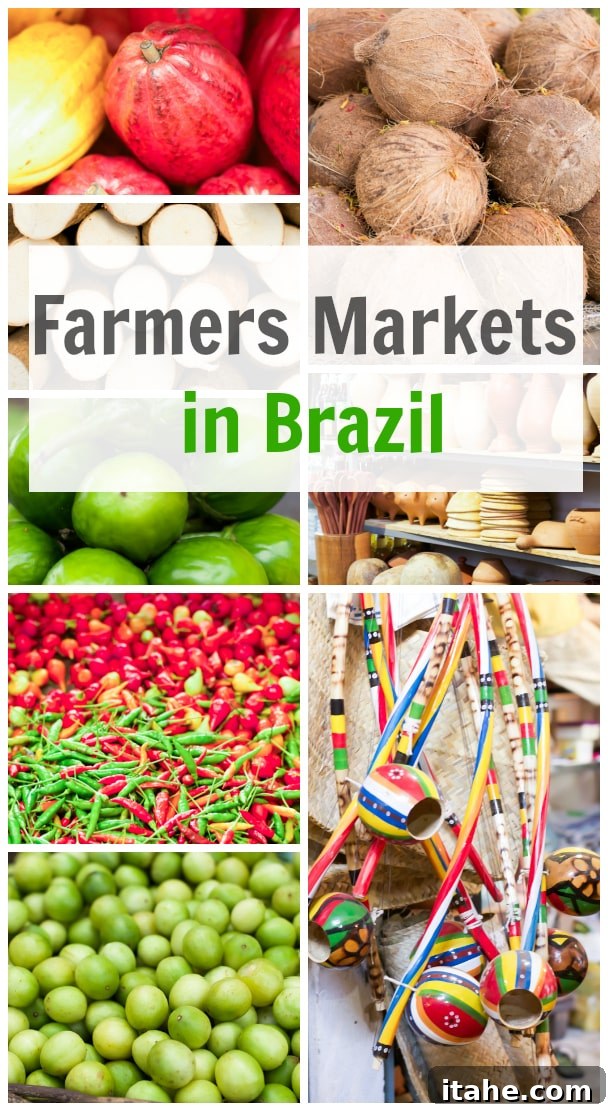
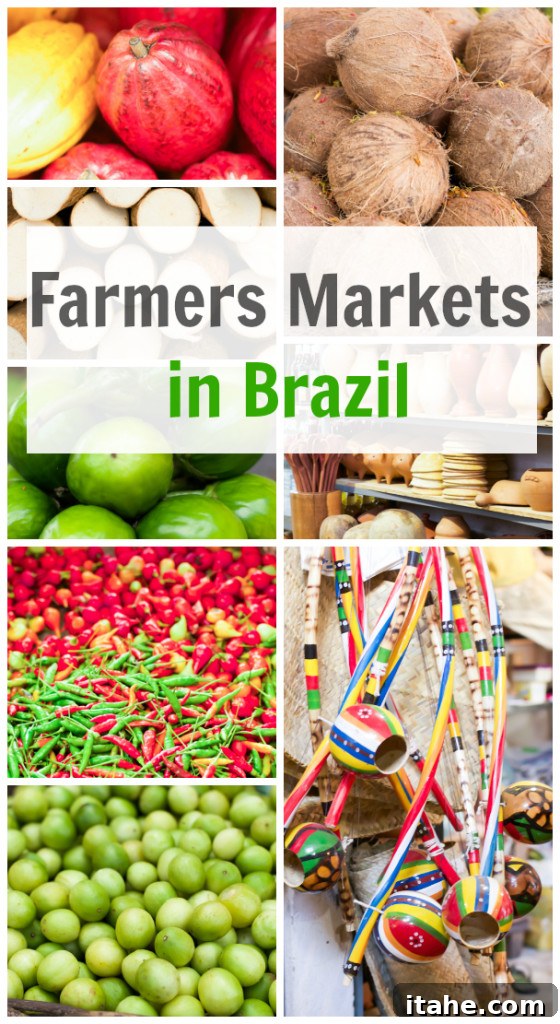
Embark on a vibrant culinary and cultural journey as we explore the bustling farmers’ markets in Brazil. These colorful hubs are more than just places to buy produce; they are pulsating centers of local life, offering an incredible array of unique fruits, vegetables, traditional foods, and handcrafted goods that truly capture the essence of this tropical nation. Join me as I share a personal glimpse into these captivating markets, particularly focusing on the rich offerings of Bahia.
For those who have been following my journey, you might already know my roots trace back to Brazil. My initial plan was to spend a mere six months in Canada, primarily to immerse myself in English studies. Yet, as life often does, it unfolded with beautiful, unexpected turns. Five months into my Canadian adventure, I met a remarkable individual—a Quebecois whose joyful spirit and charming dimples I simply couldn’t resist. Fast forward to today, and we’ve been happily married for over three years, making Canada my home for five years now. Who could have predicted that an exchange student’s short stay would transform into permanent residency?
Truth be told, despite the profound love I have for my life in Canada, there’s a constant yearning for Brazil—my family, cherished friends, the warmth of the sun, and the serene beaches. My entire family resides in Brazil, including my sister, who welcomed her first child, my adorable nephew, last November. This joyous occasion called me back to Bahia, one of Brazil’s 26 states, nestled along the eastern Atlantic coast, known for its vibrant culture and stunning landscapes. My recent trip, lasting several weeks, was a heartwarming blend of assisting my sister with her new baby, reconnecting with my family, and reminiscing with childhood and university friends.
Exploring the Soul of Brazilian Markets: A Bahian Perspective
Amidst the family reunions and rekindled friendships, I made sure to carve out time to revisit some of Bahia’s renowned farmers’ markets. Armed with my camera, I captured countless images, eager to share the unique treasures and authentic experiences these markets offer with all of you. The largest and most iconic market in Salvador, the vibrant capital city of Bahia and my family’s hometown, is affectionately known as “Feira de São Joaquim,” or simply Sao Joaquim Market in English.
Stepping into Feira de São Joaquim is like entering a living, breathing tapestry of Brazilian culture. It’s an explosion of vivid colors, intoxicating aromas, and the lively chatter of vendors and shoppers. The market boasts an incredibly diverse array of goods, from exotic tropical fruits and fresh vegetables to various flours, an impressive selection of seafood, fresh meats, aromatic spices, and even religious items and handcrafted souvenirs. It’s a place where every sense is awakened, offering an authentic glimpse into Bahian daily life and traditions. I’ve curated a selection of photos to guide you through some of the most captivating finds, with detailed explanations accompanying each image.
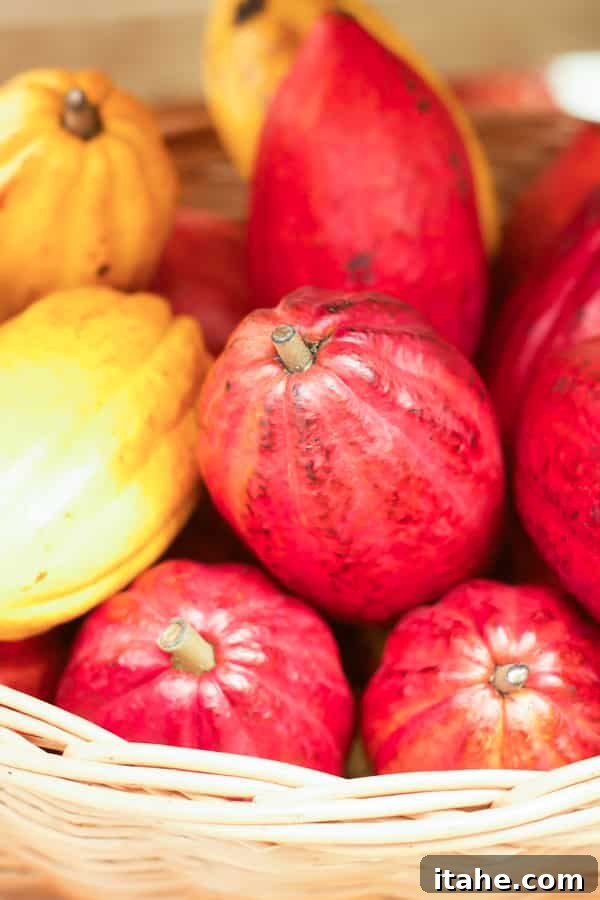
Cacao: The Heart of Brazilian Chocolate
This magnificent fruit, known as Cacao, holds a special place in my heart and in Brazil’s agricultural landscape. For those unfamiliar, chocolate, one of the world’s most beloved treats, originates from the seeds of this very fruit. Bahia, particularly its southern region, is dotted with countless cacao trees, contributing significantly to Brazil’s cacao production. Beyond its role in chocolate, the fruit’s tangy, sweet-sour pulp is often enjoyed fresh, used in refreshing juices, or transformed into delicious jams. It’s a true symbol of Brazil’s natural bounty and a testament to its rich agricultural heritage.
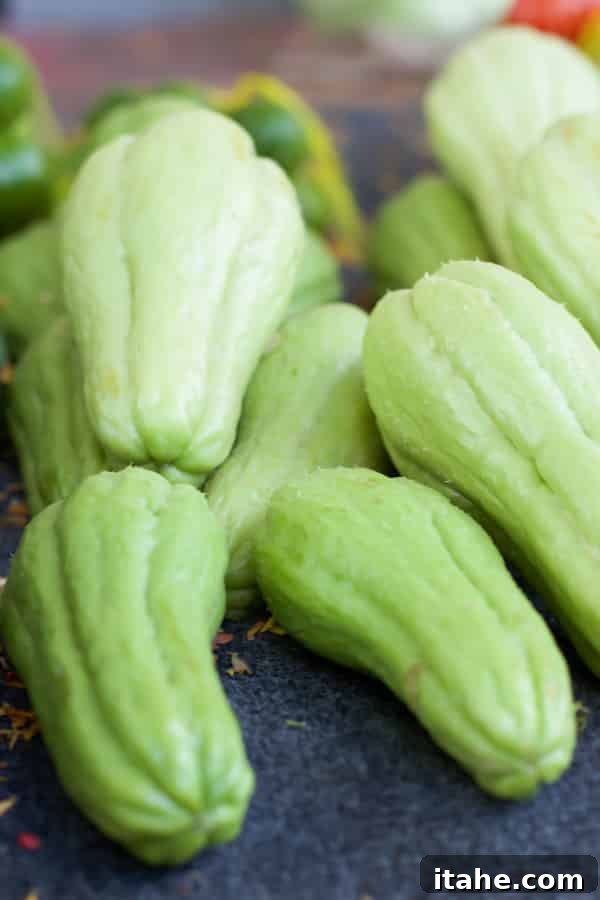
Chuchu (Chayote): A Versatile Brazilian Staple
In Portuguese, we affectionately call these “chuchu,” though they are widely recognized as “chayote” in many parts of Central America and beyond. Chuchu is an ubiquitous sight in every Brazilian market, celebrated not only for its availability but also for its incredibly affordable price. While its flavor on its own can be somewhat mild or bland, this is precisely its strength; chuchu readily absorbs the vibrant flavors of other spices and ingredients it’s cooked with. Brazilians creatively incorporate this green vegetable into a variety of dishes, from refreshing potato and chuchu salads to hearty stews and purees. Its subtle taste makes it a perfect canvas for rich Brazilian seasonings, a testament to its culinary adaptability.
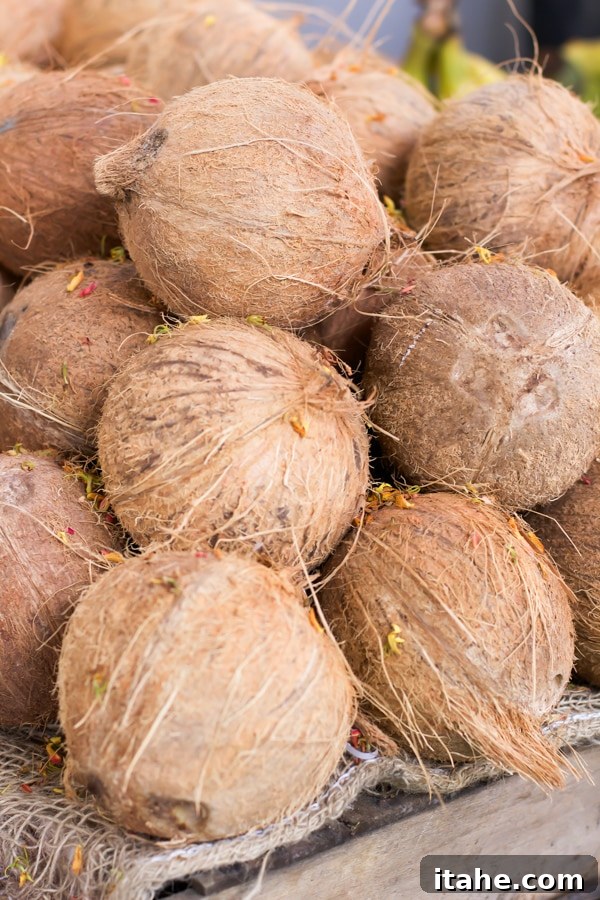
Coconut: The Quintessential Tropical Refreshment
As a quintessential tropical country, Brazil is synonymous with coconuts. You’ll find an abundance of this versatile fruit in markets across the nation, and its iconic trees line countless pristine beaches. Coconut water stands out as one of the most beloved and refreshing drinks, especially under the Brazilian sun. Beyond hydration, coconuts are integral to Brazilian cuisine; their meat is grated into savory and sweet dishes, pressed for milk, and processed into oil. It’s a symbol of tropical paradise and an essential component of the Brazilian diet, offering both flavor and vital nutrients.
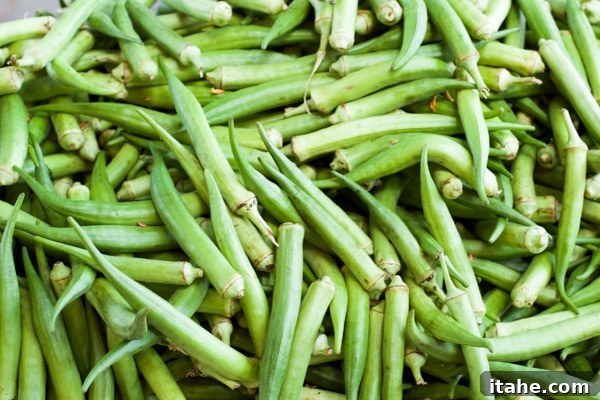
Okra (Quiabo): A Taste of African Heritage
Known as “quiabo” in Portuguese, this distinctive vegetable is universally called okra or gumbo in English-speaking regions. While its origins trace back to North-Eastern Africa, okra has found a thriving home and immense popularity throughout the tropical and warm temperate zones of the world, making it particularly beloved in the Northeast of Brazil. Its unique texture and mild flavor are essential to many traditional Bahian dishes, such as Caruru (a classic Afro-Brazilian stew), showcasing the profound influence of African culinary traditions on Brazilian gastronomy.
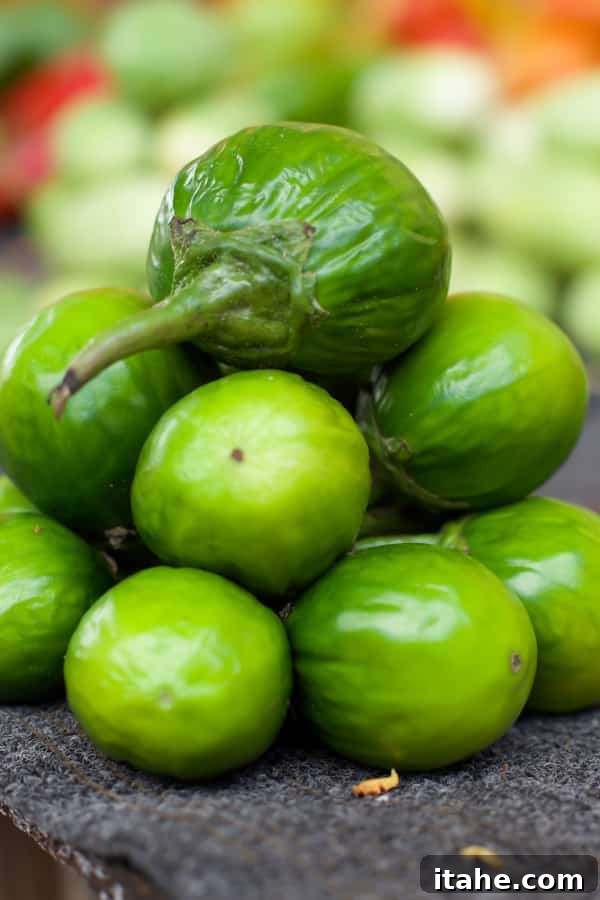
Jiló (Scarlet Eggplant): A Brazilian Delicacy for the Adventurous Palate
These intriguing vegetables are known as “Jiló” in Brazil, and they belong to the same botanical family as the common eggplant, often referred to as Scarlet Eggplant in English. Jiló is famous for its distinctly bitter taste, a characteristic that makes it a challenging yet rewarding ingredient for many palates. Personally, its bitterness isn’t my favorite, but for those who appreciate and seek out sharp, intense flavors, Jiló can be a truly captivating culinary experience. It is often prepared boiled, fried, or stewed, sometimes paired with strong spices or sauces to balance its unique profile, holding a cherished spot in traditional Brazilian cooking.
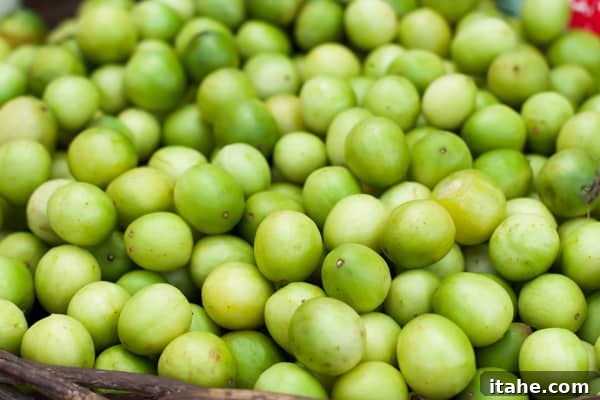
Umbu: The Sweet Gem of the Northeast
Allow me to introduce another of my absolute favorite fruits from the Brazilian Northeast: “umbu.” This small, round fruit is a true regional delicacy, making it quite a rare find outside of its native habitat in the Northeast. If you ever find yourself in that region and come across umbu, seize the opportunity to try it! Its soft, juicy flesh offers a delightful balance of sweet and tangy flavors, a unique taste that is both refreshing and utterly delicious. Umbu is commonly enjoyed fresh, made into refreshing juices, or transformed into traditional sweets and jams, embodying the distinct flavors of the caatinga biome.
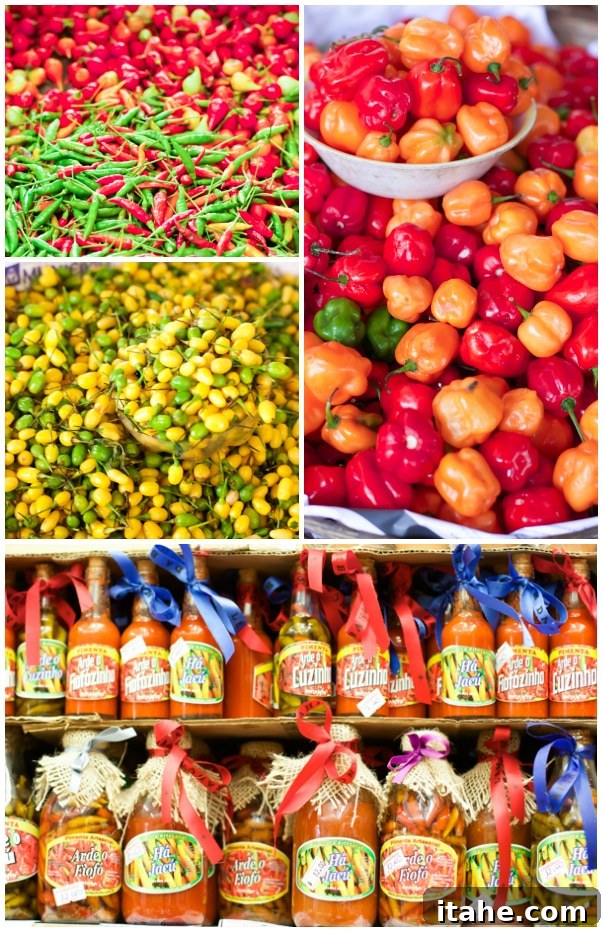
Brazilian Hot Peppers: Igniting the Palate
The images of these vibrant hot peppers and bottled sauces speak volumes about their importance in Brazilian cuisine, especially in the Northeast! My love for hot peppers and spicy food runs deep, and Brazil’s markets are a paradise for fellow enthusiasts. You’ll discover an astonishing variety of peppers, ranging from mildly piquant to intensely fiery, available everywhere. Spicy food is a cornerstone of Northeastern Brazilian gastronomy, and these peppers, often preserved in small, beautifully labeled bottles of homemade sauces, allow you to take a piece of that fiery flavor home. They are integral to marinating meats, enhancing stews, and simply adding a kick to any dish.
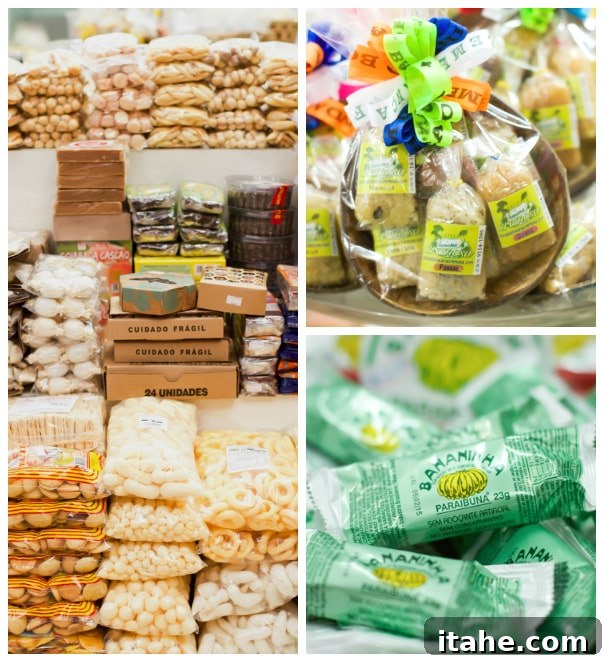
Delightful Brazilian Snacks and Sweets
Prepare for a delightful (and, I must confess, sometimes delightfully unhealthy!) assortment of Brazilian snacks and sweets. These markets are a treasure trove of traditional treats. You’ll find an incredible variety of candies, cookies, and unique snacks like “avoador” – a light, airy biscuit often found at the bottom left of the image – and “bananinhas,” delicious chewy sweets made from dried bananas, visible on the bottom right. From sugary delights to savory bites, these snacks represent a beloved part of Brazilian culinary culture, perfect for a quick energy boost or a sweet indulgence.
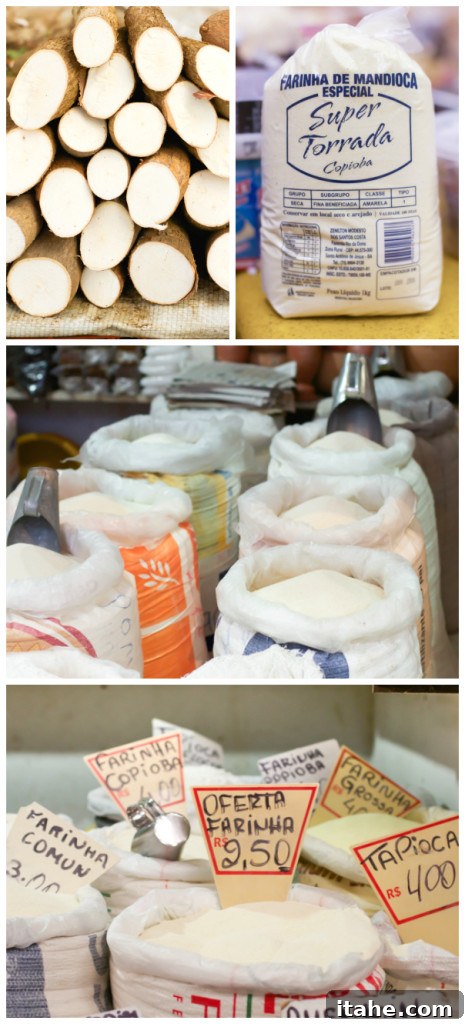
Cassava (Mandioca): A Cornerstone of Brazilian Cuisine
These images showcase the humble yet incredibly versatile cassava root, or yuca, prominently displayed on the top left, alongside various forms of its processed flours. What makes this root particularly interesting in Brazil is its regional nomenclature; depending on where you are in the country, it can be known by three distinct names: “Aipim” (predominantly in the Southeast), “Mandioca” (more common throughout the country), or “Macaxeira” (especially in the North and Northeast). Regardless of its name, cassava is an indispensable staple, transforming into everything from fluffy farofa (toasted flour mixture) to delicious tapioca, and crunchy fried yucca fries. Its adaptability and nutritional value make it a fundamental component of the Brazilian diet.
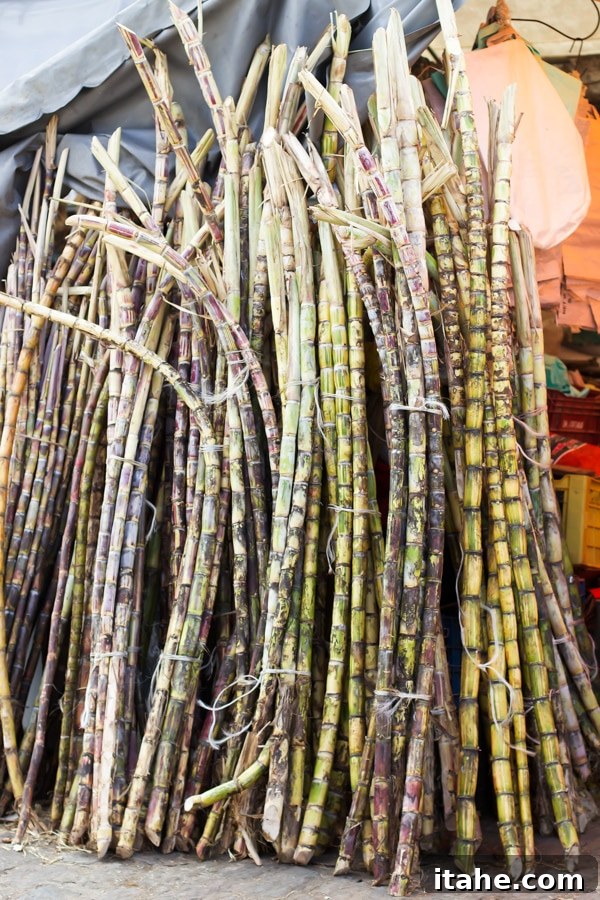
Sugarcane (Garapa): The Ultimate Tropical Thirst Quencher
These majestic stalks of sugarcane are truly awesome, and their presence is felt throughout Brazil. Sugarcane juice, known as “garapa,” is a ubiquitous and highly cherished refreshment found in markets and street stalls everywhere. Its incredible sweetness and refreshing quality make it the perfect antidote to Brazil’s tropical heat. Often pressed fresh on the spot, garapa is a pure, natural energy boost and a quintessential part of the Brazilian market experience, offering a simple yet profoundly satisfying taste of the local bounty.
Traditional Cooking with Terracotta and Wood
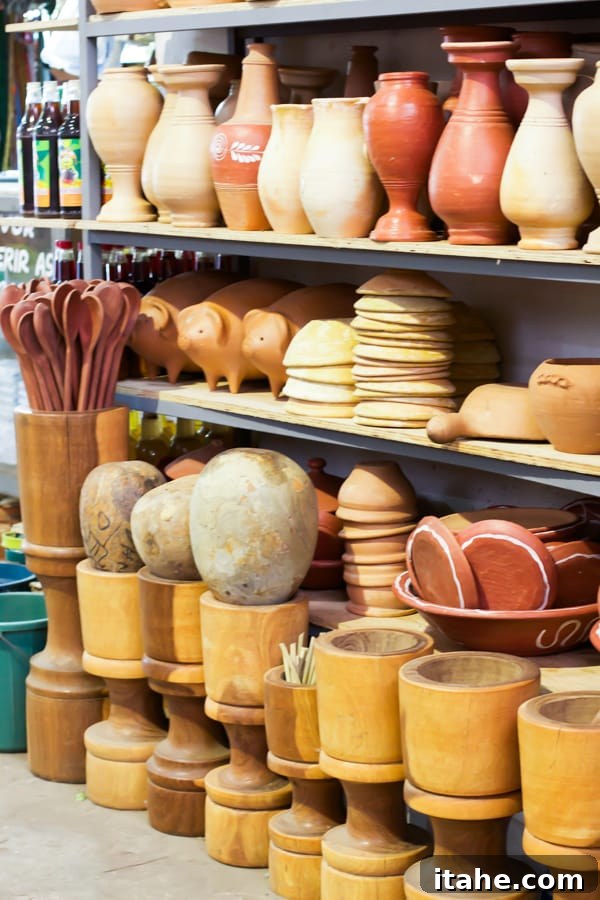
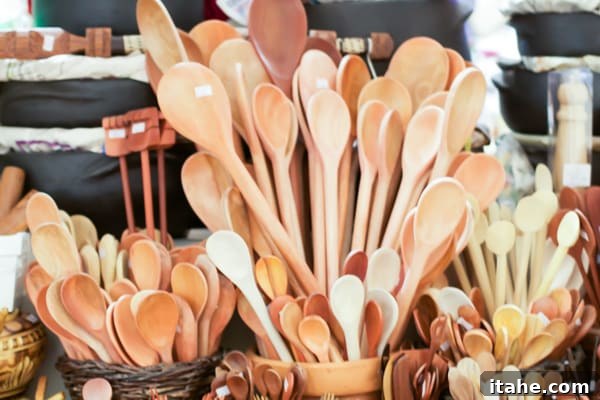
A significant aspect of Brazilian culinary tradition is the use of natural cooking vessels and implements. We Brazilians cherish cooking with wooden spoons and terracotta pots, a practice that many continue to this day. There’s a profound reason for this enduring preference: these traditional pots impart an incredible depth of flavor to the food that modern cookware simply cannot replicate. The slow, even heat distribution of terracotta and the gentle stirring of wooden spoons are believed to unlock and enhance the authentic tastes of Brazilian dishes. It’s an age-old secret to truly delicious, soulful cooking.
Brazil Nuts (Castanha do Pará): A Nutritional Powerhouse
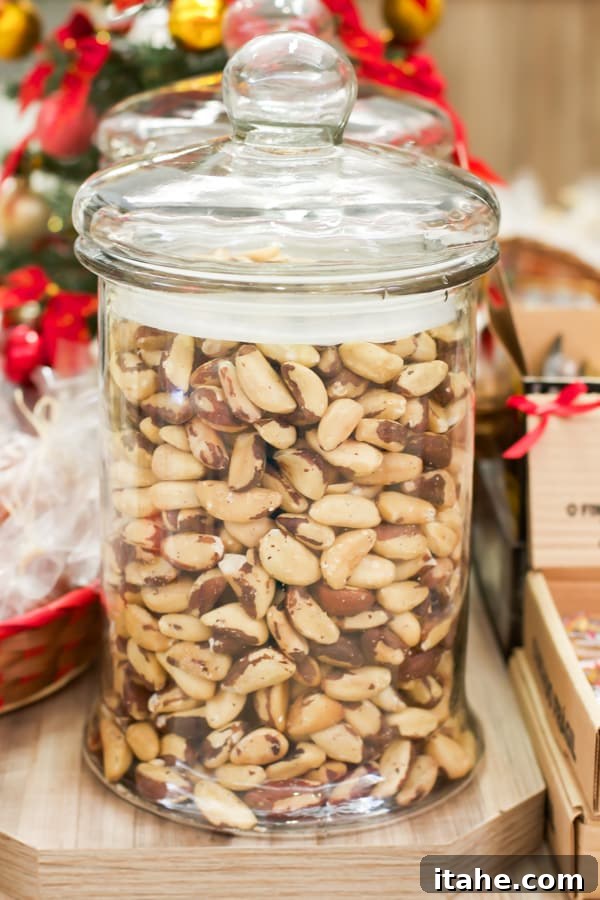
I imagine most of you are already familiar with these distinctive nuts! Known internationally as Brazil nuts, in Brazil, we proudly call them “Castanha do Pará,” referencing the state of Pará where they are abundantly harvested. These highly nutritious nuts are celebrated not only for their rich, buttery flavor but also for their impressive health benefits, particularly their high selenium content. Found fresh and often shelled in markets, they are a beloved snack and an important part of the Amazonian diet, representing another precious gift from Brazil’s incredible biodiversity.
Dendê Oil (Palm Oil): The Golden Essence of Bahian Cuisine
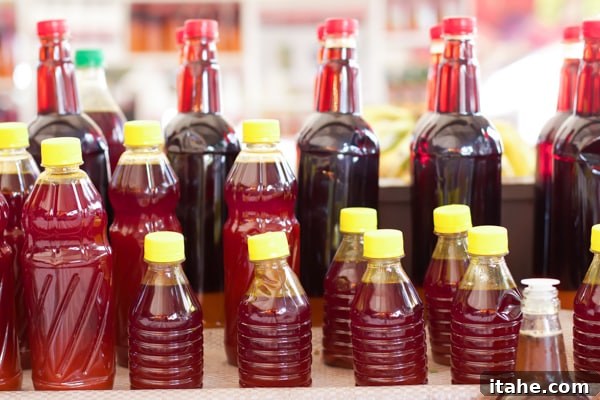
This vibrant, amber-colored oil is “Óleo de Dendê,” or palm oil in English. It is an absolutely indispensable ingredient in Bahian cuisine, which is profoundly influenced by delicious African traditions. Dendê oil imparts a unique, rich flavor and a distinctive orange hue to a myriad of dishes. It is the secret behind the authentic taste of iconic Bahian specialties such as Acarajé, a popular deep-fried street food and beach snack made from black-eyed pea paste, and Bobó de Camarão, a creamy shrimp stew. Its cultural significance and culinary impact cannot be overstated, defining the very essence of many traditional Bahian meals.
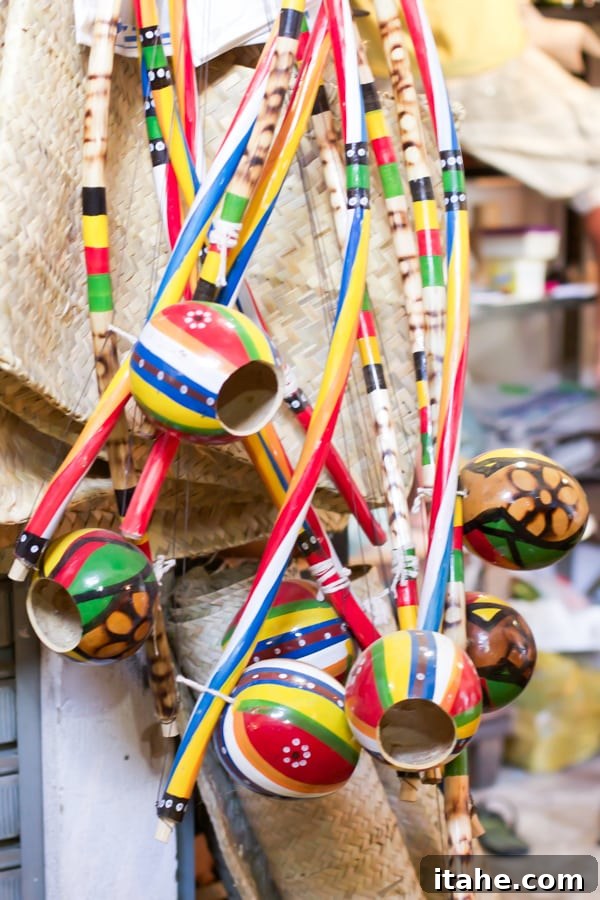
The Birimbau: A Symbol of Afro-Brazilian Culture
Last but certainly not least, among the myriad of cultural artifacts you can discover at Brazilian farmers’ markets is the “Birimbau.” This unique percussion instrument is not merely a musical tool; it is intrinsically linked to the practice of Capoeira, the dynamic Afro-Brazilian martial art that combines elements of dance, acrobatics, and music. The birimbau serves as the conductor of the Capoeira roda (circle), dictating the rhythm, tempo, and style of play. Its presence in the markets speaks volumes about the deep cultural roots and historical significance of Afro-Brazilian traditions in communities like Bahia, offering a tangible connection to Brazil’s rich heritage.
A Journey Through Brazilian Flavors and Traditions
I truly hope you’ve enjoyed this virtual tour of Brazil’s incredible farmers’ markets as much as I enjoyed revisiting these memories and sharing them with you. These markets are a microcosm of Brazil itself—bursting with life, flavor, and an undeniable cultural richness that captivates every visitor. From the exotic fruits and essential staples to the traditional crafts and musical instruments, each item tells a story of heritage, passion, and the vibrant spirit of the Brazilian people.
If this post has ignited your curiosity and taste buds, please consider sharing it with your friends and family. Eager for more culinary adventures and authentic Brazilian insights? Subscribe to my newsletter and follow Primavera Kitchen on Twitter, Pinterest, Instagram, and Facebook for delicious updates and fresh perspectives. Thank you, as always, for stopping by and being a part of this journey. Your appreciation means the world!