HPE Raises Fiscal 2027 Revenue Outlook as AI Demand Drives Record Growth
HPE reported 50% quarterly revenue growth and lifted its fiscal 2027 outlook, while forecasting continued strength in AI server demand and constrained components.
Hewlett Packard Enterprise’s results point to a sharp change in its growth outlook: fourth-quarter revenue rose 50% year over year, and the company now expects fiscal 2027 revenue growth of 27% to 35%. The forecast reflects demand for AI servers and networking equipment, along with HPE’s expectation that supplies of several key components will remain tight through the end of calendar 2028.
The market reaction was less upbeat. HPE shares had climbed more than 17% during regular trading before the results, amid a broader rally in AI-related stocks, then fell more than 6% after hours. The split reaction puts the operational results and the expectations already reflected in the share price in separate columns: HPE delivered strong figures, but the after-hours move suggests that investors had been looking for more than a strong quarter.
Revenue and profit jump
HPE reported fourth-quarter adjusted earnings of $1.43 per share, excluding certain costs such as stock compensation. That was above the $1.26 per share expected by Wall Street analysts. Revenue reached $14.55 billion, up from the same quarter a year earlier and ahead of the $14.47 billion analyst estimate.
Net profit was $1.82 billion, compared with $175 million in the year-ago period. The gap between those figures is striking, though the available results don’t break down the factors behind the increase. For IT teams, the clearest operating signal in the reported numbers is the scale of the revenue rise, which HPE’s chief executive tied to demand for AI servers and networking equipment.
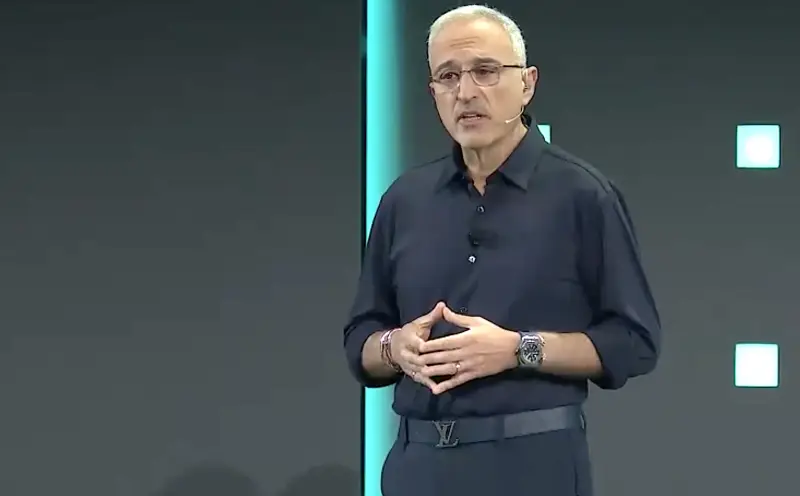
President and Chief Executive Antonio Neri described the results as evidence of the portfolio HPE has built to support durable, profitable growth. That is the company’s characterization of its performance; the reported revenue, earnings per share and net profit provide the measurable detail behind it.
Fiscal 2027 forecast more than doubles
HPE now expects revenue growth of 27% to 35% in fiscal 2027, which ends next October. That translates to revenue of $59.4 billion to $63.1 billion. Its previous growth forecast was 13% to 17%, so the updated range marks a substantial upward revision.
Neri told analysts that demand for AI servers extends well into next year. He also pointed to a shift in AI workloads, from training models toward inference and AI agents, as an opportunity for HPE’s systems and networking portfolio. In practical terms, the company is arguing that customers will continue to need infrastructure as AI services move from model development into ongoing use.
Neri said HPE sees an opportunity across networking, cloud and AI. His comments describe the company’s view of its market position; they don’t specify how much of the revised forecast depends on each product area or workload. Administrators and IT leaders weighing infrastructure plans should therefore treat the growth forecast as a signal of HPE’s expectations, rather than as a guide to the timing or availability of a particular system.
Component constraints remain part of the outlook
HPE expects supplies of memory, flash and networking equipment to remain constrained through the end of calendar 2028. That is a long horizon for a company raising its sales expectations, and it makes component availability a key part of the story alongside customer demand. HPE did not give quantities for the expected shortfalls or describe their specific effect on product delivery schedules.
For organizations planning server or networking purchases, the reported constraint is a reason to check lead times and delivery commitments with suppliers when preparing projects. It does not establish that every product will be delayed, or that every customer will face the same conditions. HPE’s comments describe its broad expectation for component supply, while the article contains no product-by-product availability guidance.
Near-term sales forecast tops analyst expectations
For the current quarter, HPE expects revenue between $14 billion and $14.6 billion. At the midpoint, that would mean 54% growth compared with the corresponding quarter a year earlier. Analysts had expected revenue of $13 billion, below even the bottom of HPE’s forecast range.
The projection indicates that HPE expects its recent pace of expansion to continue in the near term. It also gives a concrete measure to watch in the next results: whether reported sales land within the company’s range, and how management describes AI server demand and component supply at that point. The forecast is not a guarantee, and the available details don’t identify how much revenue is tied to specific customers or orders.
HPE’s shares rose more than 17% in regular trading before the report, then dropped more than 6% after hours. The broader AI rally followed news that Nvidia had reinstated founder and chief executive Jensen Huang. Those moves frame the immediate market response, but they don’t change HPE’s reported results or its revised forecast.
What to watch next
HPE’s largest rival in the AI server business, Dell Technologies, was expected to report results the following afternoon, alongside HP, Nutanix and Workday. Those reports may offer further context on demand across the server and enterprise technology markets, but no results from those companies are included here.
For now, HPE has set a high bar for its next reporting periods: strong near-term sales, much faster fiscal 2027 growth and demand it expects to persist while component supplies remain constrained. The practical question for customers is whether their planned deployments can match their required schedules; for HPE, the next results will show whether sales and deliveries keep pace with its expanded outlook.


