Claude Ship Adds Automated Code Approval for Claude Team and Enterprise
Claude Ship combines code review, pull request repair and policy based approvals for GitHub repositories, with Anthropic advising cautious beta adoption.
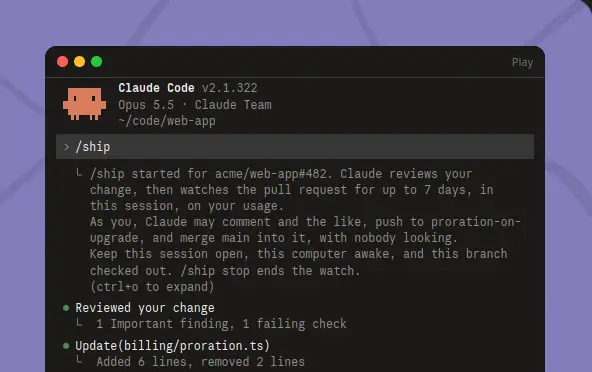
Claude Ship extends AI involvement in software delivery to the decision that has traditionally remained with a human reviewer: whether a code change meets a team’s requirements for approval. Anthropic says the service can review code, address pull request issues and apply an organization’s approval rules. For teams already using AI to generate code, that puts more of the path from a proposed change to a merge under automated handling.
Anthropic announced Claude Ship as a suite with three parts: Code Review, PR Steward and Claude Approvals. Code Review has been generally available for some time, while PR Steward and Claude Approvals remain in beta. The service is available to Claude Team and Enterprise subscribers and works with repositories on GitHub.
Approval is the key change
Automated code review and repair have become familiar uses for AI development tools. The less routine step is handing an agent authority to approve a change under rules set by the development team. In Claude Ship, that decision is governed by an approval policy stored as a file in the repository. Teams can write policies in natural language, and the process can take account of Code Review findings and the organization’s own classifiers.
That model shifts some responsibility from a person examining each change to the team that defines the conditions for approval. A policy can describe the standards Claude should apply, while the repository file gives the system a place to read those standards as part of its work. The practical value depends on how well those rules represent the team’s expectations and how reliably the system applies them. Anthropic hasn’t described a universal policy that teams can assume will fit their codebase.
The change addresses a workflow pinch point created by faster code generation. When developers or coding agents produce proposed changes quickly, review capacity can become the part of delivery that sets the pace. Anthropic says its Claude Code team wanted work after a pull request to move at the speed of code written with agents. Claude Ship is intended to help with that handoff by assigning review, repair and approval tasks to its agents.
PR Steward handles pull request problems
PR Steward is designed to respond to issues that can interrupt a pull request’s progress, including failing continuous integration checks, merge conflicts and feedback from Code Review. After each push, it leaves comments describing the changes it made and how to roll them back. That record gives developers a way to inspect the agent’s work and understand the recovery path if a change causes trouble.
In this sequence, PR Steward deals with the mechanics and feedback around a proposed change; Claude Approvals applies the repository’s approval policy after that work. This could reduce the number of routine issues a developer needs to handle manually, but it also makes visibility into agent actions important. Teams will want to review what PR Steward changes, how it responds to check failures and whether its rollback guidance is clear before relying on it across more repositories.
Start with observation and a narrow rollout
Anthropic recommends that early adopters run Claude Approvals in observe-only mode first. That lets a team see how the approval process behaves before giving it authority to approve changes. The company also advises beginning with one repository and setting monthly spending limits. These steps help teams constrain the initial rollout while they assess the system’s decisions and costs.
A useful first evaluation would compare Claude’s observed decisions with the reviews developers would normally make. Teams can check whether the configured rules cover their expected quality and security standards, whether Code Review findings are reflected in decisions, and how edge cases are handled. They should also examine the comments and proposed fixes from PR Steward, including its rollback instructions. These checks follow from the workflow Anthropic describes; the company has not supplied specific performance figures or a standard evaluation period.
Because Claude Approvals and PR Steward are still in beta, teams should treat their behavior as something to validate against their own repositories and development practices. Approval rules written in natural language give teams flexibility, but they also need to be precise enough to guide decisions consistently. A narrow trial can show where rules need clarification before the same process is applied more broadly.
Claude Ship is therefore a notable change in how far an AI agent can participate in a software team’s delivery process. The central operational question is whether a team can express its review standards clearly and verify that the agents follow them. For Claude Team and Enterprise customers using GitHub, the cautious starting point is the one Anthropic recommends: observe approvals in a single repository, review the agent’s work, and set a monthly spending limit before expanding use.


