IBM’s AI Operating Model Puts Integration, Governance and Evaluation at the Center
IBM’s Ritika Gunnar outlines four operating model components for agentic AI, with governed data, human oversight and business outcomes guiding production use.
AI agents that take action continuously put new demands on enterprise operations: systems need current information, clear access controls and a way to assess whether an agent’s decisions are accurate, timely and cost-effective. IBM’s AI operating model groups those needs into four connected components: data, workloads, automation and hybrid cloud.
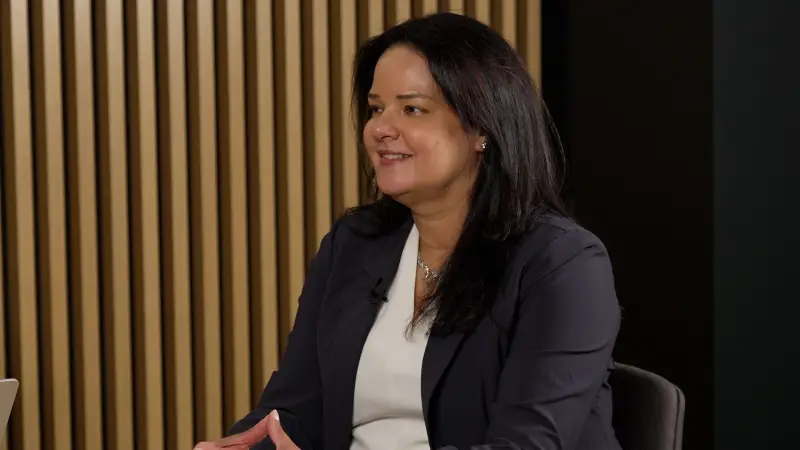
Ritika Gunnar, IBM’s chief performance marketing officer, discussed the model in an interview with theCUBE Research’s Dave Vellante and John Furrier. The conversation, part of IBM’s AI Operating Model interview series, covered integration with existing systems, data governance, human oversight and how to measure AI against business outcomes ahead of IBM TechXchange 2026.
Keep existing systems in the picture
Enterprises introducing agentic AI still need to run the applications and processes they already depend on. Gunnar pointed to SAP and Salesforce as examples of established platforms that organizations are unlikely to discard simply because they are adding AI workloads. The practical task is connecting existing systems and newer AI capabilities so both can support business processes.
IBM’s model assigns a role to each of four areas. Data provides enterprise knowledge. Workloads cover applications and workflows. Automation supports oversight and optimization. Hybrid cloud addresses operations spread across environments. The model’s value, Gunnar argued, rests on how these pieces work together, rather than on any one component in isolation.
That connection matters when teams choose models and agents for particular tasks. Data can feed applications, but without visibility into AI infused workloads, organizations may struggle to understand how those systems operate or select a suitable agent. Automation and observability are therefore part of the operating model, not just follow up tasks after deployment.
Carry permissions and provenance with data
An agent’s decision may depend on information from operational systems, edge devices and other agents. That creates a governance challenge: the context must be useful enough to inform a decision, while the data’s ownership and access rules remain clear as information moves between systems.
Gunnar’s approach is to apply governance early in the data flow. In her view, permissions should be considered as data is prepared and passed to workloads, with context and provenance identifying who owns the information and who can access it. This helps agents make decisions using relevant data while preserving the conditions attached to that data.
For IT teams, the operating question is how access rules follow information as it moves across systems and into agent workflows. If those rules are detached from the data, visibility into what an agent could use may be incomplete. Keeping provenance and permissions in view also gives teams a clearer basis for reviewing an agent’s inputs and actions.
Keep people involved where judgment matters
Not all useful business knowledge is written down in applications or databases. Employees often build judgment through experience, and that tacit knowledge can be difficult to represent in a prompt or other system context. Gunnar said prompts can help convey some of it, but capturing that expertise remains a challenge.
Some workloads may operate autonomously, but essential systems often still need people involved. Human oversight can supply judgment in areas where AI has not matured enough to make decisions on its own. That makes the human role part of the operating design: teams need to identify where staff input remains necessary and how that input reaches the workload.
This is also a reminder that adding agents does not automatically remove the need for established business processes. Organizations need to decide which actions can run autonomously, where a person should review or guide a decision, and how employees’ experience can inform the system when formal records lack the needed context.
Use activity records to evaluate results
Agent logs record decisions and actions, while prompts show the instructions provided to the system. Gunnar described using those records in evaluation loops that compare possible outcomes: did the agent make the right decision, and could another approach have been more accurate, timely or cost-effective?
Those measures need to connect to the intended business result. Accuracy, speed and cost matter in different ways depending on the work an organization wants to improve. An evaluation process can use the available records to examine agent performance, but the business process still needs to define what a good result means.
Gunnar’s advice is to assess the work as well as the technology. Before putting AI into production, organizations should consider how the underlying business process needs to change and what outcomes they expect. For administrators and IT leaders, that means treating integration, governance, oversight and evaluation as linked operating requirements. The next step is to map those requirements to the workflows where agents will act, then define how the organization will judge their results.


