
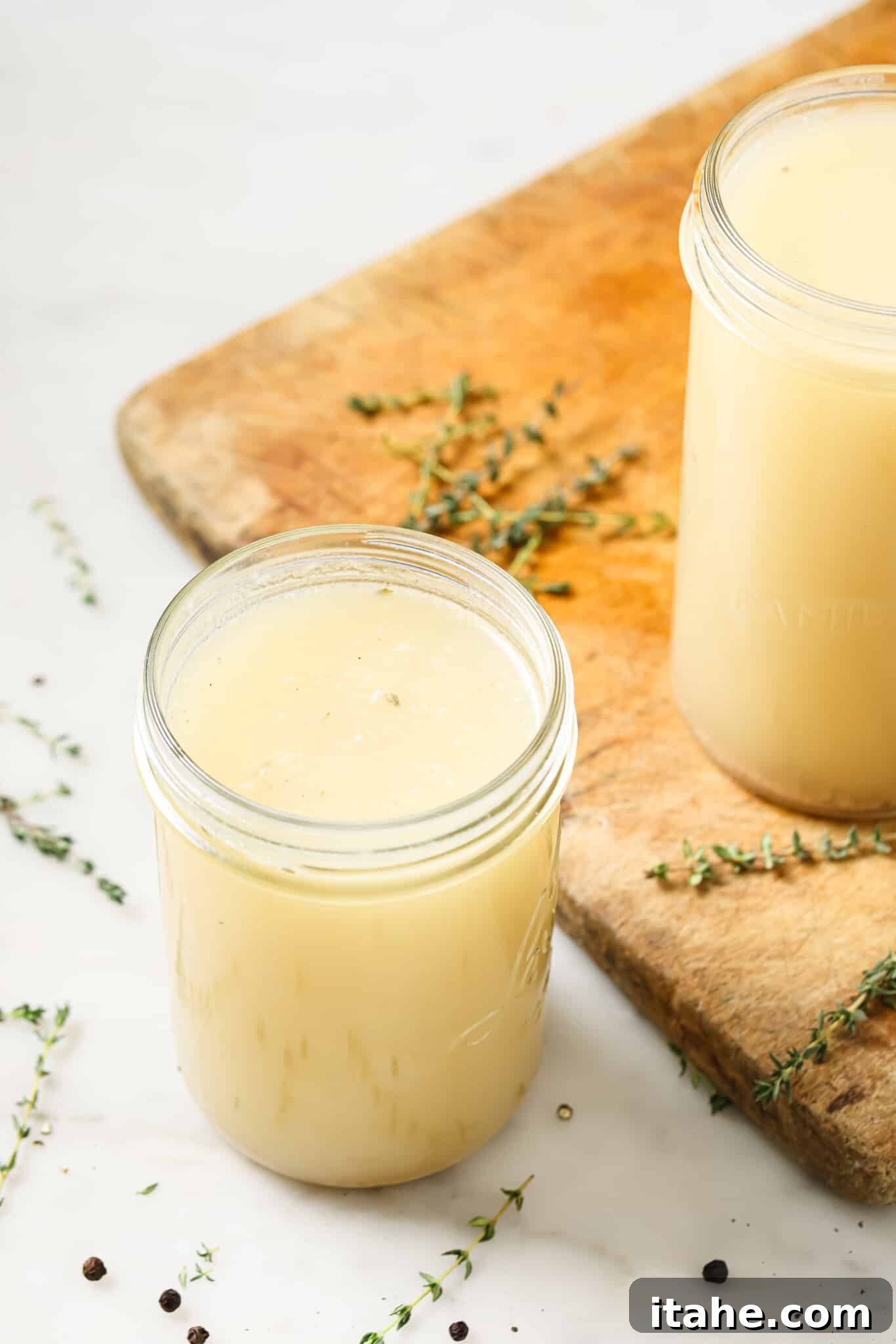
Ultimate Guide to Homemade Turkey Broth: Rich, Flavorful, and Essential
There’s a special kind of satisfaction that comes from transforming leftovers into something truly extraordinary. This easy Turkey Broth recipe does exactly that, turning your Thanksgiving turkey carcass into a deeply rich, intensely flavorful liquid gold. Far beyond its humble origins, homemade turkey broth is a versatile kitchen staple, perfectly seasoned with fresh herbs and aromatic vegetables. It adds unparalleled depth to an array of dishes, from comforting soups and robust Dutch oven beef stews to savory sauces and your most cherished holiday recipes. Once you experience the superior taste and nourishing qualities of homemade turkey broth, you’ll wonder how you ever managed without it.
Crafting this delicious broth requires minimal effort and simple ingredients. With just about 5 minutes of active preparation to combine everything in a pot, the magic truly happens hands-off. As the turkey broth gently simmers, infusing with the essence of bones, vegetables, and herbs, it builds a complex flavor profile that store-bought versions simply can’t match. It’s not just a recipe; it’s a foundational technique that elevates your entire culinary repertoire.
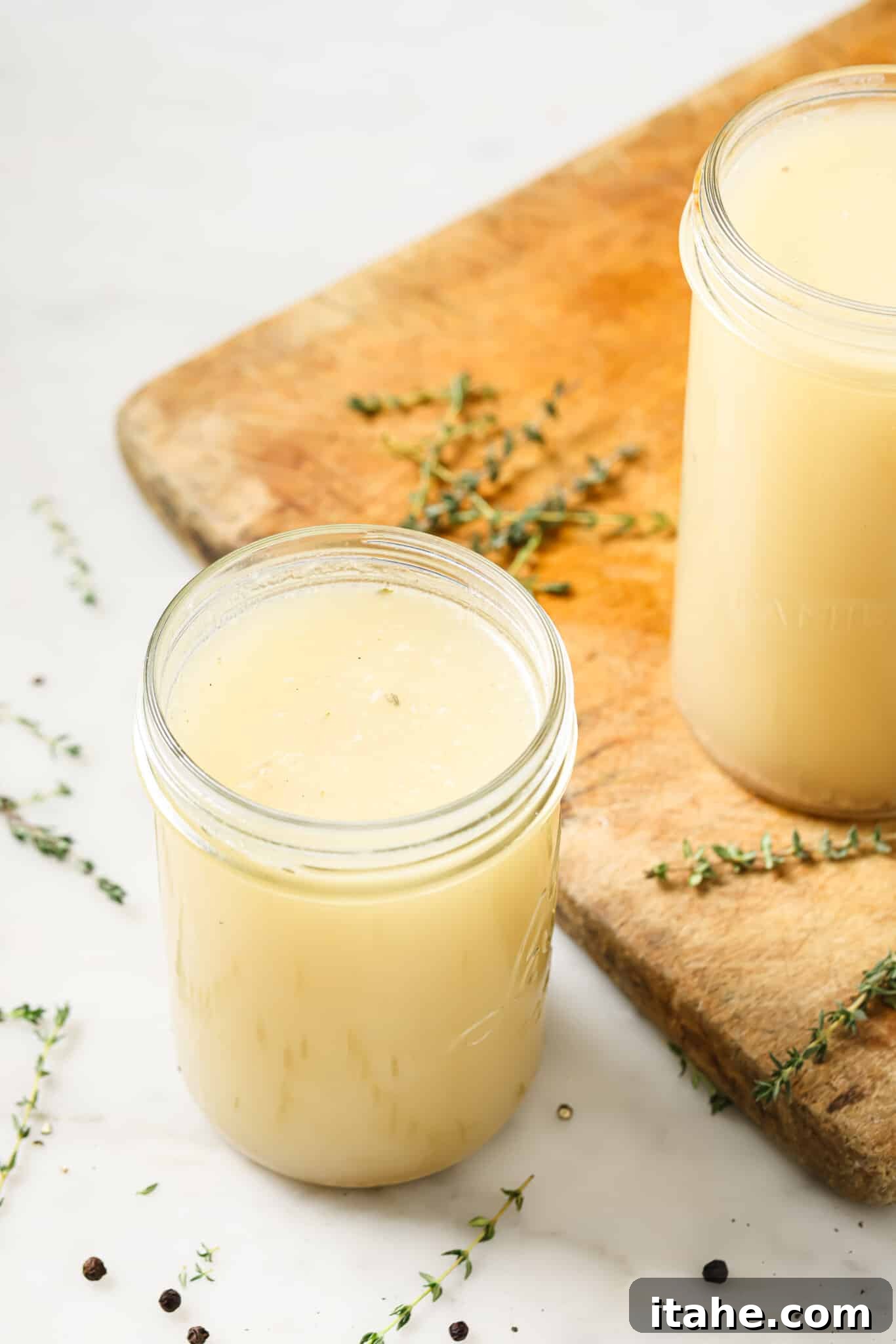
Why Make Your Own Turkey Broth?
While store-bought broth offers convenience, homemade turkey broth brings a multitude of benefits that make the effort incredibly worthwhile. Beyond simply utilizing your turkey carcass, you gain control over ingredients, flavor, and nutritional value.
Unmatched Flavor and Depth: The most compelling reason to make your own broth is the unparalleled flavor. Slow simmering extracts rich, complex flavors from the bones and aromatics that are simply absent in processed broths. This depth translates directly into more flavorful soups, stews, gravies, and sauces.
Nutritional Powerhouse: Turkey bones, when simmered for hours, release collagen, gelatin, and various minerals into the liquid. This results in a nourishing broth that supports gut health, joint health, and can even boost skin and hair vitality. It’s a wonderful way to extract maximum nutrition from your food.
Cost-Effective and Eco-Friendly: Making broth from a leftover turkey carcass is a fantastic way to practice zero-waste cooking. Instead of discarding bones, you transform them into a valuable ingredient, saving money on store-bought broth. It’s a sustainable choice that benefits both your wallet and the environment.
Complete Control Over Ingredients: When you make broth from scratch, you dictate exactly what goes into it. This means no artificial flavors, excessive sodium, or preservatives often found in commercial products. You can customize the herb blend, adjust the salt level, and ensure it meets your dietary preferences.
Starting with the Right Turkey Carcass
The foundation of a great turkey broth begins with the turkey itself. The better the turkey, the more flavorful your broth will be. If you’re cooking a whole bird for a feast, consider preparing my Garlic Butter Roasted Turkey for a rich and juicy main course, ensuring a flavorful carcass for your broth. For smaller gatherings, my Air Fryer Turkey Breast or Garlic Butter Turkey Breast recipes provide excellent results and a suitable framework for broth. Even an Easy Roasted Turkey Leg for a Thanksgiving meal for two can contribute to a modest but delightful batch of homemade stock.
Once your turkey is carved and enjoyed, save the entire carcass, including bones, skin, and any bits of meat still clinging on. For the best broth, ensure most of the meat has been removed, leaving primarily bones and connective tissue. Breaking the turkey bones into smaller pieces will expose more surface area, allowing for a more efficient extraction of flavor and gelatin during the simmering process. You can even use a chicken carcass as an alternative or in combination with turkey for a delicious poultry broth.
For even more delicious recipe ideas and to plan your holiday meals, be sure to check out my comprehensive Thanksgiving Dinner Menu.
How To Make Flavorful Turkey Broth
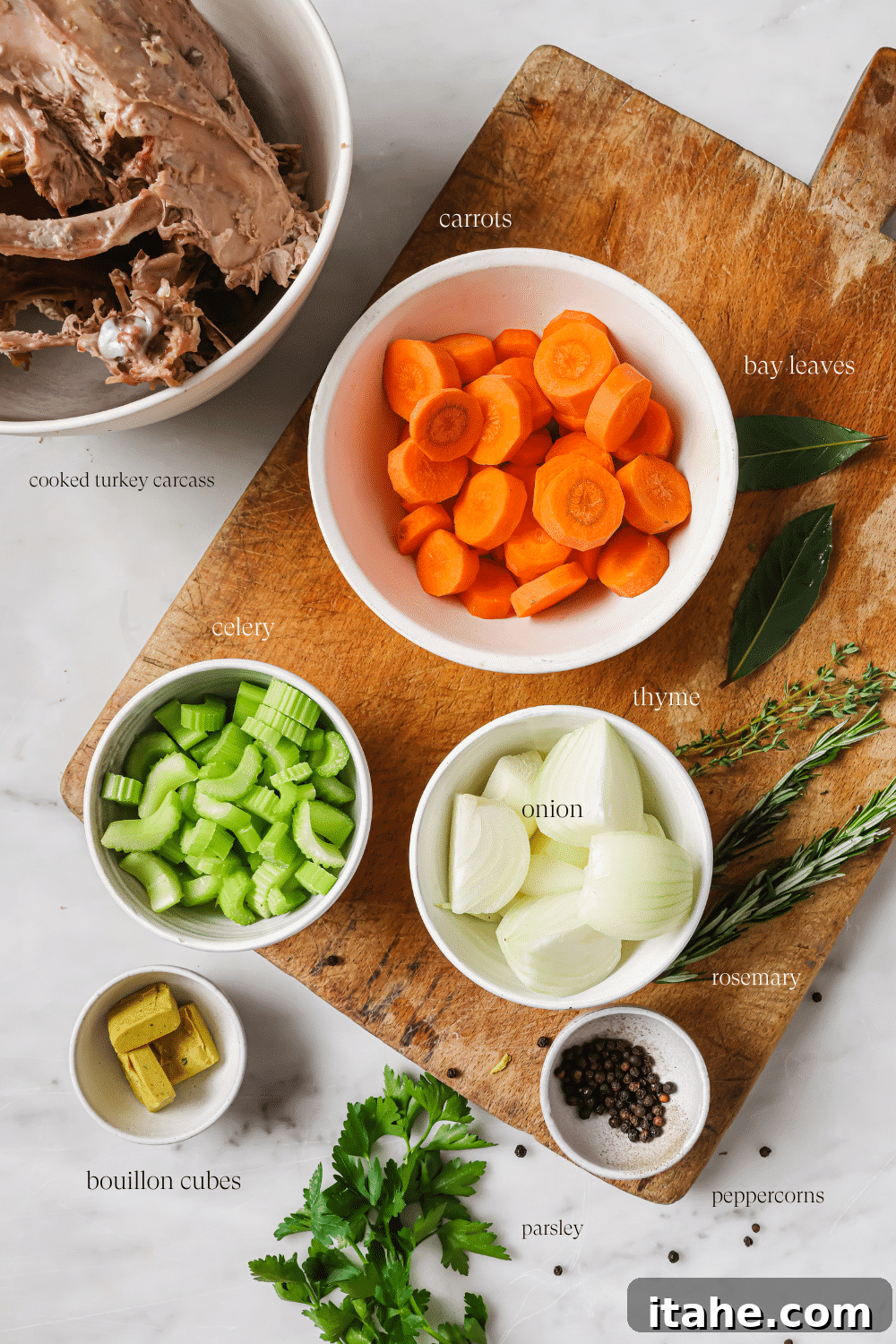
Essential Ingredients for Rich Turkey Broth
Gathering the right components is key to a robust and aromatic turkey broth. Here’s a detailed look at what you’ll need:
- Cooked Leftover Turkey Carcass: This is the star of our broth. Ensure most of the meat has been removed, and the bones are broken into smaller, manageable pieces to maximize flavor extraction. A chicken carcass can also be used, or a combination of both for a richer poultry stock.
- Aromatics (Vegetables): The classic trio of onion, celery, and carrot forms the aromatic foundation, also known as mirepoix. These vegetables lend a sweet, earthy depth without overpowering the turkey flavor. Quarter your onions for easy handling, and chop celery and carrots into roughly 2-inch pieces.
- Black Peppercorns: Whole peppercorns are ideal as they release their subtle heat and aroma slowly over the simmering time, contributing a gentle spice to the broth without making it overly pungent.
- Fresh Herbs: A generous bundle of fresh sprigs—parsley, rosemary, and thyme—adds bright, herbaceous notes that complement the rich turkey flavor. Tying them together with kitchen twine can make removal easier, though it’s not strictly necessary.
- Bay Leaves: A couple of dried bay leaves are indispensable for adding a subtle, complex, and slightly floral undertone that rounds out the overall flavor profile of the broth.
- Chicken Bouillon (Optional): For an extra layer of savory flavor, especially if your carcass isn’t overly robust, a tablespoon of Better Than Bouillon chicken paste or 2-3 chicken bouillon cubes can be a secret weapon. If using cubes, you can crush them or dissolve them in hot water before adding. This enhances the umami without making the broth taste artificial.
Step-by-Step Instructions for Perfect Turkey Broth
Follow these simple steps to create a deeply flavored, aromatic turkey broth that will become a staple in your kitchen:
- Step 1: Prepare and Combine Ingredients in the Pot
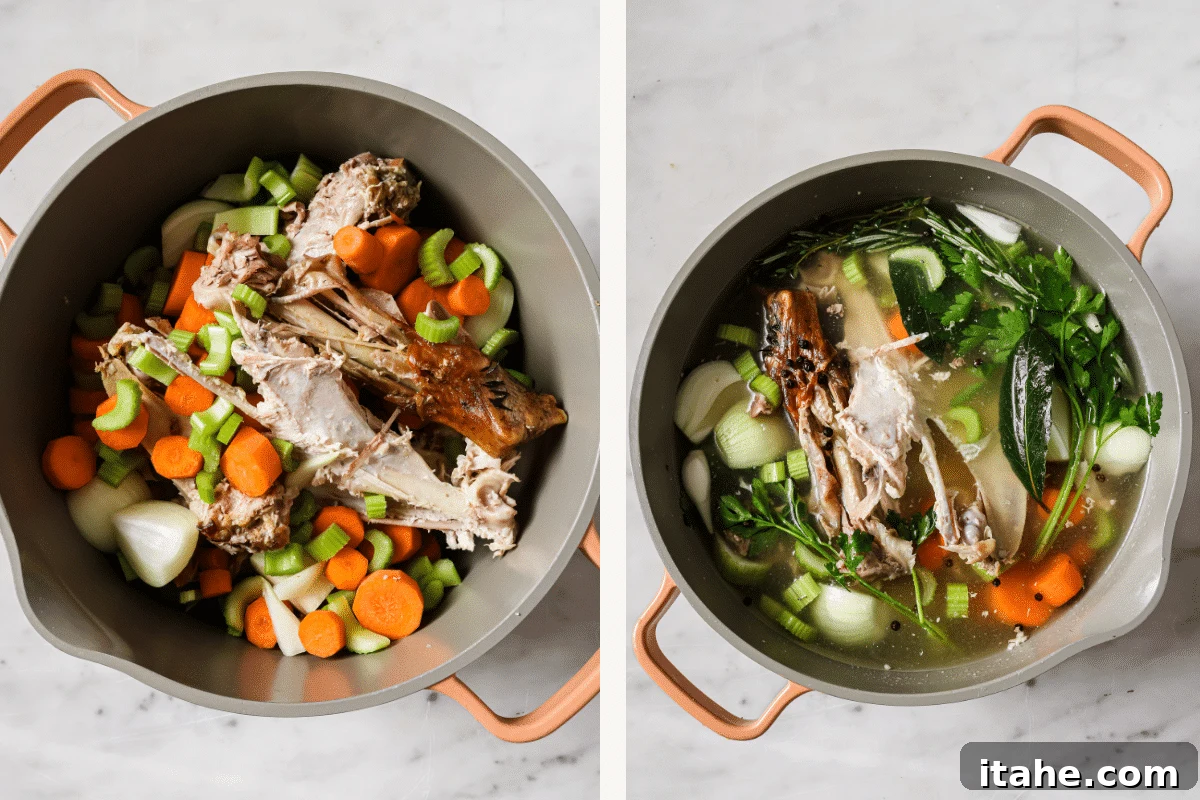
Begin by placing the broken pieces of your cooked turkey carcass into a very large Dutch oven or a sturdy stockpot. Arrange the quartered onions, chopped celery, and peeled carrots around and on top of the carcass. Next, add the whole black peppercorns, fresh herb sprigs, and bay leaves. If you’re using chicken bouillon paste, add a tablespoon directly into the pot. If opting for bouillon cubes, you can either crush them into a powder and sprinkle them in, or dissolve them first in a small amount of hot water to ensure even distribution throughout the broth.
- Step 2: Add Water to Cover
Pour enough cold water into the pot to fully submerge all the ingredients. Using cold water is crucial as it helps to slowly draw out impurities and flavors from the bones and vegetables, resulting in a clearer, richer broth. The exact quantity of water will depend on the size of your pot and the amount of carcass, but typically ranges from 12 to 16 cups. Ensure all solids are just barely covered.
- Step 3: Bring to a Boil and Gently Simmer
Place your large stockpot on the stovetop over medium-high heat. Bring the mixture to a rolling boil. As soon as it reaches a boil, reduce the heat significantly to low, then cover the pot with a lid. Allow the broth to simmer gently for a minimum of 2 to 3 hours. The key here is a gentle simmer, not a vigorous boil, as aggressive boiling can lead to cloudy broth and less flavor extraction. This slow, steady process allows the flavors from all the ingredients to meld beautifully and develop their full potential.
- Step 4: Skim Off Impurities
During the simmering process, especially within the first hour, you’ll likely see foam or impurities rising to the surface. Use a slotted spoon to carefully skim off and discard this foam. This step helps ensure your final broth is clear and has a clean flavor.
- Step 5: Strain the Broth for Clarity
Once the turkey bone broth has simmered for 2 to 3 hours and the flavors have fully developed, remove the pot from the heat and let it cool slightly for about 15-20 minutes. This makes it safer to handle. Carefully pour the liquid through a fine-mesh strainer or a colander lined with cheesecloth into a large, heat-proof bowl or another clean pot. This process separates the liquid broth from all the solids. Discard or compost the spent turkey carcass, vegetables, and herbs.
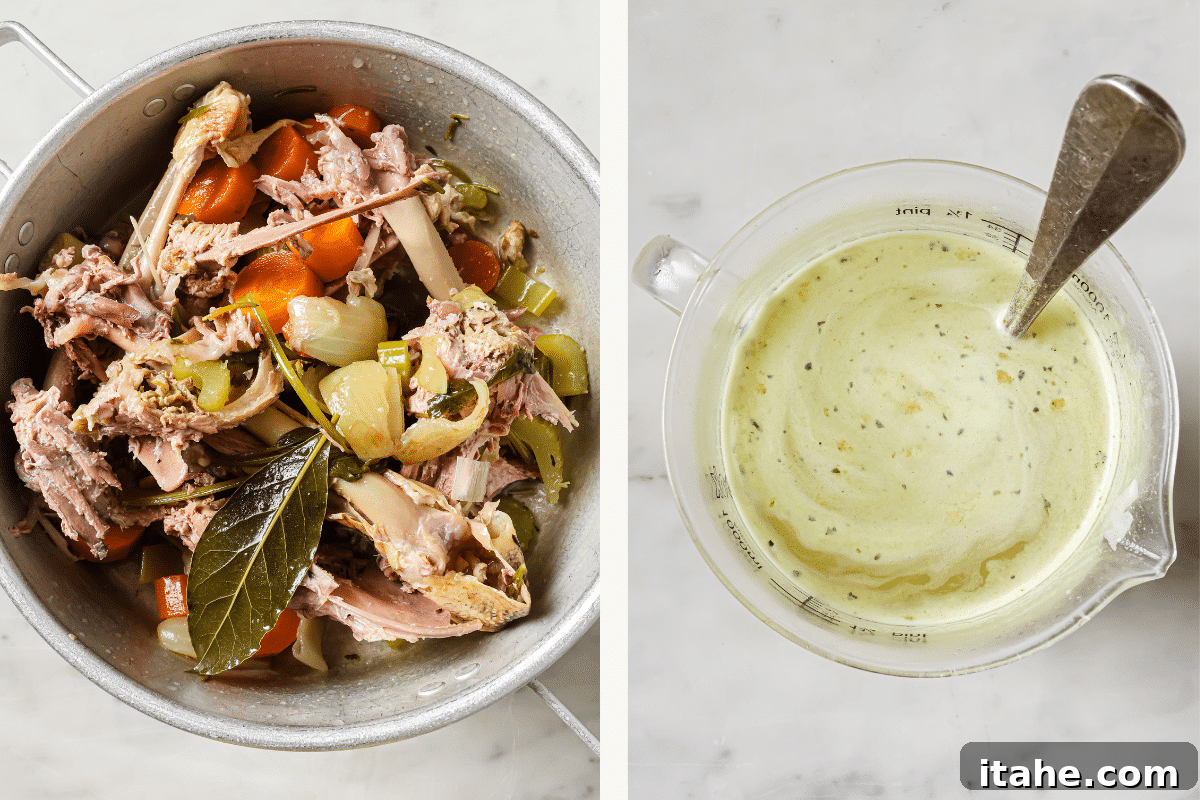
- Step 6: Chill and Remove Excess Fat
Allow the strained turkey broth to cool completely to room temperature. Once cooled, transfer it to the refrigerator. Chilling the broth overnight is ideal. As it chills, any remaining fat will solidify on the surface, forming a thick, easy-to-remove layer. Use a spoon to skim off this solidified fat. This step results in a cleaner, less greasy broth that is also easier to digest and store.
- Step 7: Store and Enjoy Your Homemade Broth
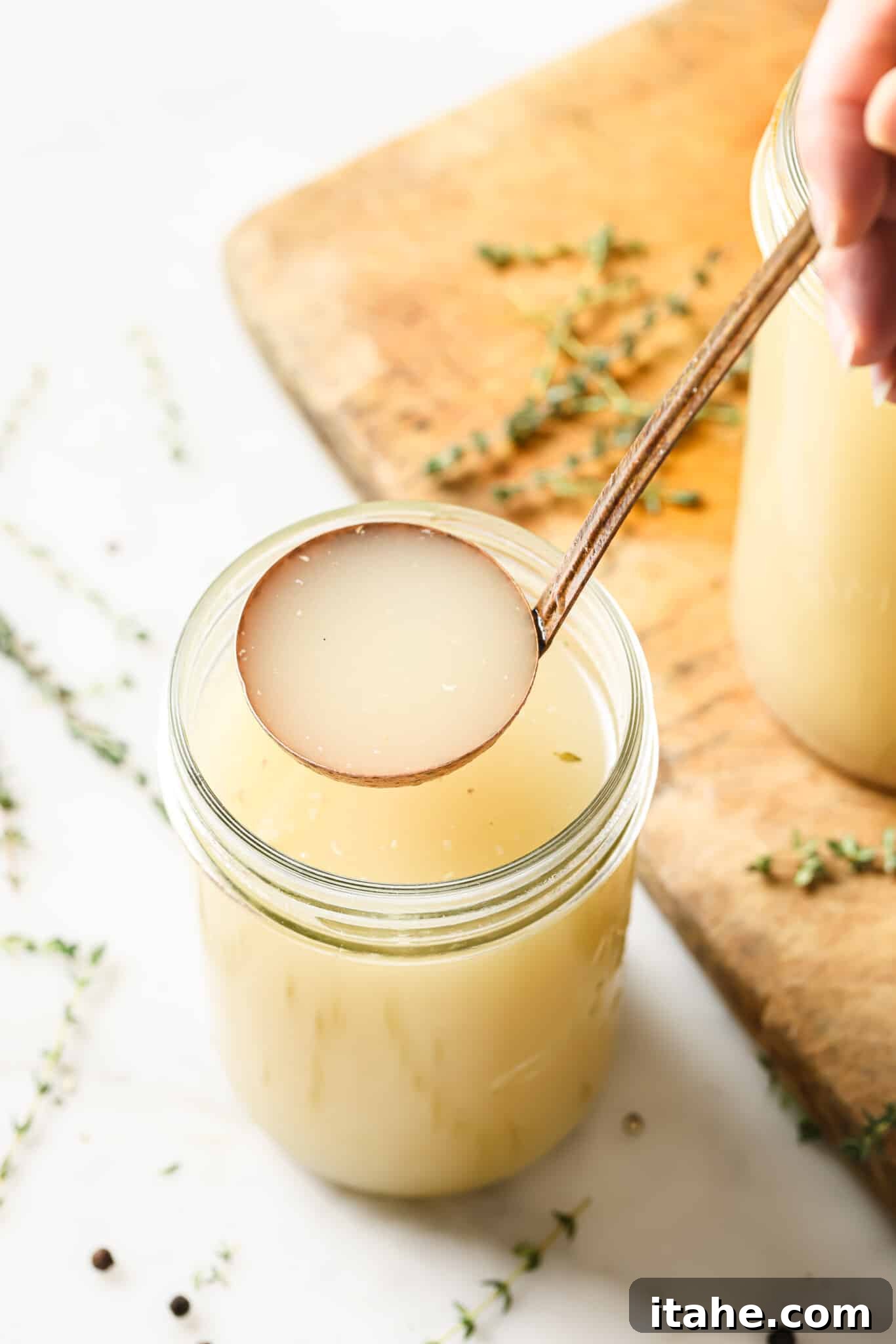
At this point, your magnificent homemade turkey broth is ready to be enjoyed! Divide the broth into airtight storage containers or mason jars. It’s now perfect for use in your favorite soups, flavorful sauces, hearty stews, or any recipe that calls for chicken or turkey broth.
Expert Tips for the Best Turkey Broth
- Break Down the Carcass: Use kitchen shears or a heavy-duty knife to break the turkey carcass into smaller pieces. This increases the surface area, allowing more flavor and collagen to extract into the broth. Kitchen shears are often much easier and safer for this task than a standard kitchen knife.
- Low and Slow is the Key: A gentle simmer is crucial for a clear, flavorful broth. Avoid a vigorous boil, which can make your broth cloudy and extract unwanted bitter flavors from the bones. A slow simmer allows the flavors to develop gradually and become richer over time.
- Don’t Forget to Skim: Regularly skimming off any foam or impurities that rise to the top, especially during the first hour of simmering, is essential for a clean, clear, and pure-tasting broth.
- Roast Bones for Deeper Flavor (Optional): For an even richer, deeper-colored broth, consider roasting the turkey carcass pieces and vegetables in the oven at 400°F (200°C) for 30-40 minutes until lightly browned before adding them to the pot. This caramelization adds an extra layer of savory flavor.
- Defatting Your Broth: If your strained broth still appears fatty, refrigerate it overnight. The fat will solidify on the surface, making it incredibly easy to skim off with a spoon the next morning, leaving you with a clean, low-fat broth.
- Embrace the Gelatin Jiggle: Don’t be alarmed if your turkey broth has a slightly gelatinous texture after it’s been chilled in the refrigerator. This “jiggle” is a sign of a high-quality broth, rich in collagen. Collagen breaks down into gelatin as the broth simmers, indicating that you’ve extracted wonderful nutrients from the bones. It melts back into liquid when reheated.
- Choose Vegetables Wisely: Avoid using starchy vegetables like potatoes, which can make the broth too thick and cloudy. Similarly, strong-tasting vegetables like asparagus, cabbage, or beets can overpower the delicate turkey flavor. Zucchini and green beans can also contribute a bitter taste. Stick to the classic aromatics: onions, carrots, and celery.
- Season at the End: It’s best to add salt and other strong seasonings at the end of the cooking process, or even when you use the broth in another recipe. As the broth reduces, flavors concentrate, so adding salt too early can result in an overly salty broth.
How To Store Homemade Turkey Broth
Proper storage is crucial to preserve the quality and extend the shelf life of your homemade turkey broth. Here’s how to ensure it stays fresh and ready for use:
- To Store in the Refrigerator: Once your turkey broth has cooled completely to room temperature, divide it into airtight storage containers or mason jars. Be sure to leave about an inch of headspace in jars to allow for potential expansion if freezing later. Store the containers in the refrigerator for up to 5 days. Always ensure the broth is thoroughly chilled before refrigerating to prevent bacterial growth.
- To Freeze for Long-Term Storage: Freezing is an excellent way to preserve turkey broth for months. Pour the cooled broth into freezer-safe containers, leaving at least an inch of extra space at the top as liquids expand when they freeze. For convenience, you can also freeze broth in ice cube trays, then transfer the frozen cubes to freezer bags once solid. This allows for easy portioning. Label your containers with the date, and store them in the freezer for up to 6 months for best quality.
- To Reheat: When ready to use, allow frozen turkey broth to thaw in the refrigerator overnight, or use the defrost setting on your microwave. Once thawed, you can reheat it gently in the microwave or on the stovetop over medium heat until warmed through.
What To Make with Your Homemade Turkey Broth
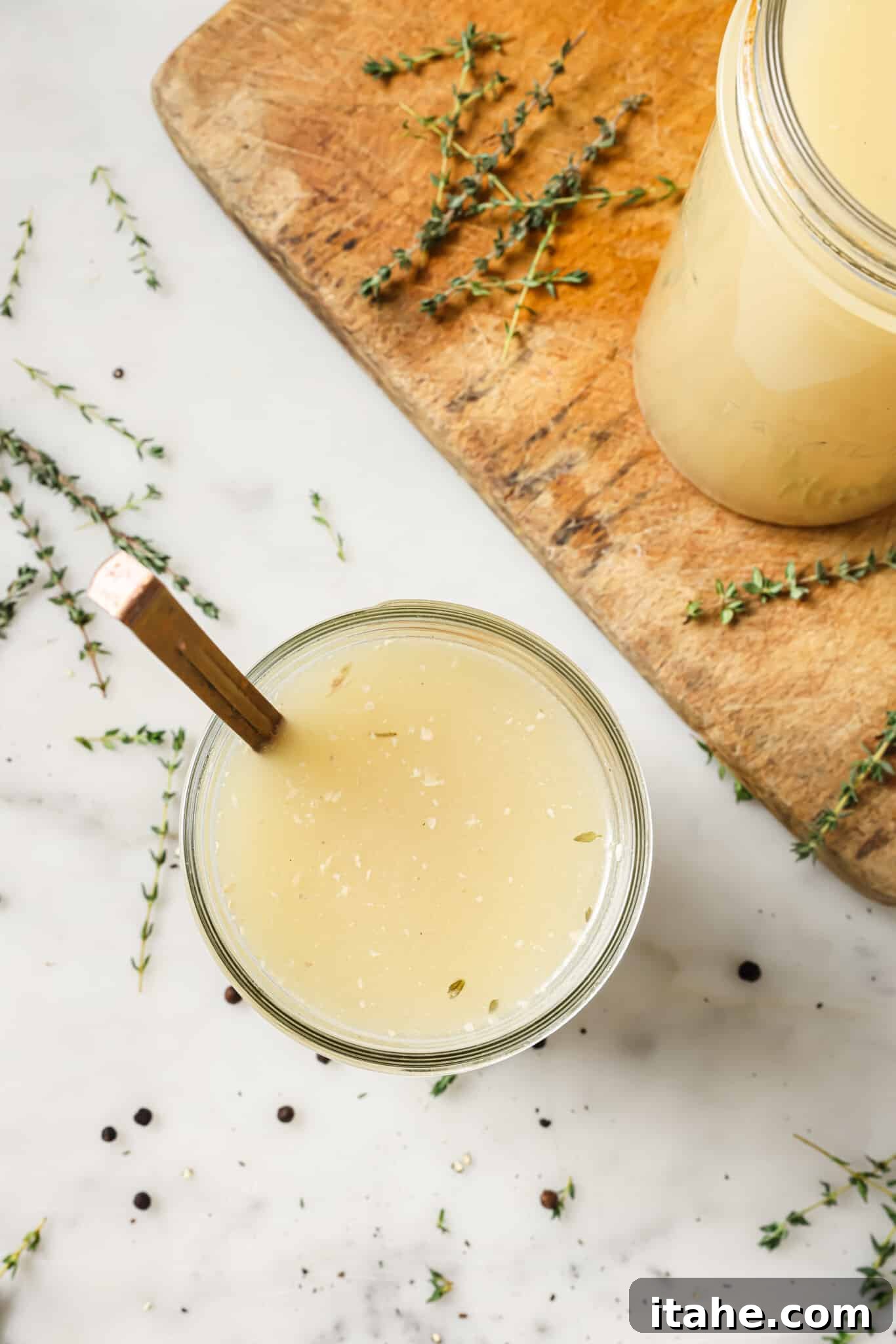
The beauty of homemade turkey broth lies in its incredible versatility. It’s a foundational ingredient that can elevate countless dishes, adding a layer of savory depth that processed broths simply can’t achieve. Here are just a few ideas for how to put your delicious broth to good use:
- Cozy Soups and Hearty Stews: Turkey broth makes an exquisite base for almost any soup or stew. It adds a comforting, robust flavor that truly shines. Use it for classics like my comforting turkey vegetable soup, a creamy butternut squash soup, or any chicken noodle or vegetable soup recipe you love. It’s also perfect for enriching a slow-cooked beef stew or chili.
- Rich Sauces and Gravies: The concentrated flavor of homemade turkey broth makes it an ideal liquid for creating luscious sauces and gravies. Use it as the base for your holiday gravy, or to deglaze a pan after roasting meats, creating a simple yet profound pan sauce. It’s a game-changer for homemade gravy without drippings, providing that essential umami.
- Flavorful Side Dishes: Elevate your side dishes by cooking them with turkey broth instead of water. It’s especially fantastic for adding extra depth to holiday favorites. Try using it in my easy sausage stuffing, for cooking grains like rice or quinoa, or for making the creamiest mashed potatoes. Risotto made with turkey broth is an absolute revelation.
- Nourishing Sipping Broth: Don’t just relegate turkey broth to an ingredient; it’s also wonderfully satisfying on its own! Enjoy a hot mug of turkey broth as a warming, nutritious beverage. It’s especially comforting when you’re feeling under the weather or simply need a soothing pick-me-up. Garnish with a sprinkle of fresh herbs or a squeeze of lemon, and serve alongside a piece of fresh garlic bread or gluten-free cornbread for a light meal.
- Cooking Grains and Legumes: Replace water with turkey broth when cooking rice, quinoa, couscous, or lentils to infuse them with rich flavor. This simple swap instantly makes side dishes more savory and satisfying.
More Homemade Kitchen Staples
Homemade Vegetable Broth
55 mins
How to make Tomato Sauce
1 hr 30 mins
Vinaigrette Recipe
5 mins
1-Minute Homemade Mayonnaise
1 min
Turkey Broth Recipe
Ingredients
- 1 cooked turkey carcass (meat mostly removed and bones broken into large pieces)
- 2 large onions (quartered)
- 3 stalks celery (chopped)
- 4 large carrots (peeled and chopped)
- 1 teaspoon whole black peppercorns
- 2 sprigs of fresh parsley, rosemary, and thyme
- 2 bay leaves
- 1 tablespoon Better Than Bouillon chicken paste (or 3 chicken bouillon cubes)
Instructions
-
In a large stockpot or a large Dutch oven, place the turkey carcass pieces. Add the quartered onions, chopped celery, and peeled carrots to the pot.
-
Next, add black peppercorns, fresh herbs, bay leaves, and chicken bouillon (paste or cubes). If using chicken bouillon cubes, you can either crush them and sprinkle them into the pot or dissolve them in a cup of hot water and pour the mixture into the pot.
-
Pour enough cold water into the pot to cover all the ingredients. The amount of water needed will depend on the size of your pot and the amount of turkey carcass, but generally, it’s about 12-16 cups of water.
-
Place the pot on the stove over medium-high heat. Bring the mixture to a boil. Once it reaches a boil, reduce the heat to low, cover the pot, and let it simmer gently for 2-3 hours. This will allow all the flavors to meld together.
-
While the broth simmers, use a slotted spoon to skim off any foam or impurities that rise to the surface.
-
After simmering, remove the pot from the heat. Let it cool slightly, then strain the broth through a fine-mesh strainer or a cheesecloth into a large bowl or another pot. Discard the solids.
-
Allow the strained broth to cool completely to room temperature, then refrigerate it. Once it’s chilled, you can skim off any fat that solidifies on the surface. Your homemade turkey broth is now ready to use in soups, sauces, or other recipes.
Nutrition Information
Nutrition information is automatically calculated and should only be used as an approximation. Actual values may vary based on ingredients and preparation methods.