
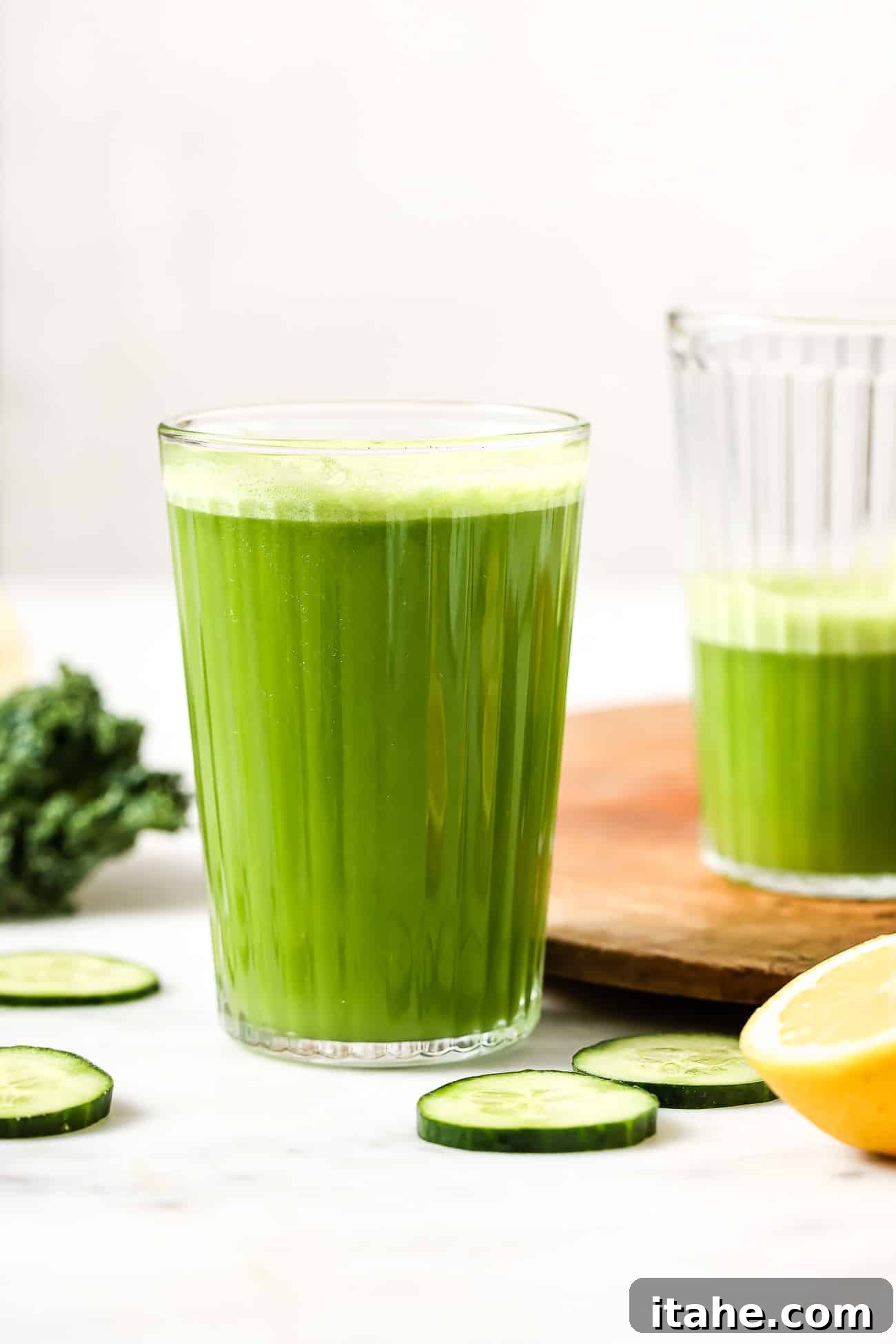
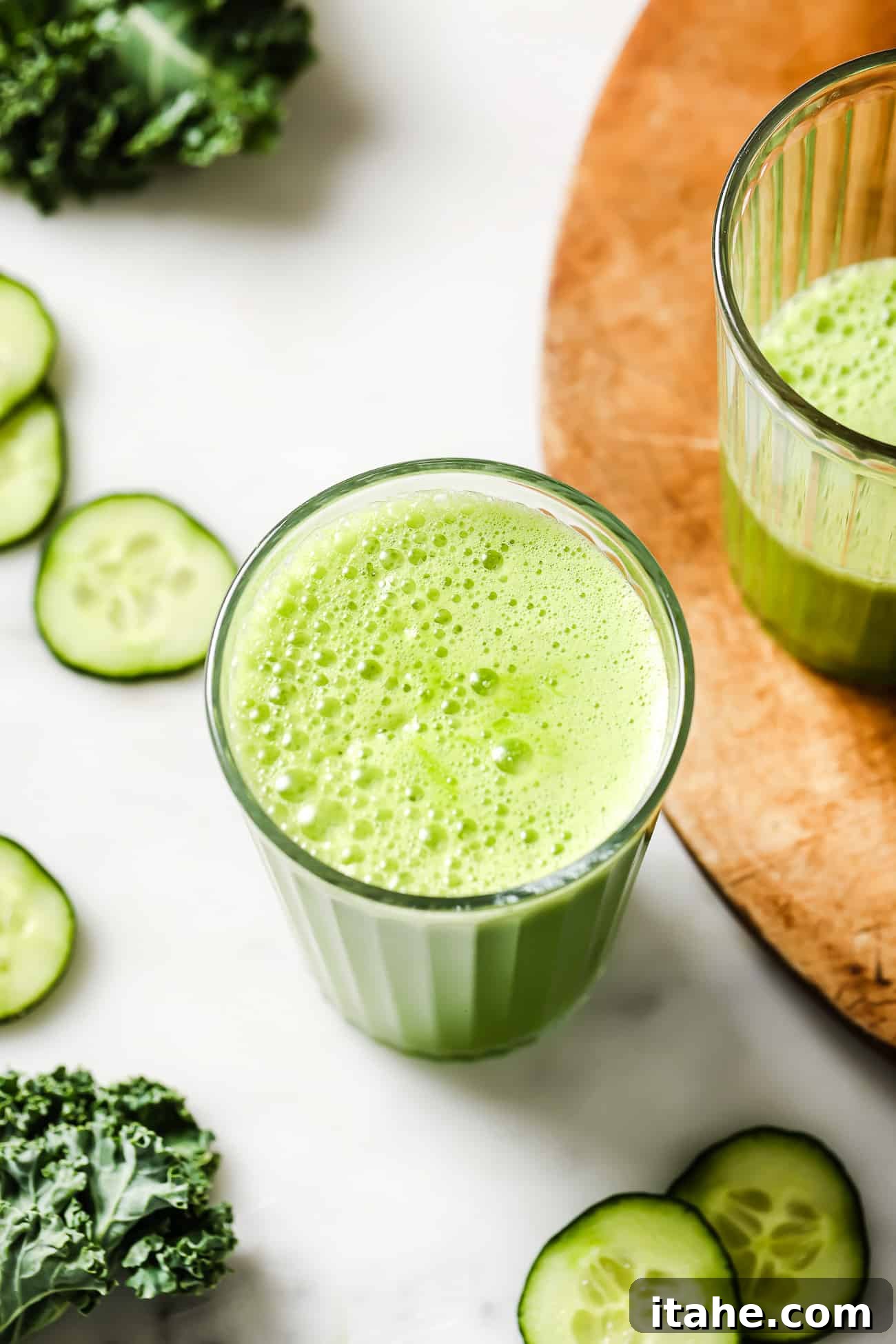
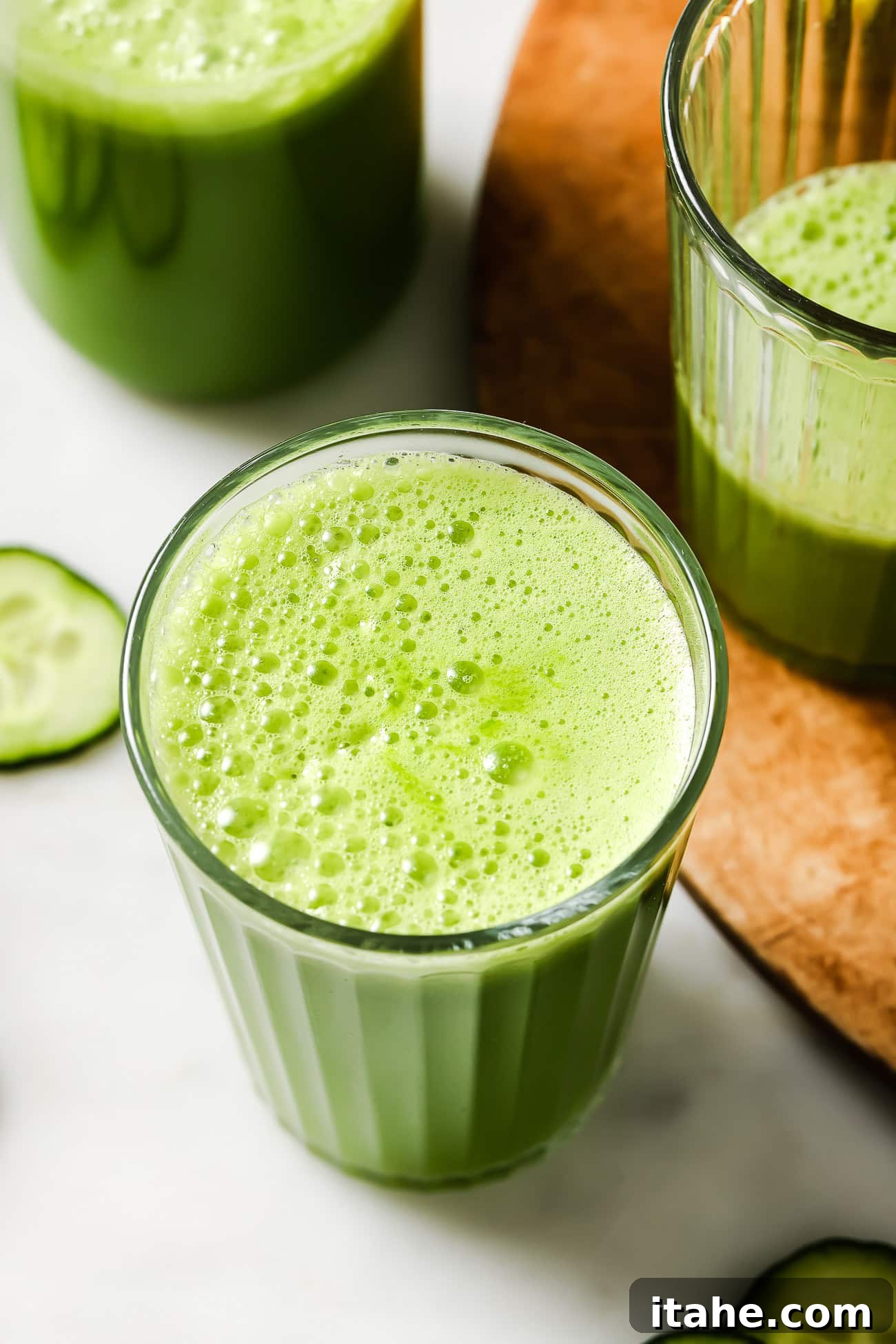
Welcome to the ultimate guide for crafting the most invigorating and delicious Green Juice! If you’re seeking a vibrant boost to kickstart your day, a natural energy enhancer, or simply a refreshing, healthy beverage, you’ve found your go-to recipe. This tried-and-true formula blends fresh kale, crisp romaine, hydrating cucumbers, mineral-rich celery, zesty lemon, and the perfect touch of sweetness from green apples. It’s an easy, flavorful way to infuse your body with essential nutrients, leaving you feeling revitalized and ready to conquer anything.
For years, green juice has been an integral part of our daily routine, transforming our approach to health and wellness. Many people initially hesitate, fearing a “grassy” taste. I was once among them, declaring, “If it tastes like grass, count me out!” However, I quickly discovered that a well-balanced green juice recipe, like this one, is anything but unappealing. It’s wonderfully bright, incredibly refreshing, and surprisingly delicious, making it a joy to drink every morning.
This particular green juice recipe is designed to be light, crisp, and incredibly satisfying. The natural sweetness from the green apples perfectly complements the earthy notes of the greens, while a generous squeeze of lemon adds a delightful brightness that truly makes the flavors sing. It’s a harmonious blend that even skeptics will adore, proving that healthy can indeed be incredibly tasty.
One of the best aspects of this recipe is its versatility. It’s incredibly easy to customize the ingredients to suit your personal preferences or what you have on hand. Whether you want to experiment with different greens or add a unique fruit, this recipe serves as a fantastic foundation. And if you’re ever in the mood for a thicker, more filling option, consider my Pineapple Green Smoothie – another quick and tasty way to enjoy your greens!
Why Embrace the Green Juice Lifestyle?
Incorporating green juice into your diet offers a multitude of benefits that extend beyond simple nutrition. It’s a powerful way to deliver a concentrated dose of vitamins, minerals, and antioxidants directly to your cells, promoting overall well-being and vitality. Here’s why this healthy habit is worth adopting:
- Energy Boost: The rich chlorophyll content in green vegetables acts like a natural energy shot, revitalizing your body without the jitters associated with caffeine.
- Detoxification Support: Ingredients like kale, celery, and lemon are renowned for their detoxifying properties, helping your body naturally cleanse and eliminate toxins.
- Enhanced Digestion: Raw, fresh juice retains enzymes that aid digestion, supporting a healthy gut and nutrient absorption.
- Immune System Boost: Packed with Vitamin C, A, and various antioxidants, green juice fortifies your immune system, helping to ward off illnesses.
- Glowing Skin: The abundance of vitamins and antioxidants contributes to healthier skin, promoting a natural radiance and combating signs of aging.
- Hydration: High-water content ingredients like cucumber and celery provide excellent hydration, crucial for all bodily functions.
Making green juice a regular part of your routine is an investment in your health, offering both immediate and long-term rewards that you’ll feel from the inside out.
Powerhouse Ingredients for Your Best Green Juice
Each ingredient in this recipe is carefully selected not only for its flavor profile but also for its incredible nutritional benefits, contributing to a truly invigorating and healthy green juice:
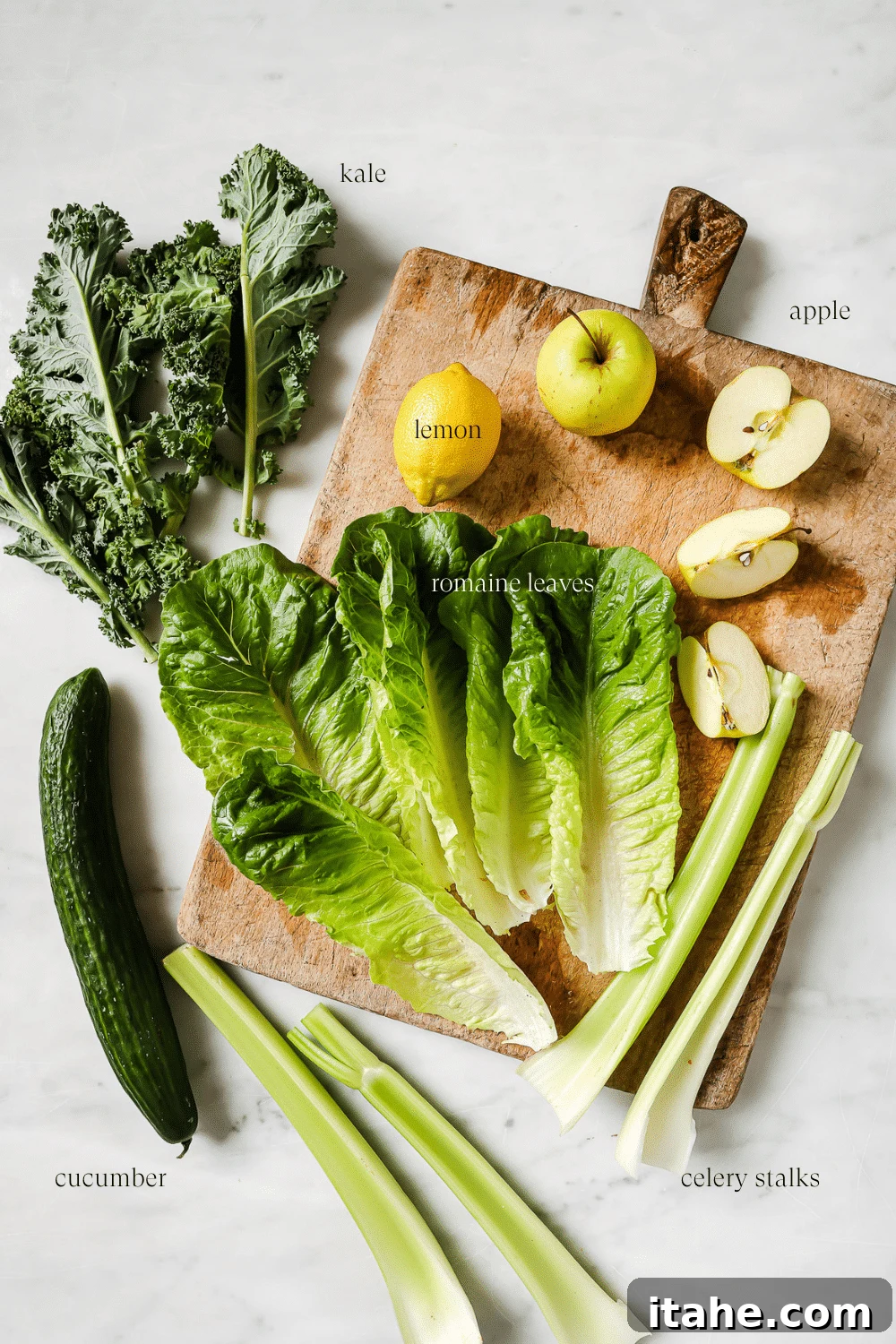
Green Apples — These are crucial for balancing the flavors and adding a natural, crisp sweetness that makes this juice incredibly palatable. Beyond taste, green apples are rich in antioxidants, particularly flavonoids, and provide a good source of fiber (though much of it is removed during juicing, some soluble fiber remains). They also contribute to healthy digestion and can help stabilize blood sugar levels. For variety, consider swapping them with oranges, kiwi, or even grapefruit for a tarter note.
Celery Stems — Celery is a hydration hero, boasting a high water content and a refreshing, subtly salty flavor. It’s an excellent source of vitamins K and C, folate, and potassium. Celery is also known for its anti-inflammatory properties and its ability to support cardiovascular health. If you’re looking for an alternative with a slightly different flavor profile, fennel can be a wonderful substitute, offering a hint of anise.
Large Cucumber — I prefer using English cucumbers due to their tender skin and fewer seeds, but any variety will work beautifully here. Cucumbers are incredibly hydrating, helping to flush toxins and support healthy skin. They are also a good source of vitamin K, B vitamins, copper, potassium, and manganese. Their mild, refreshing taste is essential for diluting the stronger flavors of the greens, creating a wonderfully balanced juice.
Greens (Romaine Leaves & Kale) — These leafy greens form the nutritional core of our green juice. I use a thoughtful mix of romaine and kale to ensure you receive a broad spectrum of benefits without an overpowering “green” flavor.
- Kale: A true superfood, kale is loaded with vitamins A, C, and K, as well as potent antioxidants like quercetin and kaempferol. It supports detoxification, bone health, and eye health.
- Romaine Lettuce: Lighter in flavor than kale, romaine adds bulk and a good dose of vitamins A and K, plus folate. It helps to mellow the intensity of the kale, making the juice more approachable.
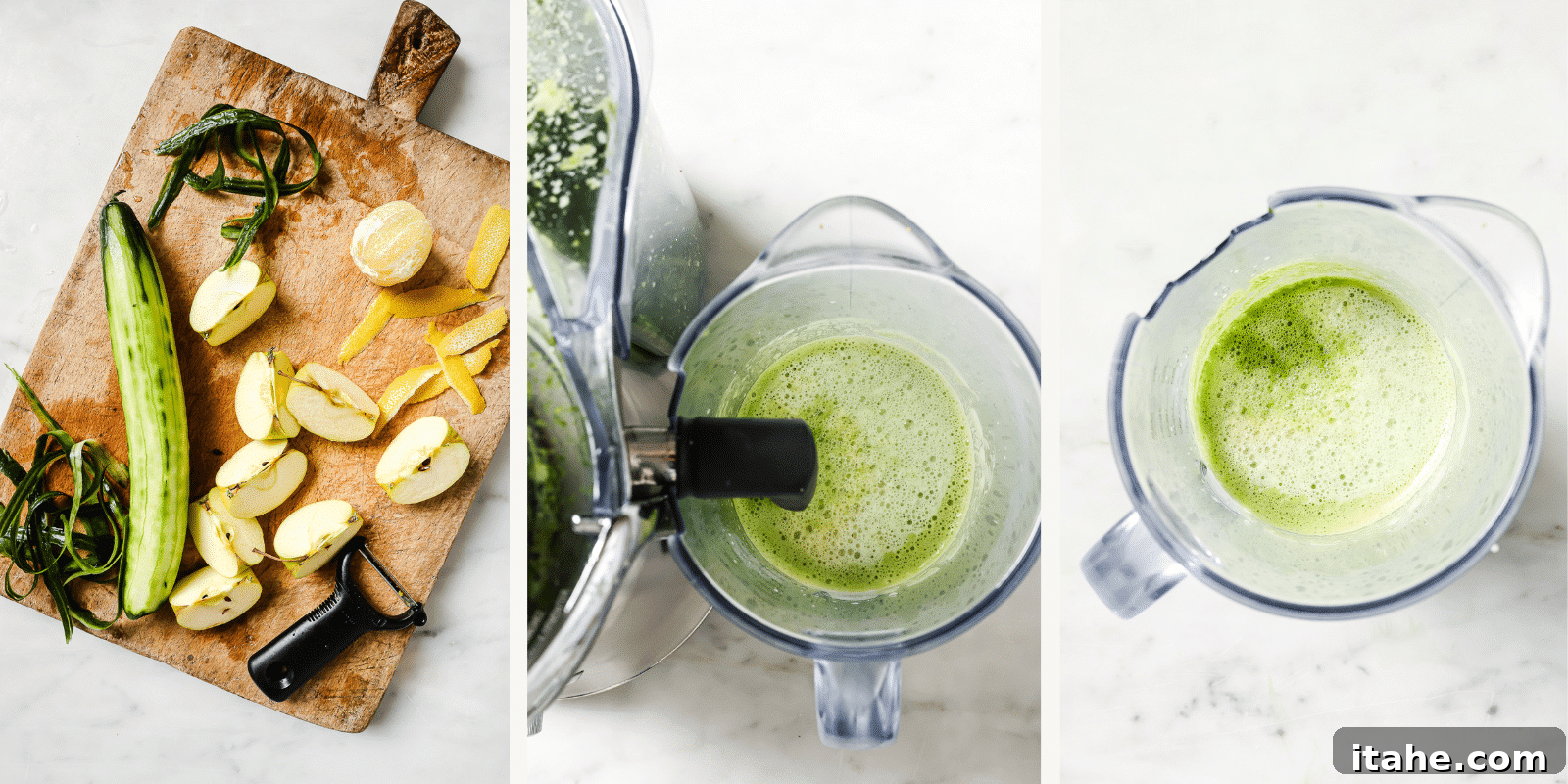
Lemon — Fresh lemon juice is indispensable for its bright, zingy flavor that cuts through the richness of the greens and apples. Importantly, remember to remove the peel and the white pith, as they contain compounds that can make your juice intensely bitter. Lemon is a fantastic source of vitamin C, an antioxidant that boosts immunity and supports skin health. It also aids in digestion and helps balance the body’s pH. If using a blender, pure lemon juice is recommended to avoid altering the texture.
Step-by-Step Instructions to Craft the Perfect Green Juice
Making your own green juice is surprisingly simple, whether you prefer a juicer or a blender. Follow these steps for a perfectly refreshing and nutritious drink:
Preparation is Key
Before you begin, thoroughly wash all your fruits and vegetables under cold running water. This is crucial for removing any dirt, pesticides, or residues. For best results, use organic produce whenever possible to maximize nutritional benefits and minimize exposure to unwanted chemicals.
Juice (or Blend) Your Ingredients:
- Using a Juicer: If you’re using a juicer, simply feed the washed ingredients through the machine according to its instructions. Most juicers handle whole or roughly chopped produce with ease. It’s that simple! Juicing separates the pulp from the liquid, giving you a smooth, concentrated beverage.
- Using a Blender: If you’re using a high-powered blender, chop your fruits and vegetables into smaller, manageable pieces to ensure a smooth blend. Add all the ingredients to your blender, along with about half a cup of water to help with blending. Blend on high speed until completely smooth, typically for 1 to 2 minutes. You may need to use a tamper or add a little more water to help push the ingredients down towards the blades, ensuring everything is thoroughly processed.
Strain for Smoothness (Blender Method Only):
- After blending, to achieve a juice-like consistency and remove fibrous pulp, you’ll need to strain the mixture. Place a fine mesh sieve or a nut milk bag over a large bowl or storage container. Pour the blended mixture into the sieve or bag.
- Using a wooden spoon or your hands (if using a nut milk bag), press down on the pulp to squeeze out as much liquid as possible. Continue pressing until only dry pulp remains. This step is essential for a smooth, palatable green juice from a blender. Discard the remaining pulp, or consider repurposing it in compost or other recipes.
Enjoy Your Fresh Green Juice:
- The best way to enjoy your green juice is immediately after it’s made, when it’s at its peak freshness and nutrient potency. Serve it over ice for an extra refreshing experience, especially on a warm day. Sip slowly and savor the revitalizing flavors!
Juicer Versus Blender: Which Method Is Right for You?
Choosing between a juicer and a blender often depends on your priorities and the consistency you desire for your green drink. Both methods have their advantages:
Using a Juicer:
- Pros: A juicer extracts only the liquid, removing all the fiber (pulp). This results in a highly concentrated, smooth beverage that allows for rapid nutrient absorption into the bloodstream. It’s ideal for those seeking a quick, potent nutrient boost without the digestive effort of fiber.
- Cons: Juicers can be expensive, and they typically yield less volume of liquid compared to blending the same amount of produce. Cleaning can also be more involved due to multiple parts. The removed fiber also means you miss out on its digestive benefits.
Using a Blender:
- Pros: Blenders are more versatile, often cheaper, and easier to clean. When blending, you retain all the fiber, which is excellent for digestive health, promoting satiety, and regulating blood sugar. The result is a thicker, more filling “smoothie” consistency.
- Cons: Without straining, the texture can be very fibrous and less like a traditional juice. If you strain it, you still get a juice, but it’s an extra step and you still lose the fiber. Nutrient absorption might be slightly slower compared to juicing due to the presence of fiber.
Ultimately, both methods deliver a healthy, nutrient-rich beverage. If you prioritize maximum nutrient absorption and a silky-smooth texture, a juicer might be your preference. If you value fiber, satiety, and convenience, a blender is a fantastic option. For this recipe, if using a blender, straining is recommended for a true “juice” experience.
Olivia’s Expert Recipe Tips
- Optimal Blender Prep: When using a blender, careful preparation is key. Make sure to cut all fruits and vegetables into smaller, uniform pieces. For leafy greens like kale, removing the tough central veins can significantly improve the smoothness and reduce fibrous bits in your final juice.
- Freshness is Best: Green juice is truly best enjoyed immediately after it’s made. This ensures you’re consuming the maximum amount of fresh enzymes and nutrients, which can degrade over time when exposed to air and light.
- Smart Meal Prep: To save valuable time on busy mornings, consider prepping your fruits and veggies the night before. Wash, chop, and store them in an airtight container in the fridge. This way, all you have to do is juice or blend and strain, making your healthy routine quick and effortless.
- Storage Guidelines: While best fresh, you can store any leftover green juice for an extra day in an airtight container in the refrigerator. Be aware that natural separation of ingredients might occur as it rests. Simply give it a good stir or shake before serving to recombine the flavors and maintain its appealing appearance.
- Taste Test and Adjust: Don’t be afraid to taste your juice as you go. If you prefer it sweeter, add another small green apple or a touch of stevia. If you like it tarter, add more lemon. This recipe is a guideline, and your palate is the ultimate judge!
Recipe Variations: Unleash Your Creativity
This green juice recipe is a fantastic starting point, but don’t be afraid to experiment and tailor it to your own taste and nutritional goals. Here are some exciting variations to try:
- Infuse with Fresh Herbs: Elevate the flavor and add additional health benefits by tossing in fresh herbs. Parsley is particularly excellent in green juices, offering a wonderfully fresh, earthy note and a boost of vitamins A and C. Other great options include a few sprigs of mint for a refreshing twist, or cilantro for its detoxifying properties.
- Amp Up the Greens: While kale and romaine are a perfect base, the world of leafy greens is vast! Feel free to incorporate or substitute with other nutrient-dense options. Consider adding collard greens, Swiss chard, spinach (which has a milder taste, great for beginners), microgreens for concentrated nutrients, or even a shot of wheatgrass for an ultimate health kick.
- Add a Superfood Kick: Transform your green juice into a super elixir by incorporating powerful superfood powders. A pinch of ground turmeric can provide anti-inflammatory benefits, while a dash of cinnamon helps with blood sugar regulation. Maca powder is known for its adaptogenic qualities, supporting energy and balance, and bee pollen offers a wide array of vitamins, minerals, and amino acids. Start with small amounts and adjust to your liking.
- Spice it Up: For those who enjoy a little heat and an extra detoxifying boost, a small piece of fresh ginger root or a tiny pinch of cayenne pepper can add a wonderful kick. Ginger is excellent for digestion and has anti-inflammatory properties.
- Sweetener Alternatives: If you find you need more sweetness than apples provide, try adding a small piece of pear, or a few drops of natural sweeteners like stevia or a tiny bit of raw honey (if not strictly vegan).
More Refreshing Sips!
Caipirinha (Brazilian Drink)
5 mins
Cherry Smoothie
5 mins
Pineapple Mango Smoothie
3 mins
Easy Apple Smoothie Recipe
5 mins
Pin
Green Juice Recipe | Delicious, Refreshing & Ready in 10 Minutes
Equipment
-
Juicer
-
High-Powered Blender (e.g., Vitamix)
-
Nut Milk Bag or Fine Mesh Sieve
Ingredients
- 2 green apples halved and quartered
- 4 celery stalks
- 1 cucumber peeled
- 6 romaine leaves
- 5 kale leaves
- 1 lemon peeled
Instructions
-
Thoroughly wash all ingredients. If using a powerful juicer, simply pass them through the juicer according to its instructions. Serve immediately with ice if desired.
-
If you are making this juice with a blender, chop all ingredients into smaller pieces. Add them to a high-powered blender with about ½ cup of water and blend until completely smooth, typically 1 to 2 minutes. Use the tamper as needed to assist in blending.
-
Then, strain the blended mixture through a fine-mesh strainer or a nut milk bag into a storage container. Press firmly on the solids with the back of a spoon to extract as much juice as possible. Discard the remaining pulp. Enjoy your freshly made green juice!
Notes
- Always wash all produce thoroughly before juicing or blending to ensure cleanliness and remove any residues.
- For additional sweetness or a different flavor profile, pear makes an excellent substitute or addition to apples.
- Remember that juicing removes most of the fiber, offering a concentrated nutrient dose. If you prefer to retain the fiber for digestive health, a smoothie (blending without straining) might be a better option for you.
Nutrition
Nutrition information is automatically calculated, so should only be used as an approximation.
Frequently Asked Questions About Green Juice
Here are answers to some common questions about making and enjoying your homemade green juice:
Can I store green juice, and for how long?
For optimal nutritional value and taste, green juice is best consumed immediately after preparation. However, you can store it in an airtight glass container in the refrigerator for up to 24 hours. Be aware that some nutrient degradation can occur over time, and the juice might separate; simply stir or shake before drinking.
What if I don’t like the taste of certain greens, like kale?
This recipe uses a balanced mix of kale and romaine to prevent an overpowering “green” flavor. If you’re new to green juice or find kale too strong, you can adjust the ratio by using more romaine or spinach, which has a milder taste. You can also increase the amount of green apple or lemon for a brighter, sweeter profile.
What’s the best time of day to drink green juice?
Many people prefer to drink green juice first thing in the morning on an empty stomach. This allows for maximum nutrient absorption and can provide a natural energy boost to start your day. However, you can enjoy it at any time that fits into your schedule, perhaps as a mid-afternoon pick-me-up or before a meal.
Can I add other fruits or vegetables to this recipe?
Absolutely! This recipe is highly customizable. Feel free to experiment with other healthy additions like ginger for a spicy kick, carrots for extra sweetness and beta-carotene, or spinach for a milder green flavor. Just remember to maintain a good balance to ensure the taste remains enjoyable.
What should I do with the leftover pulp?
The pulp from juicing is full of fiber and can be repurposed! You can add it to compost, use it in vegetable broth, mix it into baked goods like muffins (for a boost of fiber), or even create veggie burgers. Don’t let those good nutrients go to waste!
Conclusion: Sip Your Way to Better Health!
Embracing the habit of drinking homemade green juice is a simple yet profoundly impactful step towards a healthier lifestyle. This recipe is designed to be not only incredibly nutritious but also delightfully tasty, dispelling the myth that healthy food must be bland. With its refreshing blend of essential greens, hydrating cucumbers, and a touch of fruit-derived sweetness, you’ll be giving your body a powerful dose of vitality with every sip. So, gather your ingredients, choose your method—juicer or blender—and get ready to experience the amazing benefits of this invigorating green juice. Cheers to your health and a vibrant, energy-filled day!